
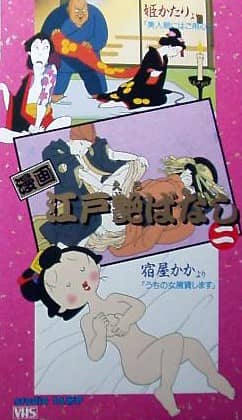
OVA
Description
"Manga Edo Ero Banashi" is set in the Edo period of Japan, a time marked by cultural flourishing and societal intricacies. The narrative revolves around the lives of ordinary people, particularly those in the entertainment and pleasure districts, offering a humorous yet insightful look into their daily struggles and relationships. The series blends historical context with comedic elements, often exploring themes of love, desire, and human folly through its characters' misadventures.
The protagonist, Seikichi, is a young man working as a ukiyo-e artist, creating erotic woodblock prints. His work brings him into contact with a variety of individuals, including courtesans, merchants, and townsfolk, each with their own quirks and stories. Seikichi’s interactions with these characters form the backbone of the series, as he navigates the complexities of his profession and personal life. His relationships, particularly with the women he encounters, are central to the plot, often leading to comedic and sometimes poignant moments.
The series also delves into the lives of the courtesans and entertainers in the Yoshiwara district, portraying their struggles and aspirations with a mix of humor and empathy. Characters like Otsuta, a seasoned courtesan, and Omitsu, a younger woman new to the profession, provide contrasting perspectives on life in the pleasure quarters. Their stories highlight the challenges they face, from societal expectations to personal desires, offering a nuanced portrayal of their world.
Throughout the series, the narrative weaves together multiple storylines, each contributing to a broader picture of Edo-period society. The humor often arises from the characters' misunderstandings and the absurdity of their situations, but it is grounded in a realistic depiction of their lives. The series does not shy away from the more risqué aspects of its setting, using them to explore deeper themes of human nature and societal norms.
The animation and art style reflect the historical setting, with attention to detail in the depiction of Edo-period architecture, clothing, and customs. The dialogue is sharp and witty, capturing the essence of the characters and their interactions. The series balances its comedic elements with moments of introspection, creating a narrative that is both entertaining and thought-provoking.
Overall, "Manga Edo Ero Banashi" offers a vivid and engaging portrayal of life in Edo-period Japan, blending humor, romance, and historical detail into a cohesive and compelling story. The characters' journeys, set against the backdrop of a vibrant and dynamic society, provide a rich and multifaceted narrative that appeals to a wide audience.
The protagonist, Seikichi, is a young man working as a ukiyo-e artist, creating erotic woodblock prints. His work brings him into contact with a variety of individuals, including courtesans, merchants, and townsfolk, each with their own quirks and stories. Seikichi’s interactions with these characters form the backbone of the series, as he navigates the complexities of his profession and personal life. His relationships, particularly with the women he encounters, are central to the plot, often leading to comedic and sometimes poignant moments.
The series also delves into the lives of the courtesans and entertainers in the Yoshiwara district, portraying their struggles and aspirations with a mix of humor and empathy. Characters like Otsuta, a seasoned courtesan, and Omitsu, a younger woman new to the profession, provide contrasting perspectives on life in the pleasure quarters. Their stories highlight the challenges they face, from societal expectations to personal desires, offering a nuanced portrayal of their world.
Throughout the series, the narrative weaves together multiple storylines, each contributing to a broader picture of Edo-period society. The humor often arises from the characters' misunderstandings and the absurdity of their situations, but it is grounded in a realistic depiction of their lives. The series does not shy away from the more risqué aspects of its setting, using them to explore deeper themes of human nature and societal norms.
The animation and art style reflect the historical setting, with attention to detail in the depiction of Edo-period architecture, clothing, and customs. The dialogue is sharp and witty, capturing the essence of the characters and their interactions. The series balances its comedic elements with moments of introspection, creating a narrative that is both entertaining and thought-provoking.
Overall, "Manga Edo Ero Banashi" offers a vivid and engaging portrayal of life in Edo-period Japan, blending humor, romance, and historical detail into a cohesive and compelling story. The characters' journeys, set against the backdrop of a vibrant and dynamic society, provide a rich and multifaceted narrative that appeals to a wide audience.
Comment(s)
Staff
- Animation DirectorEmiko Kataoka
Production
- Animation ProductionGroup TAC