
TV-Series
Description
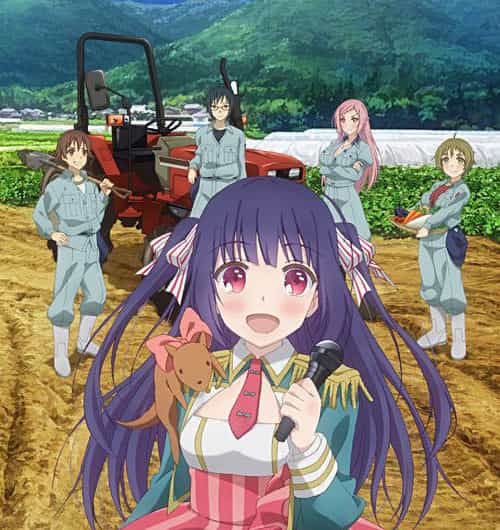
"Nourin" (also known as "Silver Spoon" in some contexts) is a comedic slice-of-life anime set in an agricultural high school, blending humor, romance, and lighthearted drama. The story centers on Kōsaku Hata, a former idol who, after a public scandal, retreats to the countryside to attend Oezo Agricultural High School under the alias Kinoshita Ringo. Hata’s decision to leave the bustling city life behind is driven by a desire to escape the pressures of fame and start anew in a rural environment.
At Oezo Agricultural High School, Hata encounters a diverse group of classmates, each with their own quirks and aspirations tied to agriculture. Among them is Minori Nakazawa, a cheerful and hardworking girl who becomes one of Hata’s closest friends. Nakazawa’s straightforward and earnest personality contrasts with Hata’s initial reluctance to embrace farm life, creating a dynamic that fuels much of the series’ humor and character development. Another key character is Kei Kamatori, a stoic and skilled farmer who often serves as a foil to Hata’s inexperience and urban background.
The narrative explores Hata’s gradual adaptation to rural life, highlighting the challenges and rewards of agricultural work. From tending to livestock to participating in school festivals, the series provides a detailed and often humorous look at the daily routines of students in an agricultural setting. Hata’s interactions with his classmates and teachers reveal the importance of community, perseverance, and finding purpose in unexpected places.
Romantic subplots are woven into the story, particularly through Hata’s growing feelings for Nakazawa and the occasional misunderstandings that arise from his secret identity. The series balances these elements with comedic situations, such as Hata’s struggles with farm chores and his attempts to maintain his disguise. The humor often stems from the clash between Hata’s urban sensibilities and the realities of rural life, as well as the eccentric personalities of his peers.
Throughout the series, themes of self-discovery and resilience are prominent. Hata’s journey from a disillusioned former idol to a more grounded and self-assured individual is central to the narrative. The anime also emphasizes the value of hard work and the importance of embracing one’s circumstances, even when they differ from initial expectations. The agricultural setting serves as both a backdrop and a metaphor for growth, both literal and metaphorical, as the characters navigate their personal and academic lives.
"Nourin" stands out for its unique premise, blending the often-overlooked world of agricultural education with comedic and heartfelt storytelling. The series offers a lighthearted yet insightful exploration of rural life, friendship, and personal growth, making it a distinctive entry in the slice-of-life genre.
At Oezo Agricultural High School, Hata encounters a diverse group of classmates, each with their own quirks and aspirations tied to agriculture. Among them is Minori Nakazawa, a cheerful and hardworking girl who becomes one of Hata’s closest friends. Nakazawa’s straightforward and earnest personality contrasts with Hata’s initial reluctance to embrace farm life, creating a dynamic that fuels much of the series’ humor and character development. Another key character is Kei Kamatori, a stoic and skilled farmer who often serves as a foil to Hata’s inexperience and urban background.
The narrative explores Hata’s gradual adaptation to rural life, highlighting the challenges and rewards of agricultural work. From tending to livestock to participating in school festivals, the series provides a detailed and often humorous look at the daily routines of students in an agricultural setting. Hata’s interactions with his classmates and teachers reveal the importance of community, perseverance, and finding purpose in unexpected places.
Romantic subplots are woven into the story, particularly through Hata’s growing feelings for Nakazawa and the occasional misunderstandings that arise from his secret identity. The series balances these elements with comedic situations, such as Hata’s struggles with farm chores and his attempts to maintain his disguise. The humor often stems from the clash between Hata’s urban sensibilities and the realities of rural life, as well as the eccentric personalities of his peers.
Throughout the series, themes of self-discovery and resilience are prominent. Hata’s journey from a disillusioned former idol to a more grounded and self-assured individual is central to the narrative. The anime also emphasizes the value of hard work and the importance of embracing one’s circumstances, even when they differ from initial expectations. The agricultural setting serves as both a backdrop and a metaphor for growth, both literal and metaphorical, as the characters navigate their personal and academic lives.
"Nourin" stands out for its unique premise, blending the often-overlooked world of agricultural education with comedic and heartfelt storytelling. The series offers a lighthearted yet insightful exploration of rural life, friendship, and personal growth, making it a distinctive entry in the slice-of-life genre.
Episodes
Staffel 1
1厨脳ラブストーリー
Kousaku Hata watches the retirement announcement of pop idol Yuka Kusakabe,known as Yukatan. The news devastates him, and he stops attending his agricultural school classes. His friend Minori Nakazawa and classmate Kei Kamuro convince him to return after days of isolation. Kousaku drags himself back to school expecting nothing. A new transfer student, Ringo Kinoshita, enters the classroom. Ringo bears an exact resemblance to the retired idol Yukatan. Kousaku recognizes her immediately, but Ringo denies any connection. The teacher assigns Kousaku to guide Ringo around the school's farming facilities. Kousaku shows Ringo the livestock barns, crop fields, and agricultural equipment. Ringo fails at basic farm tasks, revealing her urban upbringing. Minori watches Kousaku's enthusiastic assistance and grows visibly jealous. Ringo privately acknowledges she is the former idol but decides to keep her identity hidden. Kousaku resolves to discover why Yukatan abandoned her singing career for agriculture. Minori decides to compete with Ringo for Kousaku's attention, setting up a romantic rivalry at the agricultural school.
2King of Farmers
The episode opens with teacher Bekki parodying the interrogation scene from Basic Instinct. Kei Kamatori then delivers a lengthy speech arguing that panties exist in the heart. Minori Nakazawa removes her own underwear despite wearing pants and offers it to Kousaku Hata. Ringo Kinoshita observes these events with silent disapproval and visible disgust. Kousaku reacts with exaggerated shock when an arrow of light metaphorically pierces his chest. The comedy sequence includes visual parodies of Death Note and Bleach. Ringo's cold demeanor establishes her as a contrasting presence to Minori's forward behavior toward Kousaku. The male characters' obsession with underwear clashes directly with Ringo's unimpressed reactions. By the end of the episode,Ringo shows awareness that Kousaku had been sending her vegetables and letters before she transferred. The rivalry between Minori and Ringo for Kousaku's attention becomes more explicit. The episode closes with Ringo's unresolved tension toward Kousaku, setting up further romantic conflict.
3Super Sub-Mom War: Training Stage
Minori Nakazawa challenges Ringo Kinoshita to a series of farming contests. She aims to embarrass the former idol and force her return to Tokyo. Minori sets three agricultural-themed trials for Ringo to complete. The first task requires practical farming skills unfamiliar to someone from an urban background. The characters discuss the tasks for most of the episode's duration instead of performing them. Kei and Kousaku observe the competition from the sidelines. Minori's jealousy over Kousaku's attention to Ringo fuels her aggressive behavior. Ringo attempts each challenge despite lacking formal agricultural training. The episode shows minimal actual farm labor on screen. The dialogue between the characters drives the conflict forward rather than physical action. The competition concludes without a clear winner. Ringo remains enrolled at the agricultural school after completing the trials,leaving Minori's goal unfulfilled and their rivalry unresolved.
4Episode 4
A wild monkey enters one of the school's fields and destroys the crops. The students gather to assess the damage and discuss how to stop further attacks. Kousaku and his classmates must agree on a single countermeasure. Several students propose aggressive solutions,including traps or hunting the animal. Others argue for non-lethal methods to drive the monkey away without harming it. The debate becomes increasingly heated as each side refuses to compromise. Ringo observes the disagreement without immediately taking a side. The episode shows the practical difficulties of pest control on a working farm. No quick or easy solution emerges from the group discussion. The conflict forces the class to balance agricultural efficiency against ethical concerns. The episode ends with the monkey threat still unresolved and tensions among the students unresolved.
6Full-Moe Alchemist: Bounty
The students of the agricultural school launch a plan to capitalize on the 'moe foods' trend. One of the Farming Top Four members encourages the class to pursue this marketing strategy. The group attempts to create agricultural products that appeal through cute or attractive presentation. Their efforts quickly escalate into increasingly absurd directions. Each new idea builds on the previous one,pushing the concept of moe farther from practical farming. The characters invest significant energy and resources into transforming ordinary crops into novelty items. Conflicts arise as the plan strays further from efficient food production. The episode shows the students neglecting basic agricultural tasks in favor of aesthetic gimmicks. Their enthusiasm for the moe approach overrides practical considerations about cost and yield. The class faces mounting complications from their own overcomplicated schemes. The episode concludes with the group failing to achieve their original marketing goals, leaving the farm in disarray.
12Everybody's No-Rin
The Aioi Village Mixer event begins with the community coming together to boost local morale and population. Kousaku and Minori agree to a staged marriage proposal as the mixer's grand finale to attract attention and revitalize the declining rural area. Ringo reacts to the arrangement with visible jealousy but does not directly confront Kousaku about her feelings. Becky,the homeroom teacher, attempts to sabotage the event using guilt tactics and blackmail to prevent Kousaku from going through with the plan. Despite the interference, the mixer proceeds, and the finale arrives with the crowd expecting Kousaku and Minori to announce their engagement. At the critical moment, Kousaku hesitates and does not propose, leaving the relationship status between him and Minori unresolved. Ringo uses the occasion to perform an acapella version of the idol song she once sang as Yuka Kusakabe, delivering it specifically for Kousaku rather than an audience. The performance marks Ringo's first time singing publicly since retiring from her idol career and signals her emotional recovery. Kousaku reflects on his childhood memories with Minori in Aioi Village, clarifying why he feels indebted to her and the community. The episode closes with the love triangle between Kousaku, Ringo, and Minori still active, and no character has secured a definitive romantic victory.
Music
Ending
Ep. 2, 5-7, 9
“Mogitate Fruit Girls (も・ぎ・た・て♥フルーツガールズ;Fresh-Picked Fruit Girls)”
“Cordless Tere PHONE (コードレス☆照れ☆PHONE;Cordless Blushing Telephone)”
“Himitsu no Tobira Kara Ai ni Kite (秘密の扉から会いにきて;Come and Visit Me From the Secret Door)”
“Kimi*to*New*Day♡ (君と*にゅう*DAY♡;A New Day With You)”
“Minori no Zokkon Mirai Yohō (みのりのぞっこん未来予報;Minori's Complete Future Forecast)”
“Ponytail no Yon Juu (ポニーテールの四十;A Ponytailed 40-Year Old)”