
Movie
Description
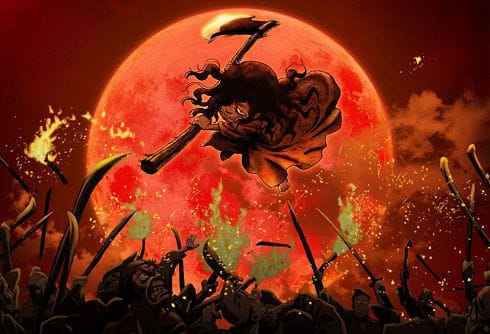
"Asura" is a dark and intense anime series that delves into themes of survival, morality, and the human condition in a harsh, unforgiving world. Set in a war-torn feudal Japan plagued by famine and despair, the story centers on a young boy named Asura, who is born into a world of extreme suffering. Abandoned by his mother shortly after birth, Asura is left to fend for himself in the wilderness, where he survives by any means necessary, including resorting to cannibalism. His feral existence is marked by violence and primal instincts, earning him the reputation of a demon among the villagers.
Asura's life takes a turn when he encounters a compassionate Buddhist monk named Wakasa, who attempts to guide him toward a path of redemption and humanity. Wakasa's teachings challenge Asura's brutal worldview, introducing him to concepts of empathy, morality, and the value of human life. However, Asura's struggle to reconcile his violent nature with these newfound ideals is fraught with internal and external conflicts. The harsh realities of the world, including the constant threat of starvation and the cruelty of others, continually test his resolve.
The narrative explores the cyclical nature of violence and the difficulty of breaking free from one's instincts and upbringing. Asura's journey is intertwined with the lives of other characters, such as his estranged mother, who abandoned him out of desperation, and a young girl named Wakasa, who represents innocence and hope in a world dominated by suffering. The series does not shy away from depicting the brutal realities of its setting, portraying the moral ambiguities faced by its characters as they navigate survival in a world devoid of mercy.
Through its unflinching portrayal of human suffering and the struggle for redemption, "Asura" presents a thought-provoking examination of the thin line between humanity and savagery. The series is driven by its complex characters, whose actions and decisions are shaped by their circumstances, and its exploration of themes such as survival, morality, and the possibility of change in the face of overwhelming adversity.
Asura's life takes a turn when he encounters a compassionate Buddhist monk named Wakasa, who attempts to guide him toward a path of redemption and humanity. Wakasa's teachings challenge Asura's brutal worldview, introducing him to concepts of empathy, morality, and the value of human life. However, Asura's struggle to reconcile his violent nature with these newfound ideals is fraught with internal and external conflicts. The harsh realities of the world, including the constant threat of starvation and the cruelty of others, continually test his resolve.
The narrative explores the cyclical nature of violence and the difficulty of breaking free from one's instincts and upbringing. Asura's journey is intertwined with the lives of other characters, such as his estranged mother, who abandoned him out of desperation, and a young girl named Wakasa, who represents innocence and hope in a world dominated by suffering. The series does not shy away from depicting the brutal realities of its setting, portraying the moral ambiguities faced by its characters as they navigate survival in a world devoid of mercy.
Through its unflinching portrayal of human suffering and the struggle for redemption, "Asura" presents a thought-provoking examination of the thin line between humanity and savagery. The series is driven by its complex characters, whose actions and decisions are shaped by their circumstances, and its exploration of themes such as survival, morality, and the possibility of change in the face of overwhelming adversity.
Cast
- Wakasa
- Shichirou
- Kinya Kitaōji
- Lord of the Land
Comment(s)
Staff
- DirectorKeiichi Satō
- StoryboardKeiichi SatōKōzō MorishitaTakuya Wada
- Original creator
- Art DirectorHiroshi KatōHirotsugu Kakoi
- Sound DirectorYukio Nagasaki
- Executive producerKazumi KawashiroTakehiko AokiNaoya KinoshitaTakashi Ōya
- ScreenplayIkuko Takahashi
- MusicYoshihiro IkeSusumu UedaNorihito Sumitomo
- Character DesignYukitoshi Hōtani
- Animation DirectorShūichi Kaneko
- Cgi DirectorNobuhiro Morita
- ProducerYoshiyuki Ikezawa
Production
- Animation ProductionToei Animation
- ProductionToei AnimationAsura Production Committee
Relations
Manga overview