
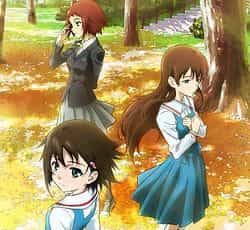
TV-Series
Description
"True Tears" is a romantic drama anime that explores the complexities of relationships, emotions, and personal growth. The story centers around Shinichiro Nakagami, a high school student with a passion for drawing, who lives with his mother and the enigmatic Hiromi Yuasa, a childhood friend who moved in after her father's death. Hiromi's reserved demeanor and emotional distance create tension in their household, as Shinichiro struggles to understand her feelings and his own.
At school, Shinichiro becomes involved with Noe Isurugi, a quirky and free-spirited girl who believes she has lost the ability to cry. Noe's eccentric behavior and her fascination with chickens, which she keeps at her family's farm, draw Shinichiro into her world. As their friendship deepens, Noe encourages Shinichiro to confront his emotions and express them through his art. Meanwhile, Shinichiro's childhood friend, Aiko Ando, harbors unspoken feelings for him, adding another layer of emotional complexity to the narrative.
The series delves into the intertwined lives of these characters, examining their struggles with love, identity, and familial expectations. Hiromi's past and her relationship with Shinichiro's family are gradually revealed, shedding light on her emotional barriers. Noe's quest to rediscover her tears becomes a metaphor for her journey toward emotional healing, while Aiko's unrequited love forces her to confront her own vulnerabilities.
As the story progresses, misunderstandings, jealousy, and unresolved feelings create tension among the characters. Shinichiro finds himself torn between his growing affection for Noe, his complicated bond with Hiromi, and his awareness of Aiko's feelings. The narrative builds toward a poignant resolution, as each character must make difficult choices and come to terms with their emotions.
"True Tears" is characterized by its realistic portrayal of teenage relationships and its emphasis on emotional authenticity. The series avoids melodrama, instead focusing on subtle character development and the gradual unfolding of its central conflicts. Through its exploration of love, loss, and self-discovery, "True Tears" offers a thoughtful and introspective take on the romantic drama genre.
At school, Shinichiro becomes involved with Noe Isurugi, a quirky and free-spirited girl who believes she has lost the ability to cry. Noe's eccentric behavior and her fascination with chickens, which she keeps at her family's farm, draw Shinichiro into her world. As their friendship deepens, Noe encourages Shinichiro to confront his emotions and express them through his art. Meanwhile, Shinichiro's childhood friend, Aiko Ando, harbors unspoken feelings for him, adding another layer of emotional complexity to the narrative.
The series delves into the intertwined lives of these characters, examining their struggles with love, identity, and familial expectations. Hiromi's past and her relationship with Shinichiro's family are gradually revealed, shedding light on her emotional barriers. Noe's quest to rediscover her tears becomes a metaphor for her journey toward emotional healing, while Aiko's unrequited love forces her to confront her own vulnerabilities.
As the story progresses, misunderstandings, jealousy, and unresolved feelings create tension among the characters. Shinichiro finds himself torn between his growing affection for Noe, his complicated bond with Hiromi, and his awareness of Aiko's feelings. The narrative builds toward a poignant resolution, as each character must make difficult choices and come to terms with their emotions.
"True Tears" is characterized by its realistic portrayal of teenage relationships and its emphasis on emotional authenticity. The series avoids melodrama, instead focusing on subtle character development and the gradual unfolding of its central conflicts. Through its exploration of love, loss, and self-discovery, "True Tears" offers a thoughtful and introspective take on the romantic drama genre.
Episodes
Staffel 1
1Because I Gave My Tears Away
2What Do I Want To Do...
3How Did That Day's Conversation Turn Out?
4OK, Splashy Splash
5A Meddlesome Guy Is Like A Fool
6What Kind Of Joke Is That?
7Say it Clearly, Write it Here
8A Town Where It Isn't Snowing
9Can't Really Fly Huh...
10Because I'll Do Everything Properly
11The One You Like Isn't Me
12From My Eyes That Don't See Anything
13Your Tears
Cast
- Shinichirō's father
- Shinichirō Nakagami
- Tomoyo Kurobe
Comment(s)
Staff
- DirectorJunji Nishimura
- Script
- Episode DirectorJunji NishimuraMasahiro AndōYoshiyuki AsaiTomoaki OhtaShinya KawatsuraJong Heo
- Original Character DesignYumehito Ueda
- Art DirectorYūsuke TakedaSatoko Shinohara
- Animation DirectorKanami SekiguchiTatsuya OkaKatsumi IkedaKōsuke KawazuraYuuko YoshidaJae Sun HeoYun Hee KwonJong-Hak KimMisaki Suzuki
- Sound DirectorKazuhiro Wakabayashi
- ProducerKenji Horikawa
- Series Composition
- StoryboardJunji NishimuraMasahiro AndōHideyo YamamotoShinya Kawatsura
- MusicHajime Kikuchi
- Character DesignKanami Sekiguchi
- Chief Animation DirectorKanami Sekiguchi
- 3D DirectorYoshimasa Yamazaki
- Director of PhotographyTōru Fukushi
Production
- Animation ProductionP.A. Works
- ProductionBandai Visual
Relations
Recommendations based on shared tags.
Music
Insert songs