
TV-Series
Description
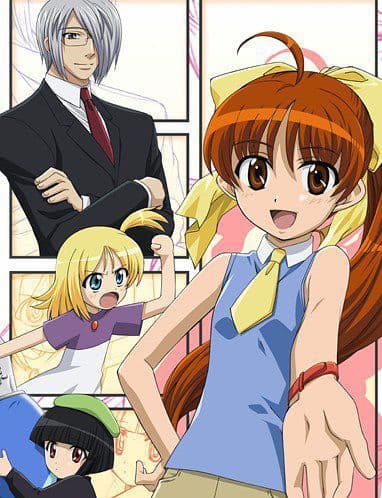
"Dojin Work" centers around Najimi Osana, a high school girl who stumbles into the world of creating and selling doujinshi, or self-published works, after a chance encounter with her classmate Tsuyoshi. Initially, Najimi is unaware of the concept of doujinshi, but Tsuyoshi introduces her to the subculture, sparking her curiosity. Despite her lack of artistic talent, Najimi decides to create her own doujinshi, driven by the potential to earn money and the allure of the creative process.
The series follows Najimi as she navigates the challenges of producing her first doujinshi, from brainstorming ideas to dealing with the technical aspects of printing and distribution. Along the way, she encounters various characters who are deeply involved in the doujinshi scene, including her friend Kousaka, who becomes her partner in the endeavor. Kousaka, a talented artist, complements Najimi’s enthusiasm with her skills, though their collaboration is often fraught with comedic misunderstandings and mishaps.
As Najimi delves deeper into the world of doujinshi, she attends conventions, interacts with other creators, and learns about the competitive and often chaotic nature of the industry. The series highlights the dedication and passion required to succeed in this niche field, as well as the camaraderie and rivalries that develop among creators. Najimi’s journey is marked by both successes and failures, providing a humorous yet insightful look into the challenges of self-publishing.
The narrative also explores the personal dynamics between the characters, particularly Najimi’s evolving relationships with Tsuyoshi and Kousaka. Tsuyoshi, who initially serves as a mentor figure, often finds himself exasperated by Najimi’s naivety and impulsiveness, while Kousaka’s more reserved personality contrasts with Najimi’s energetic approach. These interactions add depth to the story, balancing the comedic elements with moments of genuine character development.
Throughout the series, "Dojin Work" maintains a lighthearted tone, using humor to depict the trials and tribulations of creating doujinshi. The story provides a glimpse into a unique subculture, offering both entertainment and a degree of educational insight into the world of self-publishing. The characters’ experiences reflect the broader themes of creativity, perseverance, and the pursuit of one’s passions, making the series relatable to anyone who has ever embarked on a creative endeavor.
The series follows Najimi as she navigates the challenges of producing her first doujinshi, from brainstorming ideas to dealing with the technical aspects of printing and distribution. Along the way, she encounters various characters who are deeply involved in the doujinshi scene, including her friend Kousaka, who becomes her partner in the endeavor. Kousaka, a talented artist, complements Najimi’s enthusiasm with her skills, though their collaboration is often fraught with comedic misunderstandings and mishaps.
As Najimi delves deeper into the world of doujinshi, she attends conventions, interacts with other creators, and learns about the competitive and often chaotic nature of the industry. The series highlights the dedication and passion required to succeed in this niche field, as well as the camaraderie and rivalries that develop among creators. Najimi’s journey is marked by both successes and failures, providing a humorous yet insightful look into the challenges of self-publishing.
The narrative also explores the personal dynamics between the characters, particularly Najimi’s evolving relationships with Tsuyoshi and Kousaka. Tsuyoshi, who initially serves as a mentor figure, often finds himself exasperated by Najimi’s naivety and impulsiveness, while Kousaka’s more reserved personality contrasts with Najimi’s energetic approach. These interactions add depth to the story, balancing the comedic elements with moments of genuine character development.
Throughout the series, "Dojin Work" maintains a lighthearted tone, using humor to depict the trials and tribulations of creating doujinshi. The story provides a glimpse into a unique subculture, offering both entertainment and a degree of educational insight into the world of self-publishing. The characters’ experiences reflect the broader themes of creativity, perseverance, and the pursuit of one’s passions, making the series relatable to anyone who has ever embarked on a creative endeavor.
Episodes
Staffel 1
1Her First XXX
2The Naked Young Lady
3I'm... Barely Legal?
4Please Stop, Master!
5Lets Do It Together ♥
6I'll Wash First ♥
7The Scent Of A Truly Magnificent BaLa
8Everyone Is Watching
9Something Will Slip Out! Doujin Competition
10Look at What It Has Become
11Najimi's Flying Away
12I Want to Keep Doing It, I Want to Do It More
Cast
Comment(s)
Staff
- DirectorKenichi Yatagai
- ScriptRei Kunii
- Unit DirectorKazunori MizunoTakao YotsujiYorifusa YamaguchiMasahiro OkamuraToshihiro IshikawaFujiaki AsariKei Umabiki
- Original creator
- Art DirectorSaho Yamane
- Sound Director
- ProducerHiroshi TsukamotoYoshihiro IkedaTakeshi Shinohara
- Series CompositionRei Kunii
- Storyboard
- MusicKazumi MitomeKazuo Yoda
- Character DesignIkutomo Kimishima
- Animation DirectorAtsushi AonoSatoru KiyomaruEtsushi MoriNaoyuki OwadaHaruo ŌgawaraNaruse TakahashiMasakazu SaitōNatsuki EgamiMasaya TanakaIkutomo KimishimaMayumi Furuse
- Director of PhotographyYūta Nakamura
Production
- Animation ProductionREMIC
Relations
Recommendations based on shared tags.


Music
Opening