
TV-Series
Description
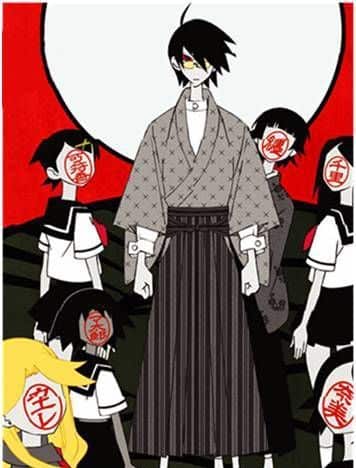
"Zoku Sayonara Zetsubō Sensei" is the second season of the anime adaptation of Kōji Kumeta's manga series. The series continues to revolve around Nozomu Itoshiki, a high school teacher with an overwhelmingly pessimistic outlook on life, who frequently contemplates suicide. His class is filled with eccentric students, each embodying unique quirks and societal critiques. The narrative structure remains episodic, with each episode delving into the absurdities of modern life, often through surreal humor and satirical commentary.
Nozomu's interactions with his students serve as the primary vehicle for exploring themes such as existential despair, societal norms, and human behavior. Key students include Kiri Komori, a hikikomori who refuses to leave her home; Abiru Kobushi, who hides her face behind a mask; and Chiri Kitsu, a perfectionist with a dual personality. These characters, along with others, represent exaggerated archetypes that highlight various facets of contemporary culture and personal struggles.
The plot does not follow a linear progression but instead presents a series of vignettes, often breaking the fourth wall and incorporating meta-humor. The series frequently employs wordplay, visual gags, and cultural references, making it dense with layered jokes that may require familiarity with Japanese language and society to fully appreciate. Despite its comedic tone, the underlying narrative consistently returns to Nozomu's existential musings, creating a balance between humor and philosophical reflection.
"Zoku Sayonara Zetsubō Sensei" maintains the distinctive visual style of its predecessor, characterized by minimalist backgrounds and exaggerated character designs. The dialogue-driven storytelling is complemented by rapid-fire jokes and recurring motifs, such as Nozomu's signature despair-filled catchphrases and the recurring appearance of his cheerful twin brother, who serves as a foil to his pessimism. The series continues to challenge conventional storytelling, blending comedy with existential themes in a way that remains both thought-provoking and entertaining.
Nozomu's interactions with his students serve as the primary vehicle for exploring themes such as existential despair, societal norms, and human behavior. Key students include Kiri Komori, a hikikomori who refuses to leave her home; Abiru Kobushi, who hides her face behind a mask; and Chiri Kitsu, a perfectionist with a dual personality. These characters, along with others, represent exaggerated archetypes that highlight various facets of contemporary culture and personal struggles.
The plot does not follow a linear progression but instead presents a series of vignettes, often breaking the fourth wall and incorporating meta-humor. The series frequently employs wordplay, visual gags, and cultural references, making it dense with layered jokes that may require familiarity with Japanese language and society to fully appreciate. Despite its comedic tone, the underlying narrative consistently returns to Nozomu's existential musings, creating a balance between humor and philosophical reflection.
"Zoku Sayonara Zetsubō Sensei" maintains the distinctive visual style of its predecessor, characterized by minimalist backgrounds and exaggerated character designs. The dialogue-driven storytelling is complemented by rapid-fire jokes and recurring motifs, such as Nozomu's signature despair-filled catchphrases and the recurring appearance of his cheerful twin brother, who serves as a foil to his pessimism. The series continues to challenge conventional storytelling, blending comedy with existential themes in a way that remains both thought-provoking and entertaining.
Comment(s)
No entries available.
Relations
Anime overview
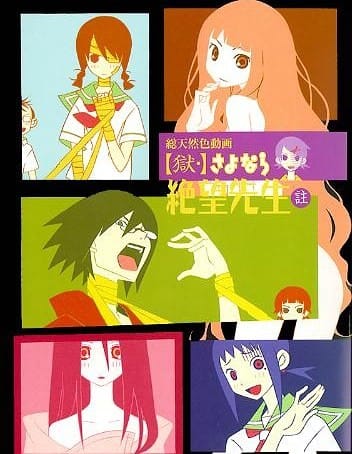
Music
Opening
- ?“"Lyricure Go Go! (リリキュアGOGO!) "” - Ai Nonaka, Marina Inoue and Ryōko Shintani (ep 7)
Ending
- 1-4“"Koiji Romanesque (恋路ロマネスク)"” - Zetsubō Shōjo-tachi
- 5-12“"Marionette (マリオネット)"” - ROLLY and Zetsubō Shōjo-tachi
- ?“"Omamori (オマモリ)"” - Ai Nonaka, Marina Inoue, Yu Kobayashi and Ryoko Shintani (ep 13)