

TV-Series
Description
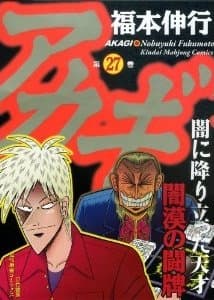
"Akagi" is a psychological thriller anime centered around the high-stakes world of mahjong, adapted from the manga by Nobuyuki Fukumoto. The series begins in 1958 post-war Japan, where a young, enigmatic boy named Shigeru Akagi stumbles into a dangerous yakuza-run mahjong parlor. Despite his apparent inexperience, Akagi displays an extraordinary talent for the game, coupled with an unshakable calmness and strategic brilliance. His arrival disrupts the parlor's operations, and he quickly becomes entangled in a high-stakes match against Nangou, a seasoned gambler deeply in debt to the yakuza. Akagi's victory not only saves Nangou's life but also establishes him as a prodigious figure in the underground mahjong scene.
The narrative progresses as Akagi navigates the perilous world of illegal gambling, where every match carries life-or-death consequences. His opponents are often hardened criminals or professional gamblers, each with their own unique styles and psychological tactics. Akagi's approach to mahjong is unconventional and ruthless, relying on intuition, risk-taking, and an almost supernatural ability to read his opponents. His cold, calculating demeanor and willingness to gamble everything, including his life, set him apart from others in the gambling underworld.
One of the central arcs involves Akagi's confrontation with Washizu Iwao, a wealthy and powerful figure who hosts a deadly mahjong game in his secluded mansion. The Washizu mahjong variant introduces unique rules, such as the use of transparent tiles, which heighten the psychological tension. Akagi's battle against Washizu becomes a test of endurance, strategy, and nerve, as both players push the limits of their skills and sanity. The series delves deeply into the psychological warfare between the characters, emphasizing the mental and emotional toll of high-stakes gambling.
Throughout the series, Akagi's past remains shrouded in mystery, with only brief glimpses into his background. His motivations and origins are left ambiguous, adding to his enigmatic persona. Supporting characters, such as Yagi, a yakuza member who becomes Akagi's ally, and other gamblers, provide context and contrast to Akagi's relentless drive and unorthodox methods. The anime maintains a tense, suspenseful atmosphere, with each mahjong match serving as a battleground for wits, strategy, and survival.
"Akagi" is notable for its intricate portrayal of mahjong as a psychological and strategic endeavor, rather than a mere game of chance. The series explores themes of risk, fate, and the human psyche, using the game as a vehicle to examine the extremes of human behavior under pressure. The narrative's focus on tension and psychological depth, combined with its unique premise, makes it a distinctive entry in the gambling anime genre.
The narrative progresses as Akagi navigates the perilous world of illegal gambling, where every match carries life-or-death consequences. His opponents are often hardened criminals or professional gamblers, each with their own unique styles and psychological tactics. Akagi's approach to mahjong is unconventional and ruthless, relying on intuition, risk-taking, and an almost supernatural ability to read his opponents. His cold, calculating demeanor and willingness to gamble everything, including his life, set him apart from others in the gambling underworld.
One of the central arcs involves Akagi's confrontation with Washizu Iwao, a wealthy and powerful figure who hosts a deadly mahjong game in his secluded mansion. The Washizu mahjong variant introduces unique rules, such as the use of transparent tiles, which heighten the psychological tension. Akagi's battle against Washizu becomes a test of endurance, strategy, and nerve, as both players push the limits of their skills and sanity. The series delves deeply into the psychological warfare between the characters, emphasizing the mental and emotional toll of high-stakes gambling.
Throughout the series, Akagi's past remains shrouded in mystery, with only brief glimpses into his background. His motivations and origins are left ambiguous, adding to his enigmatic persona. Supporting characters, such as Yagi, a yakuza member who becomes Akagi's ally, and other gamblers, provide context and contrast to Akagi's relentless drive and unorthodox methods. The anime maintains a tense, suspenseful atmosphere, with each mahjong match serving as a battleground for wits, strategy, and survival.
"Akagi" is notable for its intricate portrayal of mahjong as a psychological and strategic endeavor, rather than a mere game of chance. The series explores themes of risk, fate, and the human psyche, using the game as a vehicle to examine the extremes of human behavior under pressure. The narrative's focus on tension and psychological depth, combined with its unique premise, makes it a distinctive entry in the gambling anime genre.
Episodes
Staffel 1
1Episode 1
A young man named Akagi Shigeru wanders into a yakuza-run mahjong parlor after a rainstorm. He observes a high-stakes game between a man deep in debt and the yakuza enforcer Nangou. Akagi deduces that Nangou has been using a marked deck to ensure the debtor loses every hand. Without any money of his own,Akagi sits at the table and offers his own life as collateral to replace the losing player. He deliberately loses the first few hands to gauge Nangou’s cheating method. Akagi then exposes the marked cards and forces Nangou to play with a clean deck. He begins winning with perfect calls and aggressive discards, turning the game against the enforcer. Nangou’s composure cracks as Akagi’s unnatural calm and precise calculations dismantle his advantage. The yakuza observers shift from mocking to tense silence, realizing Akagi plays without fear of death. By the final hand, Akagi has placed Nangou in a position where losing will cost him his own life. Akagi declares he will win with a specific tile, raising the stakes to a direct confrontation of nerve. The episode ends with Akagi about to draw the decisive tile, leaving the outcome and the full scope of his gambit unresolved.
2Illusion
Akagi sits at the mahjong table in the yakuza’s basement,facing Nango, a professional player hired to defeat him. The yakuza boss Yagi oversees the match, with Akagi’s life as collateral for the escalating bets. Akagi loses the first hand deliberately, sacrificing a large number of points to gauge Nango’s patterns. Nango responds with a conservative style, discarding tiles that minimize Akagi’s offensive options. Akagi adapts by pushing aggressive calls, forcing Nango to abandon his defensive approach. He identifies Nango’s weakness in handling risky hands and exploits it with a precise declaration of a single tile. Yagi’s confidence wavers as Akagi’s strategy shifts the momentum of the game. The episode ends with Akagi setting a trap that leaves Nango with no safe discards, the outcome dependent on Nango’s next move. The stakes intensify as the match approaches a final hand where one decision will determine Akagi’s fate.
3The Strategy of the Maverick
4The Betrayal of a Genuine Thing
5The Treacherous Tse Ii Men
6詐欺の才覚
Akagi continues the mahjong match against Nangō in the underground parlor. Nangō attempts a concealed tile swap to regain control,but Akagi catches the movement without visible reaction. Akagi deliberately exposes his own cheating technique by sliding a tile from his sleeve, letting Nangō witness the act. Nangō’s confidence fractures as he realizes his opponent operates on a level beyond simple deception. Akagi calls a kan on a discarded tile, altering the dead wall and locking Nangō into a defensive position. Nangō hesitates on every discard, second-guessing his reads and falling into Akagi’s tempo. When Nangō finally discards a safe-looking tile, Akagi declares ron with a closed wait that Nangō never calculated. The hand costs Nangō nearly all his remaining chips, leaving him physically slumped over the table. Nangō’s thoughts drift to his former career as a professional player, contrasting past glory with his current helplessness. Akagi coldly insists the match continue, showing no interest in Nangō’s internal collapse. Before the next hand begins, a messenger from Washizu Iwao enters, offering a far larger stakes game that ties Washizu’s organization directly to the outcome. Akagi accepts without pause, turning the focus from Nangō’s defeat toward the imminent confrontation with Washizu’s network.
7肖像
Akagi declares riichi on the first draw,forcing Yagi into a defensive fold. Yagi discards safe tiles repeatedly, avoiding any direct confrontation. Akagi breaks his own riichi, discarding a seemingly dangerous tile to lure Yagi out of caution. Yagi interprets the move as a mistake and shifts to an aggressive attack. Akagi reveals a closed kan that opens a thirteen‑orphans wait, a hand structure Yagi never considered. Yagi deals the final tile that completes Akagi’s hand, ending the match in a single devastating loss. Yagi’s composure shatters as he understands he was maneuvered into the losing play from the start. The yakuza overseeing the match confirm the debt Yagi now holds, solidifying Akagi’s reputation. Akagi shows no reaction to the win and immediately turns his attention away from the table. The episode closes with the Superintendent arriving at the venue, signaling his intent to measure Akagi for a far larger confrontation.
8Shigai
Akagi draws a hand that would complete a closed mangan win against Washizu but discards the winning tile,choosing to fold instead. Washizu watches Akagi’s deliberate avoidance of victory and demands an explanation, his frustration surfacing. The match uses Washizu’s own blood as points, with each 1,000 points costing one milliliter of blood from his body. Akagi’s blood loss has reached 1,300 milliliters, a level that brings him close to collapse. By refusing to win, Akagi prolongs the game, forcing Washizu to remain in a high-stakes psychological battle. Nangō observes that Akagi’s intent is not merely to win hands but to erode Washizu’s mental fortitude. Washizu attempts to set a trap by discarding a tile that would give Akagi an apparent winning opportunity, but Akagi reads the bait and discards safely. Akagi shifts his focus to draining Washizu’s blood supply, calculating that Washizu’s physical endurance will give out first. When Akagi finally declares a win, the hand costs Washizu 1,500 milliliters of blood, a loss that pushes Washizu past the point of half his original volume. Washizu’s hands tremble as he realizes Akagi has been targeting his stamina rather than accumulating points. The episode closes with Washizu confronting the possibility that his own blood will run out before he can force Akagi into a fatal mistake.
9必殺
Akagi sits across from Urabe in the underground mahjong parlor,the stakes raised to a life-or-death limit after the previous round’s loss. Urabe declares his intent to finish the match with a single killing hand, relying on a defensive wait that has ended every opponent before Akagi. He discards a red five tile, a deliberate signal meant to bait Akagi into a trap. Akagi ignores the bait and instead calls riichi on a hand built around isolated honors, forcing Urabe to abandon his planned draw. Urabe abandons his original wait and switches to a faster tenpai, but Akagi immediately shifts his own hand to target the exact tile Urabe now needs. Urabe draws the tile he requires but hesitates, recognizing that Akagi’s discard pattern leaves no safe tile. He discards a different tile and deals into Akagi’s hand, losing the round and the full amount of the match’s wager. Urabe’s subordinates move to enforce the loss, demanding he pay with his fingers. Akagi intervenes, demanding the yakuza syndicate allow Urabe to continue playing instead, revealing that the match was never about money but about forcing the syndicate to gamble their own authority. The syndicate’s leadership agrees to a final continuation round, with Akagi now facing the organization’s true champion in a fresh match that doubles the previous stakes.
10Yami no Seigi
Akagi sits opposite Urabe in the yakuza’s backroom mahjong parlor,surrounded by Urabe’s men. The game’s stakes have risen to include cash and the freedom of a captured associate. Urabe, confident from years of gambling against desperate men, pushes his advantage with aggressive calls and verbal taunts. Akagi remains motionless, his eyes tracking every discarded tile while he builds a hand with no apparent pattern. Urabe declares a riichi early in the round, betting that his experience will force Akagi into a defensive fold. Akagi ignores the pressure and declares his own riichi on a hand that waits on a tile Urabe has already discarded once. Urabe calculates the odds and determines that Akagi’s wait cannot be dangerous, so he continues to draw and discard aggressively. He discards the exact tile Akagi needs, losing the hand and a large portion of his chips. Urabe’s hands tremble as he realizes Akagi had read his tendencies and set the trap from the start. The yakuza subordinates exchange uneasy glances, their faith in their boss shaking. Akagi quietly raises the wager, demanding that Urabe put up his entire wealth or forfeit the match. Urabe, cornered, accepts the bet, knowing that one more loss will strip him of everything.
11Episode 11
Akagi enters the underground mahjong parlor owned by Washizu Iwao. Washizu proposes a game with transparent tiles,allowing both players to see every discarded tile and the remaining wall. The stakes tie Washizu’s entire fortune to Akagi’s life if he loses. Akagi accepts without hesitation. Washizu’s servant, Yasuoka, explains the rules: each player starts with 100,000 points, and the game continues until one player goes bankrupt. Washizu deals the first hand. Akagi watches Washizu’s deliberate play, recognizing that Washizu relies on psychological pressure rather than chance. Washizu builds a strong hand, aiming for a high-value win. Akagi discards tiles that appear reckless, forcing Washizu to doubt his own reads. Washizu declares riichi, but Akagi responds by discarding a tile that would complete Washizu’s concealed hand—a move that seems suicidal. Washizu hesitates and declines to call the win, suspecting a trap. Akagi then reveals that he anticipated Washizu’s hesitation, confirming Akagi’s dominance in the psychological exchange. Washizu’s confidence erodes as the first hand ends without a resolution. The immediate consequence leaves Washizu questioning his own instincts, and the next conflict hinges on whether Akagi can sustain his bluff under the transparent conditions.
12運命の賽
Akagi completes the final hand of the washo-jan game by declaring a win on a thirteen-sided wait. He reveals the tile that completes his hand as a nine of circles,forming a nine-gates pattern. The declaration forces Wasizawa to confront the exact probability he had previously used to justify his system. Wasizawa’s body, already under strain from sustained stress and medication, fails to sustain his consciousness. He collapses before the payment of points can be physically enacted. Yasuoka and the other observers immediately move to secure Wasizawa and call for medical assistance. Akagi remains seated, watching the scene without altering his posture or expression. The sudden end to the match leaves the total debt accumulation unresolved in a formal sense. Yasuoka acknowledges that Akagi has effectively won, but the absence of a signed agreement from Wasizawa introduces a new uncertainty. Outside the venue, the yakuza members who had been monitoring the game receive the news of Wasizawa’s collapse. Their attention shifts to Akagi as the one who dismantled the system Wasizawa had built. Akagi walks out of the building alone, carrying the cash he had brought as his ante, now the only tangible result of the night’s contest. The narrative sets its next conflict in the confrontation between Akagi and the yakuza organization that had backed Wasizawa’s gambling hall.
13Orbit of Wind and Lightning
14Rakshasa`s New Chapter
15Ouma Time
16The Mahjong Game of Destruction
The death match between Akagi and Washizu begins with Akagi demanding higher stakes than the agreed twenty million yen. Akagi states he wants to witness Washizu's complete destruction,provoking Washizu to order Oogi to explain that this is not an ordinary game. Oogi counters that Akagi differs from previous opponents and notes that Washizu's fortune has dwindled due to bribes used to cover murders. Oogi asserts that Washizu should wager his entire five hundred million yen fortune on the match. Washizu instead demands that Oogi bet his own arm, and Oogi accepts without hesitation. Ishioka, one of Washizu's men, adds an insurance condition allowing Washizu to choose whether to continue or stop after every two sessions. The first hand proceeds, and Akagi wins a low-value hand by taking a discard from Yasuoka. Washizu taunts Akagi for settling for a cheap victory, but Akagi remains calm and internally acknowledges the validity of Washizu's observation. With Oogi's arm and Washizu's entire fortune now on the line, the match establishes its brutal terms and the psychological battle intensifies. As the first session ends, the rule permitting Washizu to withdraw every two sessions sets up the recurring threat of early termination, forcing Akagi to apply constant pressure.
17Episode 17
Akagi continues his mahjong match against Washizu under the rule of transparent tiles and blood. Washizu,able to see all tiles, maintains a calm demeanor but grows increasingly unsettled by Akagi’s unorthodox plays. Akagi deliberately discards tiles that appear disadvantageous, yet each move subtly restricts Washizu’s options. With the game reaching a critical point, Akagi declares a riichi, forcing Washizu to reconsider his defensive strategy. Washizu calculates the odds but finds himself unable to predict Akagi’s next move. Akagi then calls a kan, altering the dead wall and shifting the composition of remaining tiles. This maneuver disrupts Washizu’s anticipated draws and creates a direct threat. Washizu hesitates, breaking his usual composure for the first time. Akagi reveals that he has been manipulating Washizu’s perception of risk from the start. Akagi draws the tile needed to complete a high-value hand, placing Washizu in a position where he must rely on luck rather than foresight. The immediate consequence is a reversal of momentum, with Akagi seizing control and Washizu facing the possibility of a devastating loss. The next episode sets up Washizu’s desperate countermeasure as he considers abandoning his established strategy.
18Episode 18
Akagi continues the mahjong battle against Washizu in the underground gambling den. The stakes remain at 1cc of blood per 1000 points,with each player having already lost significant amounts. Washizu holds the advantage of a one-way mirror that lets him see Akagi’s hand, but Akagi uses this to feed Washizu false impressions through his discards. Akagi declares riichi on a hand that appears incomplete, forcing Washizu to recalculate the probabilities. Washizu knows Akagi’s exact tiles yet cannot determine which tile Akagi waits for because Akagi’s discards have systematically removed all safe options. Washizu’s own hand approaches tenpai, but every tile he might discard carries the risk of dealing into Akagi’s riichi. The clock ticks with each turn, and Washizu’s physical condition deteriorates from the accumulated blood extraction. Akagi remains motionless, his expression unchanging, applying pressure solely through the logic of the game state. Washizu finally discards a tile that Akagi has engineered to be the only seemingly safe choice. Akagi reveals a completed hand that capitalizes on Washizu’s forced decision, landing a direct hit worth substantial points. The episode closes with Washizu facing a deeper deficit and the realization that Akagi has systematically dismantled his visual advantage.
19Episode 19
Akagi places a tile that shifts the balance of the mahjong table. The dealer,Ichikawa, folds his hand after seeing the revealed dora indicators. Yasuoka calls a kan, forcing the dora indicators to change again. Akagi recalculates the remaining tiles in the wall and deduces that a single tile holds the key to the game. He discards the 5-pin, a tile that Yasuoka had been waiting for. Yasuoka refrains from calling ron and instead draws the next tile, which completes his hand for a concealed self-draw. Akagi pays the full amount, pushing his points into a dangerous deficit. Yasuoka explains that he avoided the ron to prevent Akagi from folding and to keep the game alive for a larger settlement. Akagi’s subordinate, Ishikawa, watches from the side, his hands trembling as the stakes escalate. Akagi shows no change in expression and orders another round of sake. The dealer shuffles the tiles for the next hand while the room’s tension hardens into silence. Yasuoka now holds a commanding point lead, and Akagi’s next discard will determine whether he can turn the match or fall further into debt.
20Hope and Folly
The second session of the Washizu mahjong match continues as Akagi engineers a massive upset against Iwao Washizu. Akagi secures a victory in the final hand of the first round,ending it in first place. With the opportunity to transfuse the 1100cc of blood he lost, Akagi refuses the medical procedure. He instead demands that all his winnings be converted into money, prioritizing Washizu's financial destruction over his own physical recovery. This decision demonstrates Akagi's singular focus on draining his opponent's fortune rather than merely surviving the blood-wagering game. The refusal shifts the psychological momentum entirely in Akagi's favor as the second session begins. Akagi capitalizes on this advantage and starts to dominate play, accumulating points while Washizu struggles to regain control. However, as the session progresses toward its final round, a single tile emerges as a critical obstacle that threatens to halt Akagi's momentum. The game enters a decisive phase where this specific tile determines whether Akagi can maintain his lead or if Washizu can stage a reversal.
21Episode 21
Washizu deals the first hand of the blood mahjong match with the transparent tiles. He reads every tile on the table and in the wall,confident in his complete visibility. Akagi draws and discards without once looking at the backs of the tiles. He watches Washizu’s eyes and the rhythm of each discard instead. Washizu builds a closed hand aiming for a high-scoring mangan. Akagi declares riichi on a single wait, placing a tile that Washizu’s vision shows as safe. Washizu discards that tile, and Akagi’s hand completes, costing Washizu 400 milliliters of blood. Washizu’s assistant, Yagi, attempts to break Akagi’s concentration by moving behind him, but Akagi does not react. During the next hand, Akagi tilts his head slightly and Washizu notices a reflection in the ceiling’s glass panels. Akagi confirms that he has been using those reflections to see the tile values, exactly as Washizu does. Washizu’s visible advantage disappears, and his face stiffens as he realizes Akagi has been playing on equal terms from the start. Washizu orders the stakes doubled, demanding that the next loss remove 800 milliliters, pushing the match toward a fatal conclusion.
22The Contrived Shackles
The second session of the Washizu Mahjong death match concludes with Akagi securing a victory. Akagi baits Iwao Washizu into dealing the exact tile that completes Akagi’s hand,allowing Akagi to win by head bump. Following the win, Akagi provides Yasuoka and Ohgi with a detailed explanation of his strategy. He recounts the long process of maneuvering Washizu into a position where the winning tile could be forced from him despite the overwhelming disadvantage. With the second session finished, the pre-established conditions of the match grant Washizu a chance to withdraw from the game entirely. Washizu faces the decision of whether to accept his current losses or continue the battle. Akagi’s calculated victory shifts the immediate pressure back onto Washizu, who must now weigh his pride against his fortune. The match’s rules leave the continuation solely in Washizu’s hands. His choice will determine whether the life-or-death game proceeds into a third session.
23The Power of Luck
24The Will of the Demons
25The Temptation of Murderous Intent
26闇の底
Akagi draws a final closed kan and declares riichi,revealing a hand that already shows a high probability of being a concealed flush. Washizu holds a tile that would complete Akagi’s hand if discarded but also appears safe based on earlier discards. Washizu calculates the odds and the blood stakes, recognizing that any deal-in would cost him 3,000 cc of blood and effectively end the match. Akagi’s steady discards and his refusal to react to Washizu’s intimidation force Washizu to make the decision. Washizu discards the 5-pin, and Akagi calls ron, completing his hand for a sanbaiman with ippatsu and haitei, totaling 36,000 points. The loss drains Washizu of the agreed blood volume, and his personal assets, including his empire, transfer to Akagi as per the match terms. Washizu, physically drained, acknowledges Akagi’s talent with a mixture of bitterness and admiration. Akagi collects the contract documents without visible emotion and leaves the underground gambling den. Outside, Akagi discards his cigarette and walks into the rain-soaked streets, disappearing from the yakuza’s immediate reach. The episode ends with the yakuza leadership noting that Akagi’s survival and victory create new instability within their organization, leaving Washizu’s faction in disarray and setting the stage for future confrontations.
Cast
- Washizu Iwao
Comment(s)
Staff
- DirectorYūzō Satō
- Script
- Episode DirectorKanji WakabayashiNanako ShimazakiHiroyuki TanakaTakao YotsujiNorio KashimaYūzō SatōRyōsuke NakamuraShigetaka IkedaNorimitsu SuzukiKenji NagasakiTomio YamauchiTomohiko Ito
- Original Manga
- Art DirectorNorihiko Yokomatsu
- Chief Animation DirectorTakahiro UmeharaHaruhito Takada
- ÜbersetzungMoon Seong HoKim Seung Yun
- Director of PhotographyMasayuki NaraiOh Seong HaHee Mok Jung
- Series CompositionHideo Takayashiki
- StoryboardKanji WakabayashiAtsushi TakahashiNanako ShimazakiToshiya NiidomeYoshinori KanemoriHiroshi AoyamaYoshiharu AshinoHiroyuki TanakaJunichi SakataNorio KashimaYūzō SatōMitsuyuki MasuharaNorimitsu SuzukiTomohiko Ito
- MusicHideki Taniuchi
- Character DesignTakahiro Umehara
- ArtNorihiko YokomatsuHideyuki Ueno
- Animation DirectorTakahiro UmeharaHaruhito TakadaGi Du KimTōru ShigetaKil Yong JangDong-Jun KimKim Dong SikGil Yong JangGil-Young SonEun Soo OhJang Hee KyuHyeon Joon Kim
- Sound DirectorYasunori Honda
- ProducerMasao MaruyamaToshio NakataniManabu Tamura
Production
- ProductionVAPNippon Television Network4cast.co.jp
Relations
Manga overview
Music
Ending
Ep. 1-13