Movie
Description
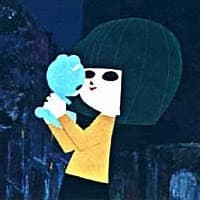
"Tales of the Street Corner" is a 1962 anime short film directed by Osamu Tezuka, often regarded as a pioneering work in Japanese animation. The narrative unfolds in a small, bustling neighborhood, where the lives of various inhabitants and even inanimate objects are interconnected. The story is divided into several vignettes, each focusing on different characters and their experiences, blending whimsy and melancholy.
The central figures include a young girl who lives in an apartment building, a streetlamp, a tree, and a group of mice. The girl, often seen playing her violin, symbolizes innocence and creativity, while the streetlamp and tree serve as silent observers of the neighborhood's daily life. The mice, living in the walls of the building, provide a playful and mischievous counterpoint to the more somber elements of the story.
The plot weaves together these disparate elements, exploring themes of coexistence, memory, and the passage of time. The streetlamp reminisces about the past, recalling the people and events it has witnessed, while the tree reflects on its growth and the changing seasons. The mice, meanwhile, engage in their own miniature dramas, mirroring the struggles and joys of the human world.
As the narrative progresses, the neighborhood faces the threat of demolition, symbolizing the encroachment of modernity and the loss of tradition. The characters, both human and non-human, grapple with this impending change, highlighting the tension between progress and preservation. The film concludes on a bittersweet note, with the girl playing her violin one last time as the neighborhood prepares for its transformation.
"Tales of the Street Corner" is notable for its experimental approach, blending traditional animation with abstract visuals and a non-linear narrative structure. The film's focus on everyday life and its poetic treatment of time and memory make it a unique and enduring work in the history of anime.
The central figures include a young girl who lives in an apartment building, a streetlamp, a tree, and a group of mice. The girl, often seen playing her violin, symbolizes innocence and creativity, while the streetlamp and tree serve as silent observers of the neighborhood's daily life. The mice, living in the walls of the building, provide a playful and mischievous counterpoint to the more somber elements of the story.
The plot weaves together these disparate elements, exploring themes of coexistence, memory, and the passage of time. The streetlamp reminisces about the past, recalling the people and events it has witnessed, while the tree reflects on its growth and the changing seasons. The mice, meanwhile, engage in their own miniature dramas, mirroring the struggles and joys of the human world.
As the narrative progresses, the neighborhood faces the threat of demolition, symbolizing the encroachment of modernity and the loss of tradition. The characters, both human and non-human, grapple with this impending change, highlighting the tension between progress and preservation. The film concludes on a bittersweet note, with the girl playing her violin one last time as the neighborhood prepares for its transformation.
"Tales of the Street Corner" is notable for its experimental approach, blending traditional animation with abstract visuals and a non-linear narrative structure. The film's focus on everyday life and its poetic treatment of time and memory make it a unique and enduring work in the history of anime.
Comment(s)
Staff
- DirectorEiichi Yamamoto
- Original creator
- Executive producer
- MusicTatsuo Takai
- ArtKazuko NakamuraMotoaki IshiiEiichi YamamotoGizaburo SugiiRyo AraiYūsaku SakamotoShūji Konno
- ProducerEichi Kawabata
Production
- ProductionMushi Production
Relations
Recommendations based on shared tags.