
Movie
Description
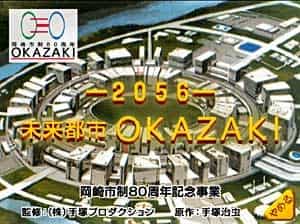
"Okazaki City in 70 Years" is a historical drama anime that chronicles the transformation of Okazaki City over seven decades, from the post-World War II era to the present day. The narrative is structured around the lives of three generations of the Takahashi family, whose personal experiences and struggles mirror the broader societal changes in Japan.
The story begins in 1945, shortly after the end of World War II, with Hiroshi Takahashi, a young man returning to Okazaki City after serving in the military. Hiroshi finds his hometown in ruins, its infrastructure destroyed, and its people struggling to rebuild their lives. Determined to contribute to the city's recovery, Hiroshi becomes involved in local reconstruction efforts, focusing on restoring the city's cultural landmarks and fostering a sense of community among its residents. His efforts are met with both support and resistance, reflecting the broader tensions between tradition and modernization in post-war Japan.
As the narrative progresses into the 1960s and 1970s, the focus shifts to Hiroshi's daughter, Ayako, who grows up during Japan's rapid economic growth. Ayako witnesses the city's transformation from a rural town to a bustling urban center, marked by the construction of new industries, schools, and transportation networks. However, this period of prosperity also brings challenges, including environmental degradation and the erosion of traditional values. Ayako becomes an advocate for sustainable development, balancing her father's legacy with the need to address contemporary issues.
The final arc of the series centers on Ayako's son, Takeru, who comes of age in the early 21st century. Takeru represents a generation grappling with the consequences of globalization and technological advancement. As Okazaki City becomes increasingly interconnected with the global economy, Takeru navigates the complexities of identity, heritage, and progress. His journey involves reconciling the city's rich history with its evolving future, culminating in efforts to preserve its cultural heritage while embracing innovation.
Throughout the series, the Takahashi family's personal stories are interwoven with key historical events, such as the 1964 Tokyo Olympics, the economic bubble of the 1980s, and the 2011 Tōhoku earthquake and tsunami. These events serve as backdrops to the characters' lives, highlighting the interplay between individual experiences and broader societal changes. The series also features a diverse cast of supporting characters, including local politicians, business leaders, and community activists, whose interactions with the Takahashi family provide additional perspectives on the city's development.
"Okazaki City in 70 Years" is a poignant exploration of resilience, adaptation, and the enduring connection between people and place. Through its multi-generational narrative, the series offers a comprehensive portrayal of Okazaki City's evolution, capturing the complexities of progress and the enduring spirit of its inhabitants.
The story begins in 1945, shortly after the end of World War II, with Hiroshi Takahashi, a young man returning to Okazaki City after serving in the military. Hiroshi finds his hometown in ruins, its infrastructure destroyed, and its people struggling to rebuild their lives. Determined to contribute to the city's recovery, Hiroshi becomes involved in local reconstruction efforts, focusing on restoring the city's cultural landmarks and fostering a sense of community among its residents. His efforts are met with both support and resistance, reflecting the broader tensions between tradition and modernization in post-war Japan.
As the narrative progresses into the 1960s and 1970s, the focus shifts to Hiroshi's daughter, Ayako, who grows up during Japan's rapid economic growth. Ayako witnesses the city's transformation from a rural town to a bustling urban center, marked by the construction of new industries, schools, and transportation networks. However, this period of prosperity also brings challenges, including environmental degradation and the erosion of traditional values. Ayako becomes an advocate for sustainable development, balancing her father's legacy with the need to address contemporary issues.
The final arc of the series centers on Ayako's son, Takeru, who comes of age in the early 21st century. Takeru represents a generation grappling with the consequences of globalization and technological advancement. As Okazaki City becomes increasingly interconnected with the global economy, Takeru navigates the complexities of identity, heritage, and progress. His journey involves reconciling the city's rich history with its evolving future, culminating in efforts to preserve its cultural heritage while embracing innovation.
Throughout the series, the Takahashi family's personal stories are interwoven with key historical events, such as the 1964 Tokyo Olympics, the economic bubble of the 1980s, and the 2011 Tōhoku earthquake and tsunami. These events serve as backdrops to the characters' lives, highlighting the interplay between individual experiences and broader societal changes. The series also features a diverse cast of supporting characters, including local politicians, business leaders, and community activists, whose interactions with the Takahashi family provide additional perspectives on the city's development.
"Okazaki City in 70 Years" is a poignant exploration of resilience, adaptation, and the enduring connection between people and place. Through its multi-generational narrative, the series offers a comprehensive portrayal of Okazaki City's evolution, capturing the complexities of progress and the enduring spirit of its inhabitants.
Comment(s)
Staff
- Original story
Production
- ProductionTezuka Productions