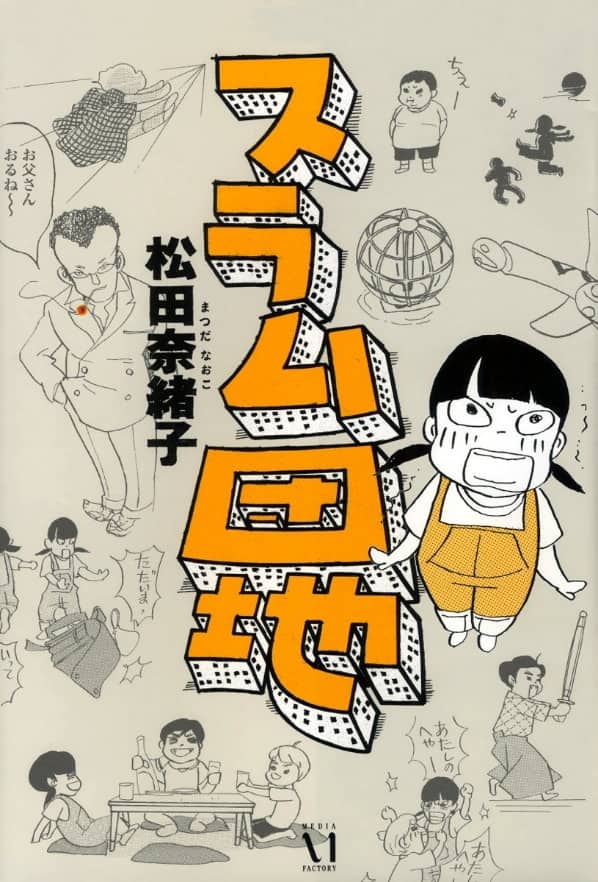
Manga
Description
"Slum Danchi" is a manga series that explores the lives of residents in a dilapidated apartment complex, delving into their struggles, relationships, and the harsh realities of their environment. The narrative centers on the interconnected lives of the tenants, each grappling with personal challenges while navigating the shared hardships of living in a neglected, poverty-stricken neighborhood.
The protagonist, a young man named Hiroshi, moves into the Danchi (apartment complex) after losing his job and facing financial ruin. His arrival introduces readers to the diverse cast of characters who inhabit the building, each with their own backstory and struggles. Among them is Yuko, a single mother working multiple jobs to support her child; Tetsuo, an elderly man haunted by his past; and Akira, a rebellious teenager caught in a cycle of delinquency. The interactions between these characters form the core of the story, highlighting themes of resilience, community, and survival.
As the plot unfolds, the series examines the systemic issues that perpetuate the residents' hardships, such as unemployment, crime, and social neglect. Hiroshi becomes increasingly involved in the lives of his neighbors, forming bonds that challenge his initial sense of isolation. Through his perspective, the manga sheds light on the complexities of human relationships and the ways in which people adapt to adversity.
The narrative is episodic, with each chapter focusing on a different character or group of characters, gradually revealing their interconnected lives. The series balances moments of humor and warmth with stark depictions of poverty and despair, creating a nuanced portrayal of life in the Danchi. The setting itself plays a significant role, with the crumbling infrastructure and cramped living conditions serving as a constant reminder of the characters' circumstances.
"Slum Danchi" does not shy away from addressing difficult topics, including addiction, domestic violence, and the impact of economic inequality. However, it also emphasizes the resilience and solidarity of the community, offering glimpses of hope and humanity amidst the challenges. The manga's realistic portrayal of its characters and their struggles makes it a compelling exploration of life on the margins of society.
The protagonist, a young man named Hiroshi, moves into the Danchi (apartment complex) after losing his job and facing financial ruin. His arrival introduces readers to the diverse cast of characters who inhabit the building, each with their own backstory and struggles. Among them is Yuko, a single mother working multiple jobs to support her child; Tetsuo, an elderly man haunted by his past; and Akira, a rebellious teenager caught in a cycle of delinquency. The interactions between these characters form the core of the story, highlighting themes of resilience, community, and survival.
As the plot unfolds, the series examines the systemic issues that perpetuate the residents' hardships, such as unemployment, crime, and social neglect. Hiroshi becomes increasingly involved in the lives of his neighbors, forming bonds that challenge his initial sense of isolation. Through his perspective, the manga sheds light on the complexities of human relationships and the ways in which people adapt to adversity.
The narrative is episodic, with each chapter focusing on a different character or group of characters, gradually revealing their interconnected lives. The series balances moments of humor and warmth with stark depictions of poverty and despair, creating a nuanced portrayal of life in the Danchi. The setting itself plays a significant role, with the crumbling infrastructure and cramped living conditions serving as a constant reminder of the characters' circumstances.
"Slum Danchi" does not shy away from addressing difficult topics, including addiction, domestic violence, and the impact of economic inequality. However, it also emphasizes the resilience and solidarity of the community, offering glimpses of hope and humanity amidst the challenges. The manga's realistic portrayal of its characters and their struggles makes it a compelling exploration of life on the margins of society.
Comment(s)
Staff
- Story & ArtNaoko Matsuda
Recommendations
Empfehlungen auf Basis gemeinsamer Kategorien.