Manga
Description
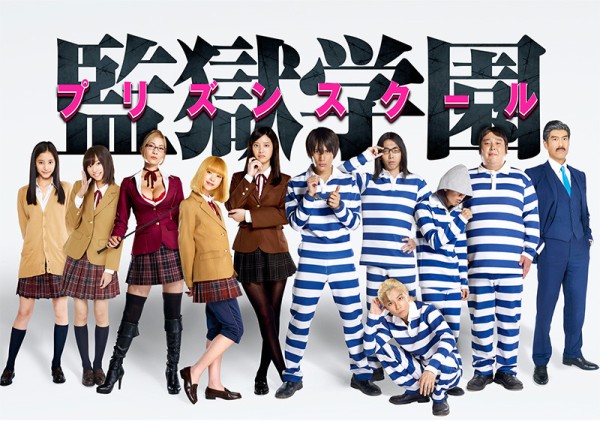
"Prison School" is a manga series set at Hachimitsu Academy, a formerly all-girls school that has recently begun admitting male students. The narrative centers on five male students—Kiyoshi Fujino, Takehito Morokuzu, Shingo Wakamoto, Jouji Nezu, and Reiji Andou—who quickly find themselves at odds with the school's oppressive student council. The student council, led by President Mari Kurihara and her vice president, Meiko Shiraki, enforces strict rules with severe punishments, including imprisonment in the school's underground detention facility.
The story begins when the five boys are caught attempting to peep into the girls' bathhouse. As punishment, they are sentenced to a month of imprisonment within the school's prison, where they endure harsh conditions and brutal treatment from the Underground Student Council, which oversees the facility. The boys' struggle to survive their sentence forms the core of the narrative, with frequent comedic and absurd situations arising from their attempts to escape or alleviate their suffering.
Kiyoshi Fujino emerges as the de facto leader of the group, often devising plans to outwit their captors. His growing relationship with Chiyo Kurihara, Mari's younger sister, adds a layer of romantic tension, particularly as Chiyo remains unaware of the boys' misdeeds. Meanwhile, Meiko Shiraki, the vice president, becomes a central figure in the boys' torment, though her interactions with Kiyoshi occasionally hint at a more complex dynamic.
As the story progresses, the boys' imprisonment becomes increasingly chaotic, with alliances shifting and new characters introduced, such as Hana Midorikawa, a member of the Underground Student Council who develops a complicated relationship with Kiyoshi. The narrative frequently escalates into over-the-top scenarios, blending dark humor with exaggerated physical comedy and occasional moments of genuine tension.
Themes of power dynamics, rebellion, and the absurdity of authority are explored through the interactions between the boys and their captors. The series balances its comedic elements with a satirical take on institutional control and the lengths individuals will go to in order to assert their freedom. The plot is driven by a mix of slapstick humor, strategic maneuvering, and unexpected twists, keeping the tone unpredictable and engaging.
"Prison School" is characterized by its bold and often controversial humor, as well as its willingness to push boundaries in both its storytelling and character dynamics. The series maintains a fast-paced narrative, with each chapter building on the escalating stakes and absurdity of the boys' predicament. Through its unique blend of comedy, drama, and satire, the manga offers a distinctive and memorable exploration of its central premise.
The story begins when the five boys are caught attempting to peep into the girls' bathhouse. As punishment, they are sentenced to a month of imprisonment within the school's prison, where they endure harsh conditions and brutal treatment from the Underground Student Council, which oversees the facility. The boys' struggle to survive their sentence forms the core of the narrative, with frequent comedic and absurd situations arising from their attempts to escape or alleviate their suffering.
Kiyoshi Fujino emerges as the de facto leader of the group, often devising plans to outwit their captors. His growing relationship with Chiyo Kurihara, Mari's younger sister, adds a layer of romantic tension, particularly as Chiyo remains unaware of the boys' misdeeds. Meanwhile, Meiko Shiraki, the vice president, becomes a central figure in the boys' torment, though her interactions with Kiyoshi occasionally hint at a more complex dynamic.
As the story progresses, the boys' imprisonment becomes increasingly chaotic, with alliances shifting and new characters introduced, such as Hana Midorikawa, a member of the Underground Student Council who develops a complicated relationship with Kiyoshi. The narrative frequently escalates into over-the-top scenarios, blending dark humor with exaggerated physical comedy and occasional moments of genuine tension.
Themes of power dynamics, rebellion, and the absurdity of authority are explored through the interactions between the boys and their captors. The series balances its comedic elements with a satirical take on institutional control and the lengths individuals will go to in order to assert their freedom. The plot is driven by a mix of slapstick humor, strategic maneuvering, and unexpected twists, keeping the tone unpredictable and engaging.
"Prison School" is characterized by its bold and often controversial humor, as well as its willingness to push boundaries in both its storytelling and character dynamics. The series maintains a fast-paced narrative, with each chapter building on the escalating stakes and absurdity of the boys' predicament. Through its unique blend of comedy, drama, and satire, the manga offers a distinctive and memorable exploration of its central premise.
Comment(s)
Relations