
Manga
Description
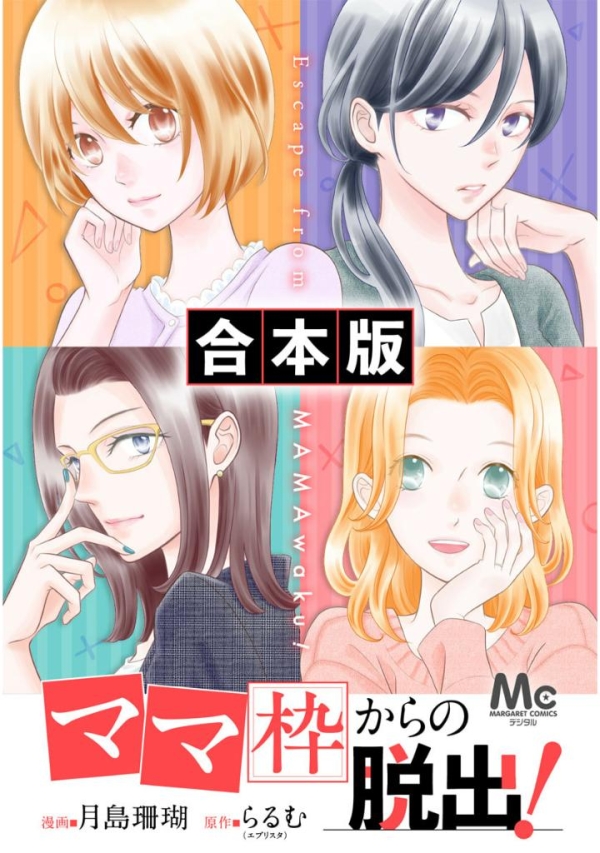
"Mama-waku kara no Dasshutsu!" centers on a young boy named Shou, who finds himself trapped in a surreal and unsettling world after being abandoned by his mother. The narrative unfolds in a mysterious facility known as "Mama-waku," a place where children are left by their parents and subjected to bizarre experiments and psychological manipulation. Shou, determined to escape, forms alliances with other children who share his desire for freedom. Each child possesses unique traits or abilities, which they must harness to navigate the facility's labyrinthine structure and evade its sinister caretakers.
The facility is overseen by enigmatic figures who enforce strict rules and administer strange tests designed to break the children's spirits. As Shou and his companions progress, they uncover the dark purpose behind Mama-waku: it serves as a breeding ground for creating "ideal" children, molded to fit societal expectations or fulfill specific roles. The children's struggles are both physical and emotional, as they confront their fears, past traumas, and the lingering guilt of being abandoned.
Key characters include Shou, whose resilience and leadership drive the group forward; Aya, a girl with a sharp intellect and a deep understanding of the facility's mechanisms; and Kenta, a boy whose physical strength and protective nature make him a vital ally. The caretakers, particularly the cold and calculating "Mama," serve as the primary antagonists, embodying the oppressive forces the children must overcome.
The story explores themes of identity, autonomy, and the impact of societal pressures on individuals, particularly children. The children's journey is marked by moments of tension, camaraderie, and self-discovery as they challenge the facility's oppressive systems and strive to reclaim their freedom. The narrative balances psychological depth with action, creating a compelling and thought-provoking exploration of resilience in the face of adversity.
The facility is overseen by enigmatic figures who enforce strict rules and administer strange tests designed to break the children's spirits. As Shou and his companions progress, they uncover the dark purpose behind Mama-waku: it serves as a breeding ground for creating "ideal" children, molded to fit societal expectations or fulfill specific roles. The children's struggles are both physical and emotional, as they confront their fears, past traumas, and the lingering guilt of being abandoned.
Key characters include Shou, whose resilience and leadership drive the group forward; Aya, a girl with a sharp intellect and a deep understanding of the facility's mechanisms; and Kenta, a boy whose physical strength and protective nature make him a vital ally. The caretakers, particularly the cold and calculating "Mama," serve as the primary antagonists, embodying the oppressive forces the children must overcome.
The story explores themes of identity, autonomy, and the impact of societal pressures on individuals, particularly children. The children's journey is marked by moments of tension, camaraderie, and self-discovery as they challenge the facility's oppressive systems and strive to reclaim their freedom. The narrative balances psychological depth with action, creating a compelling and thought-provoking exploration of resilience in the face of adversity.
Comment(s)
Staff
- Original storyRarumu
- ArtSango Tsukishima