Description
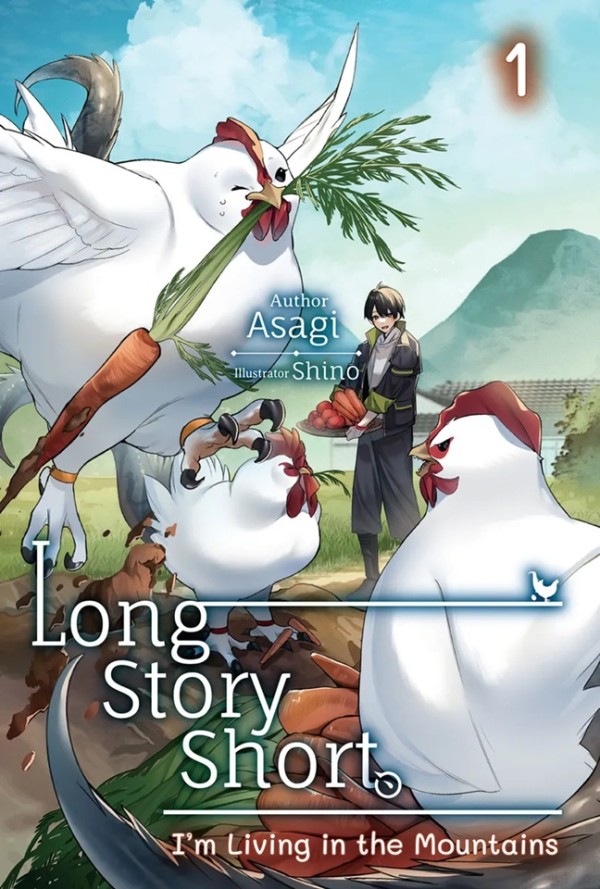
After being dumped by his fiancée and receiving a sizable apology payment from her family, Sano Shohei decides to abandon his city life entirely. Dealing with intense burnout, social exhaustion, and what he begins to recognize as possible depression, he purchases two mountains and moves to one of them, seeking complete isolation. His plan for a reclusive existence hits an unexpected snag when he buys three colored chicks from a festival stall to keep him company. The chicks grow rapidly, develop reptilian tails, grow to enormous size, and begin to speak. Named Pochi, Tama, and Yuma, these increasingly questionable but devoted birds become his closest companions, helping him navigate the challenges of mountain life.
The story takes place in a strange version of rural Japan where unseen gods seem to sell mythological animals to emotionally damaged individuals who purchase mountains. Sano discovers he is not alone in his situation. On the neighboring mountains live two other people fleeing troubled pasts. Aikawa had a stalker pursue him for so long he developed a violent fear of women, which makes it ironic that one of his pets is a lamia. Katsuragi, prone to panic attacks, escaped an abusive boyfriend and serves as the nearest thing to comic relief in an otherwise somber cast. Both neighbors gradually angle to become close to Sano, though the author has explicitly stated the series will not include romance.
As the narrative progresses through the seasons, Sano learns the hard realities of mountain ownership. He deals with illegal dumping on his property, helps organize local festivals, and attends village BBQs despite his desire for solitude. He battles murder hornets with the help of his chickens, clears fallen trees after typhoons, harvests chestnuts and lotus roots, and prepares for harsh winters that may leave him isolated for months at a time. A significant moment occurs when he discovers a dilapidated shrine at the top of his mountain and attempts to restore it. The fourth volume introduces Katsuragi's younger sister Rie, a seventeen year old gyaru who comes to stay while fleeing her own stalker, expanding the small mountain community.
Throughout the series, Sano's psychological wounds remain central. He is baffled by neighbors who offer help or meals without expecting repayment, always seeking some transactional arrangement to avoid feeling indebted. He neglects his own needs, from chapped hands to insufficient winter preparations, while going to great lengths to solve others problems. His chickens seem to sense this, with one essentially acting as his wife and another as a jealous mistress, the mythological animals serving as manifestations of psychological trauma or its solutions. Between learning the ropes of mountain living, getting acquainted with rural neighbors, raising his giant talking chickens, and slowly being forced into a community he never wanted, Sano finds that his solitary new life might be more exciting than he anticipated, even as he continues to run from the core issues that drove him there in the first place.
The story takes place in a strange version of rural Japan where unseen gods seem to sell mythological animals to emotionally damaged individuals who purchase mountains. Sano discovers he is not alone in his situation. On the neighboring mountains live two other people fleeing troubled pasts. Aikawa had a stalker pursue him for so long he developed a violent fear of women, which makes it ironic that one of his pets is a lamia. Katsuragi, prone to panic attacks, escaped an abusive boyfriend and serves as the nearest thing to comic relief in an otherwise somber cast. Both neighbors gradually angle to become close to Sano, though the author has explicitly stated the series will not include romance.
As the narrative progresses through the seasons, Sano learns the hard realities of mountain ownership. He deals with illegal dumping on his property, helps organize local festivals, and attends village BBQs despite his desire for solitude. He battles murder hornets with the help of his chickens, clears fallen trees after typhoons, harvests chestnuts and lotus roots, and prepares for harsh winters that may leave him isolated for months at a time. A significant moment occurs when he discovers a dilapidated shrine at the top of his mountain and attempts to restore it. The fourth volume introduces Katsuragi's younger sister Rie, a seventeen year old gyaru who comes to stay while fleeing her own stalker, expanding the small mountain community.
Throughout the series, Sano's psychological wounds remain central. He is baffled by neighbors who offer help or meals without expecting repayment, always seeking some transactional arrangement to avoid feeling indebted. He neglects his own needs, from chapped hands to insufficient winter preparations, while going to great lengths to solve others problems. His chickens seem to sense this, with one essentially acting as his wife and another as a jealous mistress, the mythological animals serving as manifestations of psychological trauma or its solutions. Between learning the ropes of mountain living, getting acquainted with rural neighbors, raising his giant talking chickens, and slowly being forced into a community he never wanted, Sano finds that his solitary new life might be more exciting than he anticipated, even as he continues to run from the core issues that drove him there in the first place.
Comment(s)
Staff
- StoryAsagi
- IllustrationShino
Recommendations
Empfehlungen auf Basis gemeinsamer Kategorien.
Anime overview