
Manga
Description
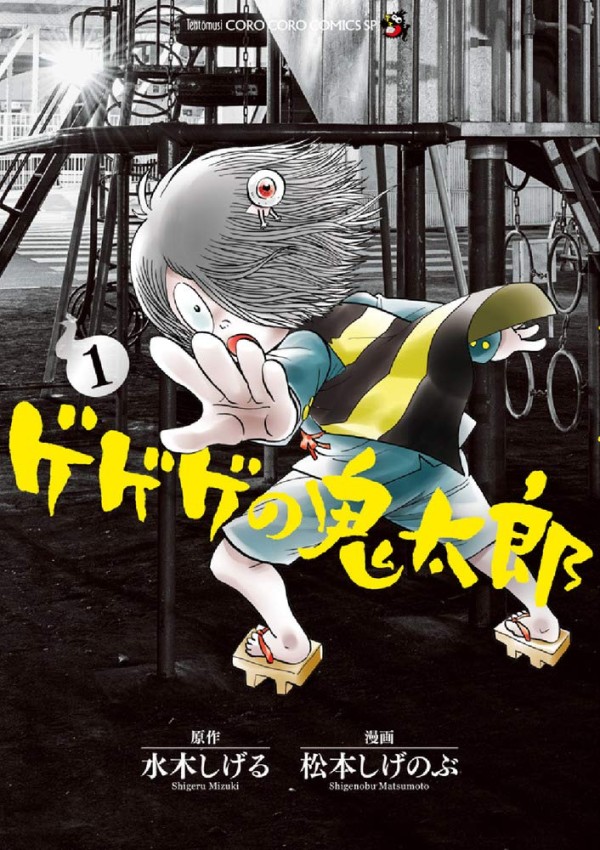
GeGeGe no Kitarō follows the adventures of Kitarō, a young boy who is also the last surviving member of the Ghost Tribe, a race of supernatural beings. Born from his mother's corpse in a cemetery, Kitarō lost his left eye either at birth or shortly after. He is accompanied by his father, Medama-Oyaji, who, after dying from a disease, was reincarnated as a sentient, anthropomorphic eyeball that lives inside Kitarō’s hair or a teacup. Kitarō acts as a mediator and protector, striving to bring peace between the human world and the world of yōkai, the spirits and monsters of Japanese folklore.
The series is set in a modern Japan where ancient yōkai and other creatures secretly live alongside humans, often taking advantage of human vices or responding to environmental destruction. Kitarō uses a range of supernatural abilities inherited from his tribe to combat malevolent yōkai. His iconic weapons include his own hair, which he can fire as needles, and his geta sandals, which allow him to fly. His striped vest, known as a chanchanko, is made from the hair of his ancestors and amplifies his power. He is joined by a recurring cast of allies, including Nezumi-Otoko, a greedy, opportunistic half-yōkai who resembles a rat; Neko-Musume, a cat-girl with a fierce temper and a crush on Kitarō; and other creatures like the living stone wall Nurikabe and the flying cloth Ittan-Momen.
Many storylines involve Kitarō resolving conflicts where a yōkai has been disturbed by human development or is preying on unsuspecting people. The manga also features larger narrative arcs, such as the Great Yōkai War, which draws influence from the folk tale of Momotarō, where Kitarō and his yōkai friends drive away invading Western ghouls and monsters. Notable storylines include conflicts with powerful antagonists like Nurarihyon, a conniving yōkai leader, and arcs exploring the theft of mystical artifacts that threaten the balance between the two worlds. The tone of the narrative has shifted over time; the original 1960s serial, originally titled Hakaba Kitarō (Kitarō of the Graveyard), featured a much more mischievous and morally ambiguous protagonist who lived as a drifter. As the series evolved into GeGeGe no Kitarō, the character became a more heroic and sympathetic figure, though he is still known to deliver harsh punishments to humans who refuse to learn from their mistakes.
The series is set in a modern Japan where ancient yōkai and other creatures secretly live alongside humans, often taking advantage of human vices or responding to environmental destruction. Kitarō uses a range of supernatural abilities inherited from his tribe to combat malevolent yōkai. His iconic weapons include his own hair, which he can fire as needles, and his geta sandals, which allow him to fly. His striped vest, known as a chanchanko, is made from the hair of his ancestors and amplifies his power. He is joined by a recurring cast of allies, including Nezumi-Otoko, a greedy, opportunistic half-yōkai who resembles a rat; Neko-Musume, a cat-girl with a fierce temper and a crush on Kitarō; and other creatures like the living stone wall Nurikabe and the flying cloth Ittan-Momen.
Many storylines involve Kitarō resolving conflicts where a yōkai has been disturbed by human development or is preying on unsuspecting people. The manga also features larger narrative arcs, such as the Great Yōkai War, which draws influence from the folk tale of Momotarō, where Kitarō and his yōkai friends drive away invading Western ghouls and monsters. Notable storylines include conflicts with powerful antagonists like Nurarihyon, a conniving yōkai leader, and arcs exploring the theft of mystical artifacts that threaten the balance between the two worlds. The tone of the narrative has shifted over time; the original 1960s serial, originally titled Hakaba Kitarō (Kitarō of the Graveyard), featured a much more mischievous and morally ambiguous protagonist who lived as a drifter. As the series evolved into GeGeGe no Kitarō, the character became a more heroic and sympathetic figure, though he is still known to deliver harsh punishments to humans who refuse to learn from their mistakes.
Comment(s)
Staff
- Story & Art
- Original creator