
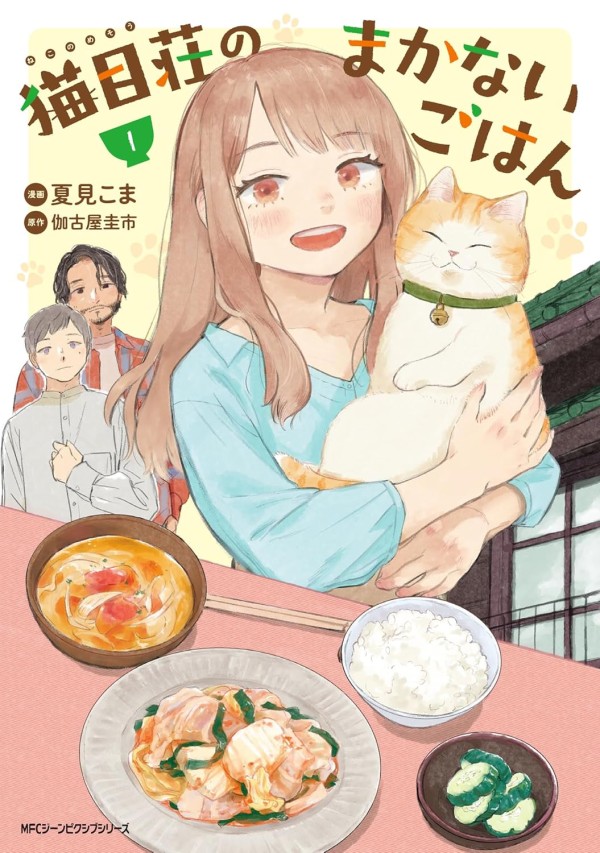
Manga
Description
Two childhood friends from the snowy far north of Aomori journey to the ancient capital of Kyoto with a shared dream of becoming maiko, apprentice geiko. Sumire possesses a natural grace and talent for the demanding arts of dance and music, quickly rising through the ranks as a once-in-a-generation prodigy. Kiyo, however, is deemed too clumsy for the rigorous traditions of the ochaya, and her path to becoming a maiko is cut short.
Yet Kiyo possesses a different gift. Her heartfelt cooking brings warmth and comfort to the all-female household where they live, known as the yakata. Discovering her skill in the kitchen, the house mother offers Kiyo a new role: the makanai, the live-in cook responsible for preparing daily meals for her fellow residents. Far from being disappointed, Kiyo embraces her position with joy, dedicating herself to supporting Sumire and the other geiko and maiko of the house through her culinary creations.
The story unfolds in the historic geiko districts of Kyoto, focusing on the daily lives within the communal boarding house. It is a slice-of-life narrative told through gentle vignettes centered on the changing seasons and the rituals of Japanese cuisine. From hearty winter hot pots to delicate spring bento boxes, Kiyo's meals reflect her deep care for her found family. The household includes the elegant and aloof senior maiko Momoko, the dependable house mother known as Okā-san, and the strict dresser the girls call Onii-san. Kiyo and Sumire also maintain a connection to their hometown through their childhood friend Kenta, who moves to Kyoto to become an apprentice chef.
As the series progresses, the narrative follows the natural milestones of a maiko's life. Significant arcs focus on Sumire's evolution as she earns her name Momohana and faces the pressures of being a prodigy. Another arc follows the senior maiko Tsurukoma as she reaches a career crossroads, deciding whether to graduate into a full-fledged geiko or retire from the profession. Through these transitions, Kiyo remains a constant, grounding presence, using her food to celebrate successes, soothe heartaches, and bind the household together. The manga captures the beauty of tradition and the quiet power of finding one's place not in the spotlight, but in the warm, supportive glow of the kitchen.
Yet Kiyo possesses a different gift. Her heartfelt cooking brings warmth and comfort to the all-female household where they live, known as the yakata. Discovering her skill in the kitchen, the house mother offers Kiyo a new role: the makanai, the live-in cook responsible for preparing daily meals for her fellow residents. Far from being disappointed, Kiyo embraces her position with joy, dedicating herself to supporting Sumire and the other geiko and maiko of the house through her culinary creations.
The story unfolds in the historic geiko districts of Kyoto, focusing on the daily lives within the communal boarding house. It is a slice-of-life narrative told through gentle vignettes centered on the changing seasons and the rituals of Japanese cuisine. From hearty winter hot pots to delicate spring bento boxes, Kiyo's meals reflect her deep care for her found family. The household includes the elegant and aloof senior maiko Momoko, the dependable house mother known as Okā-san, and the strict dresser the girls call Onii-san. Kiyo and Sumire also maintain a connection to their hometown through their childhood friend Kenta, who moves to Kyoto to become an apprentice chef.
As the series progresses, the narrative follows the natural milestones of a maiko's life. Significant arcs focus on Sumire's evolution as she earns her name Momohana and faces the pressures of being a prodigy. Another arc follows the senior maiko Tsurukoma as she reaches a career crossroads, deciding whether to graduate into a full-fledged geiko or retire from the profession. Through these transitions, Kiyo remains a constant, grounding presence, using her food to celebrate successes, soothe heartaches, and bind the household together. The manga captures the beauty of tradition and the quiet power of finding one's place not in the spotlight, but in the warm, supportive glow of the kitchen.
Comment(s)
Staff
- Original storyKeiichi Kakoya
- ArtKoma Natsumi