
Manga
Description
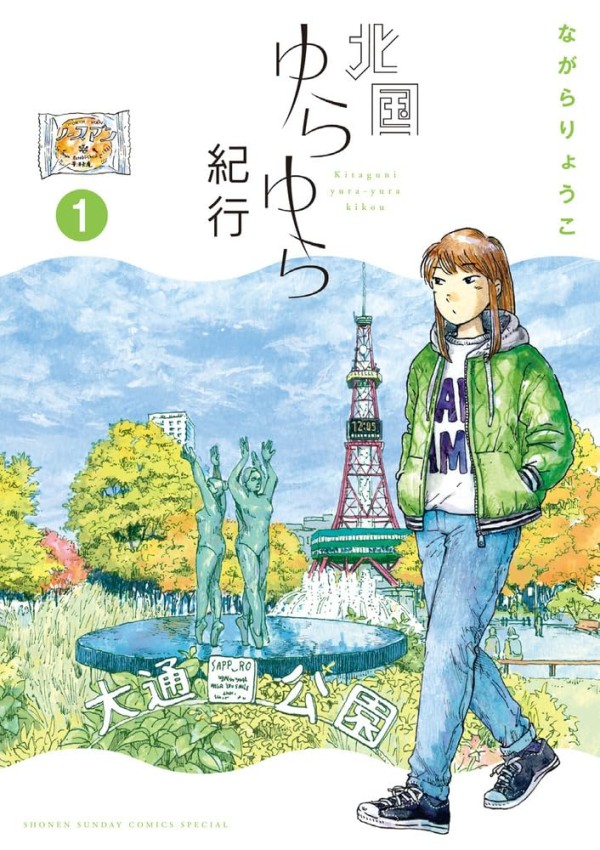
Tsukiko, a young woman struggling with burnout and depression, has left her job and returned to her hometown of Sapporo in Hokkaido, Japan. Unable to face full-time employment and watching her savings dwindle, she accepts an invitation from her friend Chitose to move into a sharehouse in a charming Showa-era building. The landlord, a world traveler who no longer lives in Japan, grants Tsukiko permission to stay on one condition she must clear out a spare room overflowing with accumulated junk.
As Tsukiko slowly recovers, she accompanies Chitose, an aspiring writer, on a leisurely exploration of Sapporo. Chitose dreams of creating a magazine that celebrates the city's regional culture, and she brings Tsukiko along as she scouts for material at small local shops, restaurants, and scenic neighborhoods lined with old houses. Their gentle adventures are punctuated by lively conversations over local cuisine and the simple pleasure of rediscovering their city.
Within the sharehouse, Tsukiko also navigates life with Chitose's flatmate Kensuke and his girlfriend Miwa. The task of cleaning the landlord's spare room becomes an unexpected source of wonder, as the two women dig through cardboard boxes to uncover analog treasures like vinyl records, cassette tapes, an old Walkman, and unique Hokkaido woodcrafts. This tangible connection to the past offers a concrete anchor against the formless anxiety of modern digital life, providing Tsukiko with a sense of ritual and purpose that she had been lacking.
Despite the warmth of her new surroundings and friendships, Tsukiko continues to grapple with her mental health, occasionally imagining herself as a helpless egg yolk under threat from menacing shadows whenever she contemplates returning to the workforce. The narrative unfolds in an episodic, travelogue style, focusing on the small moments of healing, the pleasures of analog media, and the quiet process of relearning how to form meaningful connections with a place and the people who share it.
As Tsukiko slowly recovers, she accompanies Chitose, an aspiring writer, on a leisurely exploration of Sapporo. Chitose dreams of creating a magazine that celebrates the city's regional culture, and she brings Tsukiko along as she scouts for material at small local shops, restaurants, and scenic neighborhoods lined with old houses. Their gentle adventures are punctuated by lively conversations over local cuisine and the simple pleasure of rediscovering their city.
Within the sharehouse, Tsukiko also navigates life with Chitose's flatmate Kensuke and his girlfriend Miwa. The task of cleaning the landlord's spare room becomes an unexpected source of wonder, as the two women dig through cardboard boxes to uncover analog treasures like vinyl records, cassette tapes, an old Walkman, and unique Hokkaido woodcrafts. This tangible connection to the past offers a concrete anchor against the formless anxiety of modern digital life, providing Tsukiko with a sense of ritual and purpose that she had been lacking.
Despite the warmth of her new surroundings and friendships, Tsukiko continues to grapple with her mental health, occasionally imagining herself as a helpless egg yolk under threat from menacing shadows whenever she contemplates returning to the workforce. The narrative unfolds in an episodic, travelogue style, focusing on the small moments of healing, the pleasures of analog media, and the quiet process of relearning how to form meaningful connections with a place and the people who share it.
Comment(s)
Staff
- Story & ArtRyōko Nagara