
Manga
Description
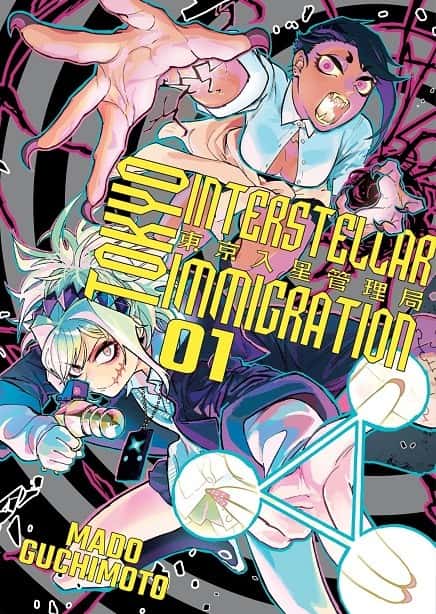
"Tokyo Interstellar Immigration" is a science fiction manga series set in a future where humanity has expanded beyond Earth, establishing colonies on distant planets. The narrative centers on the Tokyo Interstellar Immigration Office, a government agency responsible for managing the relocation and integration of Earth's population to these off-world settlements. The story explores the complexities of interstellar migration, the challenges of adapting to alien environments, and the societal tensions arising from the division between those who leave Earth and those who remain.
The protagonist, Akira Tachibana, is a young immigration officer tasked with overseeing the relocation process. Akira is idealistic and deeply committed to ensuring the well-being of migrants, but his work is complicated by bureaucratic hurdles, resource shortages, and the ethical dilemmas of displacing people from their homes. Alongside Akira is his colleague, Rina Fujimoto, a pragmatic and resourceful officer who often balances Akira's idealism with a more grounded perspective. Their dynamic drives much of the interpersonal tension and growth within the series.
The plot unfolds through a series of interconnected arcs, each focusing on different groups of migrants and the unique challenges they face. One arc delves into the struggles of a farming community forced to relocate to a barren planet, highlighting themes of resilience and adaptation. Another explores the plight of refugees fleeing a war-torn colony, examining the moral complexities of providing aid in a politically charged environment. The series also delves into the lives of those who choose to stay on Earth, portraying their resistance to change and their fears of being left behind in a rapidly evolving society.
Central to the narrative is the overarching mystery of the "Exodus Project," a clandestine initiative aimed at accelerating interstellar migration. As Akira and Rina uncover more about the project, they confront powerful entities with vested interests in controlling the flow of migration. This subplot introduces elements of political intrigue and corporate manipulation, adding depth to the series' exploration of humanity's future.
The manga balances its speculative elements with a strong focus on character development. Akira's journey from a naive idealist to a more nuanced leader is a key narrative thread, while Rina's backstory as a former migrant provides insight into the personal costs of relocation. Supporting characters, including migrants, bureaucrats, and activists, are given distinct voices and motivations, enriching the story's exploration of its central themes.
"Tokyo Interstellar Immigration" combines a thought-provoking premise with a richly detailed world, offering a compelling examination of humanity's potential future in the stars. Its blend of personal drama, ethical dilemmas, and speculative science fiction makes it a standout entry in the genre.
The protagonist, Akira Tachibana, is a young immigration officer tasked with overseeing the relocation process. Akira is idealistic and deeply committed to ensuring the well-being of migrants, but his work is complicated by bureaucratic hurdles, resource shortages, and the ethical dilemmas of displacing people from their homes. Alongside Akira is his colleague, Rina Fujimoto, a pragmatic and resourceful officer who often balances Akira's idealism with a more grounded perspective. Their dynamic drives much of the interpersonal tension and growth within the series.
The plot unfolds through a series of interconnected arcs, each focusing on different groups of migrants and the unique challenges they face. One arc delves into the struggles of a farming community forced to relocate to a barren planet, highlighting themes of resilience and adaptation. Another explores the plight of refugees fleeing a war-torn colony, examining the moral complexities of providing aid in a politically charged environment. The series also delves into the lives of those who choose to stay on Earth, portraying their resistance to change and their fears of being left behind in a rapidly evolving society.
Central to the narrative is the overarching mystery of the "Exodus Project," a clandestine initiative aimed at accelerating interstellar migration. As Akira and Rina uncover more about the project, they confront powerful entities with vested interests in controlling the flow of migration. This subplot introduces elements of political intrigue and corporate manipulation, adding depth to the series' exploration of humanity's future.
The manga balances its speculative elements with a strong focus on character development. Akira's journey from a naive idealist to a more nuanced leader is a key narrative thread, while Rina's backstory as a former migrant provides insight into the personal costs of relocation. Supporting characters, including migrants, bureaucrats, and activists, are given distinct voices and motivations, enriching the story's exploration of its central themes.
"Tokyo Interstellar Immigration" combines a thought-provoking premise with a richly detailed world, offering a compelling examination of humanity's potential future in the stars. Its blend of personal drama, ethical dilemmas, and speculative science fiction makes it a standout entry in the genre.
Comment(s)
Staff
- Story & ArtMado Guchimoto