
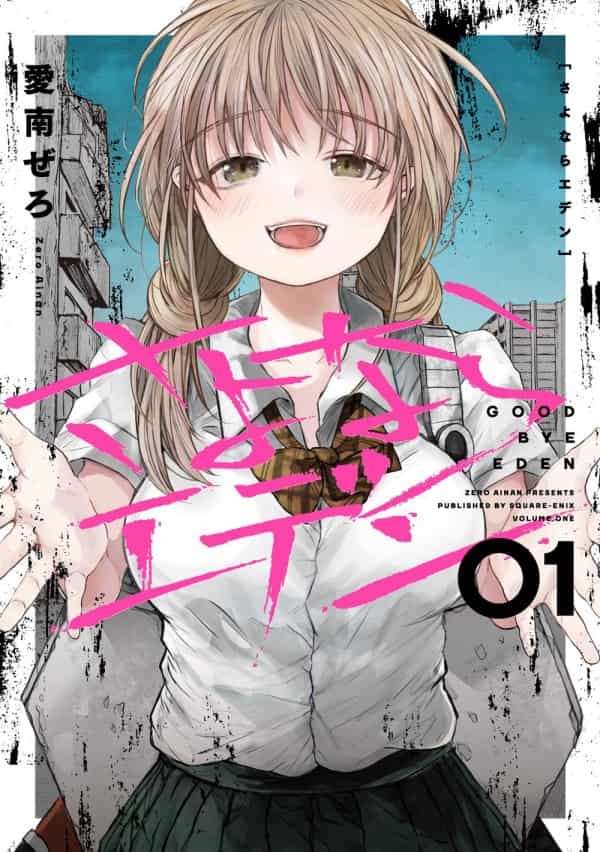
Manga
Description
"Goodbye, Eden" is a manga series that explores themes of survival, identity, and the human condition within a dystopian framework. The narrative is set in a world where humanity has been decimated by a mysterious catastrophe, leaving behind a fractured society struggling to rebuild. The remnants of civilization are divided into isolated factions, each with its own ideology and methods of survival. The story centers on a group of individuals who are forced to navigate this harsh landscape, confronting both external threats and internal conflicts.
The protagonist, a young man named Kaito, emerges as a reluctant leader among a band of survivors. Kaito is driven by a desire to uncover the truth behind the catastrophe that destroyed the world, as well as to find a place where humanity can begin anew. His journey is marked by encounters with various factions, each representing different extremes of human behavior—ranging from authoritarian regimes to anarchic collectives. These interactions highlight the moral ambiguities and ethical dilemmas inherent in a world where traditional societal structures have collapsed.
Key characters include Aya, a skilled fighter with a mysterious past who becomes Kaito's closest ally, and Ren, a former scientist whose knowledge of the pre-catastrophe world provides crucial insights into the events that led to the current state of affairs. The group is also joined by Haru, a young child who symbolizes hope and innocence in an otherwise bleak environment. Their relationships evolve as they face numerous challenges, including resource scarcity, hostile factions, and the ever-present threat of the unknown forces that caused the world's downfall.
The plot is driven by a series of revelations about the nature of the catastrophe, which is gradually unveiled through flashbacks and discoveries made by the characters. These revelations suggest that the disaster may have been the result of human experimentation and hubris, raising questions about the limits of scientific progress and the consequences of playing god. As the group moves closer to uncovering the truth, they are forced to confront their own beliefs and the sacrifices required to ensure the survival of humanity.
The narrative is structured around a series of episodic arcs, each focusing on the group's interactions with different factions or their exploration of key locations tied to the catastrophe. These arcs are interwoven with moments of introspection and character development, providing depth to the protagonists and their motivations. The story balances action and suspense with philosophical undertones, examining themes such as the nature of humanity, the ethics of survival, and the possibility of redemption in a broken world.
The protagonist, a young man named Kaito, emerges as a reluctant leader among a band of survivors. Kaito is driven by a desire to uncover the truth behind the catastrophe that destroyed the world, as well as to find a place where humanity can begin anew. His journey is marked by encounters with various factions, each representing different extremes of human behavior—ranging from authoritarian regimes to anarchic collectives. These interactions highlight the moral ambiguities and ethical dilemmas inherent in a world where traditional societal structures have collapsed.
Key characters include Aya, a skilled fighter with a mysterious past who becomes Kaito's closest ally, and Ren, a former scientist whose knowledge of the pre-catastrophe world provides crucial insights into the events that led to the current state of affairs. The group is also joined by Haru, a young child who symbolizes hope and innocence in an otherwise bleak environment. Their relationships evolve as they face numerous challenges, including resource scarcity, hostile factions, and the ever-present threat of the unknown forces that caused the world's downfall.
The plot is driven by a series of revelations about the nature of the catastrophe, which is gradually unveiled through flashbacks and discoveries made by the characters. These revelations suggest that the disaster may have been the result of human experimentation and hubris, raising questions about the limits of scientific progress and the consequences of playing god. As the group moves closer to uncovering the truth, they are forced to confront their own beliefs and the sacrifices required to ensure the survival of humanity.
The narrative is structured around a series of episodic arcs, each focusing on the group's interactions with different factions or their exploration of key locations tied to the catastrophe. These arcs are interwoven with moments of introspection and character development, providing depth to the protagonists and their motivations. The story balances action and suspense with philosophical undertones, examining themes such as the nature of humanity, the ethics of survival, and the possibility of redemption in a broken world.
Comment(s)
Staff
- Story & ArtZero Ainan
Company
- Carlsen Comics · 1