
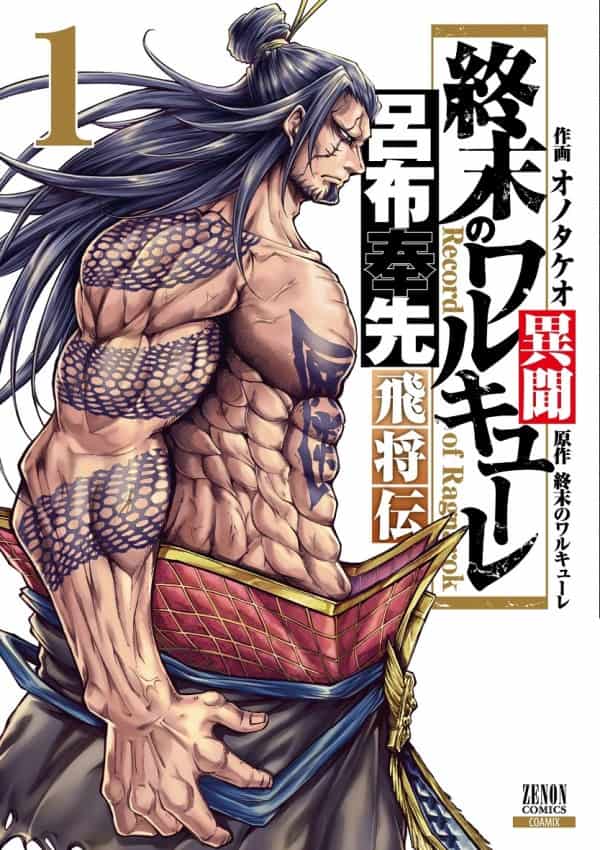
Manga
Description
"The Legend of Lu Bu" is a historical manga that adapts the life and exploits of the legendary Chinese warrior Lü Bu, a figure prominently featured in the historical novel "Romance of the Three Kingdoms." The narrative is set during the late Eastern Han Dynasty, a period marked by political turmoil, warlord rivalries, and the eventual fragmentation of China into three competing states. The manga chronicles Lü Bu's rise from obscurity to becoming one of the most feared and revered warriors of his time, known for his unparalleled combat skills and his iconic weapon, the halberd.
The story begins with Lü Bu's early life, depicting his humble origins and his eventual recruitment into the military under the warlord Ding Yuan. Lü Bu's extraordinary prowess in battle quickly earns him recognition, but his ambition and volatile nature lead him to betray Ding Yuan and align himself with the powerful warlord Dong Zhuo. Under Dong Zhuo's command, Lü Bu becomes a key enforcer, feared across the land for his ruthless efficiency in combat. However, his loyalty is fleeting, and he eventually turns against Dong Zhuo, driven by personal grievances and the manipulations of others, including the scheming advisor Wang Yun and the enigmatic Diaochan.
Central to the narrative is Lü Bu's complex relationship with Diaochan, a beautiful and cunning woman who becomes a pawn in the political machinations of the era. Her involvement with Lü Bu and Dong Zhuo serves as a catalyst for betrayal and conflict, further complicating Lü Bu's already tumultuous life. The manga explores themes of loyalty, ambition, and the consequences of unchecked power, as Lü Bu's actions repeatedly place him at odds with both allies and enemies.
As the story progresses, Lü Bu establishes himself as an independent warlord, carving out a territory and amassing a formidable army. His military campaigns bring him into direct conflict with other prominent figures of the era, such as Cao Cao, Liu Bei, and Guan Yu. Despite his martial prowess, Lü Bu's inability to maintain lasting alliances and his impulsive decisions ultimately lead to his downfall. The manga portrays his final stand at Xiapi, where he is betrayed by his own subordinates and captured by Cao Cao's forces, marking the end of his reign as a dominant warlord.
The manga stays true to the historical and literary portrayal of Lü Bu as a larger-than-life figure, blending historical events with dramatic storytelling. It delves into the psychological and emotional dimensions of its characters, offering a nuanced depiction of Lü Bu's internal struggles and the moral ambiguities of his actions. The supporting cast, including figures like Zhang Liao, Gao Shun, and Chen Gong, adds depth to the narrative, highlighting the intricate web of alliances and rivalries that define the era.
"The Legend of Lu Bu" provides a compelling exploration of one of history's most iconic warriors, capturing the grandeur and tragedy of his life within the chaotic backdrop of the Three Kingdoms period. The manga balances action-packed battle sequences with character-driven drama, making it a notable entry in the genre of historical manga.
The story begins with Lü Bu's early life, depicting his humble origins and his eventual recruitment into the military under the warlord Ding Yuan. Lü Bu's extraordinary prowess in battle quickly earns him recognition, but his ambition and volatile nature lead him to betray Ding Yuan and align himself with the powerful warlord Dong Zhuo. Under Dong Zhuo's command, Lü Bu becomes a key enforcer, feared across the land for his ruthless efficiency in combat. However, his loyalty is fleeting, and he eventually turns against Dong Zhuo, driven by personal grievances and the manipulations of others, including the scheming advisor Wang Yun and the enigmatic Diaochan.
Central to the narrative is Lü Bu's complex relationship with Diaochan, a beautiful and cunning woman who becomes a pawn in the political machinations of the era. Her involvement with Lü Bu and Dong Zhuo serves as a catalyst for betrayal and conflict, further complicating Lü Bu's already tumultuous life. The manga explores themes of loyalty, ambition, and the consequences of unchecked power, as Lü Bu's actions repeatedly place him at odds with both allies and enemies.
As the story progresses, Lü Bu establishes himself as an independent warlord, carving out a territory and amassing a formidable army. His military campaigns bring him into direct conflict with other prominent figures of the era, such as Cao Cao, Liu Bei, and Guan Yu. Despite his martial prowess, Lü Bu's inability to maintain lasting alliances and his impulsive decisions ultimately lead to his downfall. The manga portrays his final stand at Xiapi, where he is betrayed by his own subordinates and captured by Cao Cao's forces, marking the end of his reign as a dominant warlord.
The manga stays true to the historical and literary portrayal of Lü Bu as a larger-than-life figure, blending historical events with dramatic storytelling. It delves into the psychological and emotional dimensions of its characters, offering a nuanced depiction of Lü Bu's internal struggles and the moral ambiguities of his actions. The supporting cast, including figures like Zhang Liao, Gao Shun, and Chen Gong, adds depth to the narrative, highlighting the intricate web of alliances and rivalries that define the era.
"The Legend of Lu Bu" provides a compelling exploration of one of history's most iconic warriors, capturing the grandeur and tragedy of his life within the chaotic backdrop of the Three Kingdoms period. The manga balances action-packed battle sequences with character-driven drama, making it a notable entry in the genre of historical manga.
Comment(s)
Staff
- Story & ArtTakeo Ono