Manga
Description
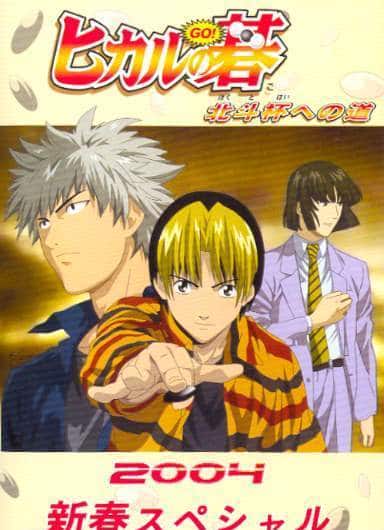
Hikaru Shindo, a middle school student, stumbles upon an old Go board in his grandfather’s storage. Upon touching it, he is possessed by the spirit of Fujiwara no Sai, a Heian-era Go master who was wrongfully accused of cheating and took his own life. Sai’s passion for Go compels him to teach Hikaru the game, despite Hikaru’s initial disinterest. Over time, Hikaru begins to develop his own skills and appreciation for Go, driven by Sai’s guidance and his growing rivalry with Akira Toya, a prodigious young Go player.
Akira, the son of a renowned Go professional, recognizes Hikaru’s potential after their first encounter and becomes determined to surpass him. This rivalry serves as a central driving force in the narrative, pushing both characters to improve. As Hikaru progresses, he joins a Go salon, enters the world of professional Go, and competes in tournaments, all while balancing his relationship with Sai. Sai’s presence is a constant, acting as both a mentor and a source of internal conflict for Hikaru, who struggles with his reliance on Sai’s expertise versus his desire to play independently.
The story explores the intricacies of Go, its cultural significance, and the dedication required to master it. Hikaru’s journey is marked by personal growth, as he transitions from a novice to a skilled player, earning respect within the Go community. Along the way, he encounters a diverse cast of characters, including fellow players, mentors, and rivals, each contributing to his development. The narrative also delves into the emotional and psychological aspects of competition, highlighting themes of perseverance, identity, and the pursuit of excellence.
As Hikaru’s skills mature, Sai’s role evolves, culminating in a poignant resolution that addresses their bond and Sai’s ultimate purpose. The series balances its focus on Go strategy with character-driven storytelling, creating a compelling narrative that appeals to both enthusiasts of the game and general readers. Through its exploration of ambition, mentorship, and the timeless nature of Go, the series offers a rich and engaging portrayal of the competitive world of professional play.
Akira, the son of a renowned Go professional, recognizes Hikaru’s potential after their first encounter and becomes determined to surpass him. This rivalry serves as a central driving force in the narrative, pushing both characters to improve. As Hikaru progresses, he joins a Go salon, enters the world of professional Go, and competes in tournaments, all while balancing his relationship with Sai. Sai’s presence is a constant, acting as both a mentor and a source of internal conflict for Hikaru, who struggles with his reliance on Sai’s expertise versus his desire to play independently.
The story explores the intricacies of Go, its cultural significance, and the dedication required to master it. Hikaru’s journey is marked by personal growth, as he transitions from a novice to a skilled player, earning respect within the Go community. Along the way, he encounters a diverse cast of characters, including fellow players, mentors, and rivals, each contributing to his development. The narrative also delves into the emotional and psychological aspects of competition, highlighting themes of perseverance, identity, and the pursuit of excellence.
As Hikaru’s skills mature, Sai’s role evolves, culminating in a poignant resolution that addresses their bond and Sai’s ultimate purpose. The series balances its focus on Go strategy with character-driven storytelling, creating a compelling narrative that appeals to both enthusiasts of the game and general readers. Through its exploration of ambition, mentorship, and the timeless nature of Go, the series offers a rich and engaging portrayal of the competitive world of professional play.
Comment(s)
1Company
- Carlsen Comics · 1
Relations