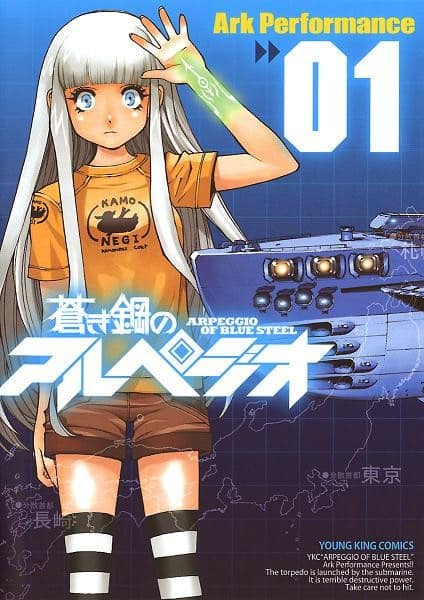
Manga
Description
"Arpeggio of Blue Steel" is set in a near-future world where humanity faces an existential threat from the Fleet of Fog, a mysterious armada of sentient, highly advanced warships that have blockaded the oceans. These ships, modeled after historical World War II vessels, possess superior technology, including nanomaterial-based weaponry and adaptive capabilities, rendering conventional human military forces ineffective. The Fleet of Fog's origins and motives remain enigmatic, but their dominance has pushed humanity to the brink of collapse.
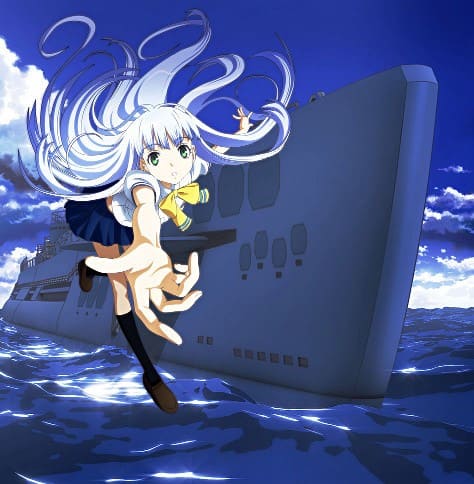
The narrative centers on Gunzou Chihaya, a young and resourceful naval tactician, who becomes the captain of the I-401, a sentient submarine modeled after a World War II Japanese vessel. The I-401, known as Iona, is a Mental Model—a humanoid avatar created by the Fleet of Fog to interact with humans. Unlike her counterparts, Iona defects from the Fleet of Fog and allies with Gunzou, offering humanity a chance to fight back. Together, they form a small but determined crew, including Gunzou's childhood friend Shizuka Hazumi and the brilliant engineer Kyouhei Kashihara.
As the story progresses, Gunzou and his crew embark on missions to challenge the Fleet of Fog, utilizing Iona's advanced capabilities and Gunzou's tactical ingenuity. They encounter other Mental Models, such as Takao, Hyuuga, and Haruna, who exhibit varying degrees of curiosity about humanity and their own existence. These interactions explore themes of identity, free will, and the evolving relationship between humans and artificial intelligence. The Fleet of Fog itself is not monolithic; internal conflicts and differing perspectives among its members create opportunities for alliances and betrayals.
The plot delves into the broader implications of the Fleet of Fog's blockade, including humanity's struggle to adapt and survive in a world where traditional naval power is obsolete. Scientific advancements, such as the development of nanomaterial-based weapons and the creation of Mental Models, play a central role in the conflict. The series balances intense naval battles with character-driven moments, examining the psychological and emotional toll of war on both humans and Mental Models.
"Arpeggio of Blue Steel" combines elements of science fiction, military strategy, and philosophical inquiry, presenting a layered narrative that explores the complexities of coexistence between humans and sentient machines. The story's pacing alternates between high-stakes action and introspective dialogue, creating a dynamic and engaging experience. The characters, both human and Mental Model, are developed with distinct personalities and motivations, contributing to the series' depth and thematic richness.
The narrative centers on Gunzou Chihaya, a young and resourceful naval tactician, who becomes the captain of the I-401, a sentient submarine modeled after a World War II Japanese vessel. The I-401, known as Iona, is a Mental Model—a humanoid avatar created by the Fleet of Fog to interact with humans. Unlike her counterparts, Iona defects from the Fleet of Fog and allies with Gunzou, offering humanity a chance to fight back. Together, they form a small but determined crew, including Gunzou's childhood friend Shizuka Hazumi and the brilliant engineer Kyouhei Kashihara.
As the story progresses, Gunzou and his crew embark on missions to challenge the Fleet of Fog, utilizing Iona's advanced capabilities and Gunzou's tactical ingenuity. They encounter other Mental Models, such as Takao, Hyuuga, and Haruna, who exhibit varying degrees of curiosity about humanity and their own existence. These interactions explore themes of identity, free will, and the evolving relationship between humans and artificial intelligence. The Fleet of Fog itself is not monolithic; internal conflicts and differing perspectives among its members create opportunities for alliances and betrayals.
The plot delves into the broader implications of the Fleet of Fog's blockade, including humanity's struggle to adapt and survive in a world where traditional naval power is obsolete. Scientific advancements, such as the development of nanomaterial-based weapons and the creation of Mental Models, play a central role in the conflict. The series balances intense naval battles with character-driven moments, examining the psychological and emotional toll of war on both humans and Mental Models.
"Arpeggio of Blue Steel" combines elements of science fiction, military strategy, and philosophical inquiry, presenting a layered narrative that explores the complexities of coexistence between humans and sentient machines. The story's pacing alternates between high-stakes action and introspective dialogue, creating a dynamic and engaging experience. The characters, both human and Mental Model, are developed with distinct personalities and motivations, contributing to the series' depth and thematic richness.
Comment(s)
Staff
- Story & Art
Relations
Anime overview