
Image: 樋口彰彦・講談社/「江戸前エルフ」製作委員会
AMBot | 05/07/2023 | Reading Time: 2 Min.
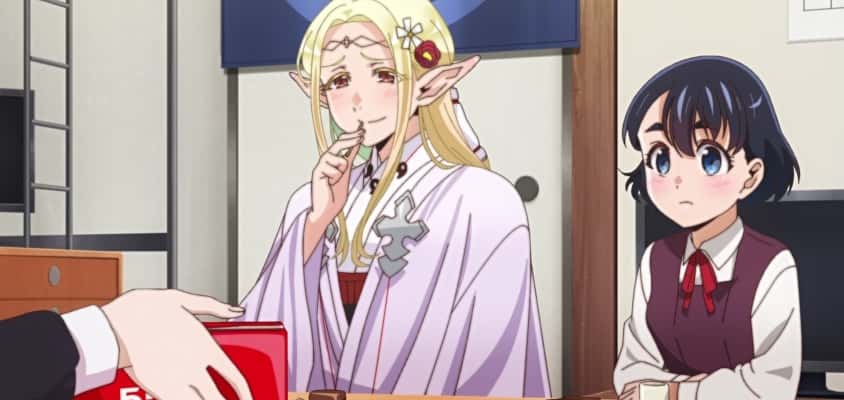
In this episode, we are introduced to a new character, Yolde, a dark elf from the Kansai region. Along with her attendant Himawari, she visits Elda and Koito. The episode primarily focuses on getting to know these newcomers and observing their interactions with our familiar cast.
While Yolde initially captivates with her petite, lovable appearance and sharp tongue, she falls short of her potential. Her constant petty outbursts come across as less charming than Elda’s, given her childlike stature. Despite being revealed as the older of the two elves, Yolde displays no traits that substantiate her supposed maturity.
The addition of another elf character is a natural progression for Otaku Elf, and I hope Yolde’s character develops further. Koito’s curiosity about the relationship between the two elves remains unexplored, as their interactions stay purely antagonistic. The concept of immortality and its impact on relationships is hinted at but not delved into, feeling like a missed opportunity.
On the other hand, Koito quickly befriends Himawari, Yolde’s shrine maiden. Himawari’s contrasting approach to handling her charge and her strong communication style bring a refreshing twist to the series.
This episode tones down the usual cultural enrichment elements, except for a brief scene where Elda corrects Yolde on naming foods. This interaction highlights Yolde’s small inferiority complex and offers a glimpse of Elda’s ability to handle her, perhaps due to their age difference.
In the latter part of the episode, we see Elda falling ill and reluctantly accepting treatment from the new doctor, Akane. Elda’s character shines through the voice of Ami Koshimizu, who brings a certain charm to Elda’s tantrums.
The episode ends on a lighthearted note, with Koito attempting to cook porridge for the sick Elda but ending up with curry instead.
While Yolde initially captivates with her petite, lovable appearance and sharp tongue, she falls short of her potential. Her constant petty outbursts come across as less charming than Elda’s, given her childlike stature. Despite being revealed as the older of the two elves, Yolde displays no traits that substantiate her supposed maturity.
The addition of another elf character is a natural progression for Otaku Elf, and I hope Yolde’s character develops further. Koito’s curiosity about the relationship between the two elves remains unexplored, as their interactions stay purely antagonistic. The concept of immortality and its impact on relationships is hinted at but not delved into, feeling like a missed opportunity.
On the other hand, Koito quickly befriends Himawari, Yolde’s shrine maiden. Himawari’s contrasting approach to handling her charge and her strong communication style bring a refreshing twist to the series.
This episode tones down the usual cultural enrichment elements, except for a brief scene where Elda corrects Yolde on naming foods. This interaction highlights Yolde’s small inferiority complex and offers a glimpse of Elda’s ability to handle her, perhaps due to their age difference.
In the latter part of the episode, we see Elda falling ill and reluctantly accepting treatment from the new doctor, Akane. Elda’s character shines through the voice of Ami Koshimizu, who brings a certain charm to Elda’s tantrums.
The episode ends on a lighthearted note, with Koito attempting to cook porridge for the sick Elda but ending up with curry instead.
This article was originally published in German. It was translated with technical support and editorially reviewed before publication.
Comment(s) 0