
Image: 美咲・講談社/「スキップとローファー」製作委員会
AMBot | 06/01/2023 | Reading Time: 3 Min.
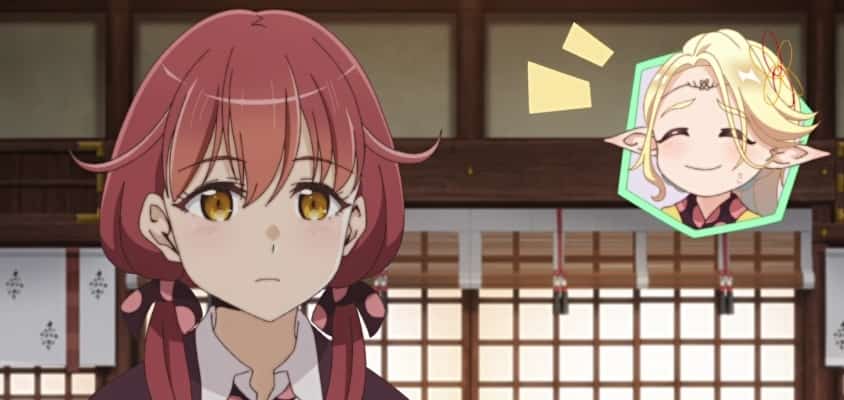
In the eighth episode, we are introduced to a new elf/miko pair: Haira, the deity of the Uramimi Shrine, and her miko, Isuzu, a popular Instagram influencer. At the beginning of the episode, there seems to be some friction between Haira and Elda, who is believed to be Haira's sister as well.
Haira initially presents herself as a diligent and dedicated deity who does not require her miko's constant presence, which appears to contrast with Elda's more relaxed approach. However, as the episode progresses, it is revealed that Haira has a severe gambling problem that often causes unrest and chaos in her shrine. The portrayal of Haira's gambling addiction is exaggerated and is meant to be understood as a comedic element.
This episode explores the roles and relationships between the elves and their mikos. The relationship between Elda and Koito is perceived as harmonious and effective despite their occasional bickering, as they manage to defuse a heated situation between Haira and Isuzu. Through this event, it becomes clear that the closeness of the mikos to the elves is not just about reverence but also about managing the elves' eccentricities for the benefit of their shrines.
The episode also compares and contrasts the relationship dynamics of Elda/Koito and Haira/Isuzu. Isuzu seems to idolize Haira, despite the problems caused by her gambling, and even keeps a photo collection of her. In contrast, Koito treats Elda more like a roommate or a friend than a revered deity.
The episode ends with a touching moment where Isuzu reflects on how fleeting the time of the mikos with their elves is and how it might affect their feelings in the long term. This leads Koito to ponder her relationship with Elda and her commitment to stand by Elda not just as a servant but as a companion.
Throughout the episode, we also enjoy several comedic moments stemming from Haira's chaotic tendencies, further amplified by Mamiko Noto's voice acting. There are also educational segments covering topics such as gambling in the Edo era and the beginnings of idol culture.
Haira initially presents herself as a diligent and dedicated deity who does not require her miko's constant presence, which appears to contrast with Elda's more relaxed approach. However, as the episode progresses, it is revealed that Haira has a severe gambling problem that often causes unrest and chaos in her shrine. The portrayal of Haira's gambling addiction is exaggerated and is meant to be understood as a comedic element.
This episode explores the roles and relationships between the elves and their mikos. The relationship between Elda and Koito is perceived as harmonious and effective despite their occasional bickering, as they manage to defuse a heated situation between Haira and Isuzu. Through this event, it becomes clear that the closeness of the mikos to the elves is not just about reverence but also about managing the elves' eccentricities for the benefit of their shrines.
The episode also compares and contrasts the relationship dynamics of Elda/Koito and Haira/Isuzu. Isuzu seems to idolize Haira, despite the problems caused by her gambling, and even keeps a photo collection of her. In contrast, Koito treats Elda more like a roommate or a friend than a revered deity.
The episode ends with a touching moment where Isuzu reflects on how fleeting the time of the mikos with their elves is and how it might affect their feelings in the long term. This leads Koito to ponder her relationship with Elda and her commitment to stand by Elda not just as a servant but as a companion.
Throughout the episode, we also enjoy several comedic moments stemming from Haira's chaotic tendencies, further amplified by Mamiko Noto's voice acting. There are also educational segments covering topics such as gambling in the Edo era and the beginnings of idol culture.
This article was originally published in German. It was translated with technical support and editorially reviewed before publication.
Comment(s) 0