The fundamental problem with most anime/manga live-action adaptations in recent years can be summarized simply: The execution bears only a distant resemblance to the respective original. The excuse is usually quickly found—wanting to make the content accessible to a broader audience, even if the works were commercialized to the point of being unrecognizable.
This cannot be said for "Ghost in the Shell" (abbreviated as GITS) by Mamoru Oshii, as the material is now over 20 years old. Nevertheless, the adaptation should not come as a surprise. The sequel "Ghost in the Shell: Innocence" in 2004 and the subsequent TV series (in recent years) were well-received in the American market. From today's perspective, the "Cyberpunk" direction is ideal for the big screen, as technology now makes it possible to create the worlds of this genre.
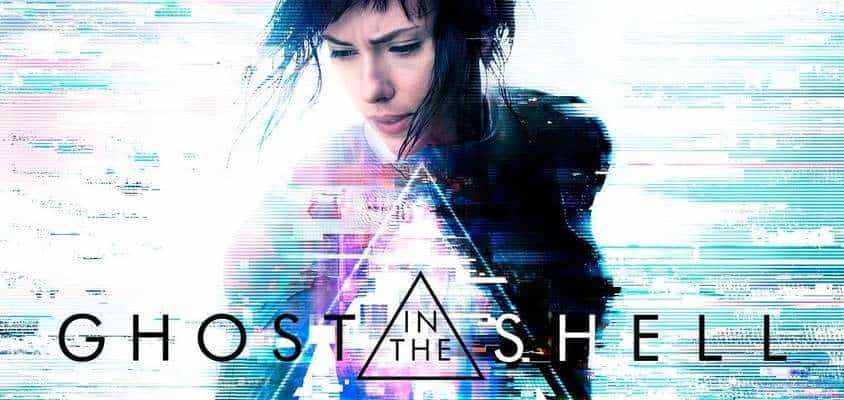
To address the aforementioned problem, the director and their vision are the most important prerequisites. When a moviegoer thinks of the film "Alien," the name Ridley Scott inevitably comes to mind. For "Ghost in the Shell," Rupert Sanders takes on this role, having made his feature film debut with "Snow White and the Huntsman" and being known for his visual compositions. Of course, every film also needs its star, and with Scarlett Johansson—despite some hardly understandable criticism ("whitewashing")—the film found its ideal casting.
The story begins with the creation of Major in a visually grand depiction of the anime's scenes. It is revealed that she is the first cyborg of her kind, bringing the introductory question of technological progress and human identity ("Ghost") to the forefront (also due to her memory loss). After this scene, the story jumps right into the action of Section 9 (a team of specialists in hacking and cyberterrorism) investigating an attack on a business meeting. This is the scene that has already been shown in various trailers.
In this first part, the viewer is introduced to the main characters and setting of "Ghost in the Shell." All that can really be said here is that the graphical detail work is outstanding. Most films depicting a futuristic vision of the world hold their respective CGI work to the standard of a bad video game backdrop or the now-standardized shots in the so-called "green room." For this reason, most films primarily limit themselves to simple sets, individual areas, or characters within a real background.
"Ghost in the Shell," on the other hand, is based on the backdrop of Hong Kong and interacts with this template, with every image and scene being digitally modified. In a way, the real world is overlaid with CGI. This kind of application of 3D technology, it can be said, has never been seen before. This attention to detail doesn’t end with the background but extends to the characters as well. The film is further elevated by an excellent soundtrack that ideally underscores the directorial choices of the original.
Among the characters, Kuze (a prototype by Hanka Robotics—neither the Puppetmaster nor the Laughing Man), played by Michael Carmen Pitt (known from the second season of Hannibal), stands out. In his first real scene with Major, he somewhat steals the show from the other characters. From this scene onward, the plot revolves around the revelation that Major’s assumed life up to this point has been a complete manipulation. We also really liked Batou, played by Pilou Asbæk (with some cool scenes), who leads the team under Major and acts as a link for the story.
If one looks for weaknesses from the perspective of the original in the adaptation, the film follows a continuous storyline in two parts that, compared to the original, feels more transparent and less mysterious, thereby losing some of its charm. Interestingly, this aspect is only noticeable if the original anime is known (it must be said). Another point is the attempt to integrate too many thematic areas. From our perspective, the emotional side between the characters falls short, while other scenes feel overblown.
Considering today's technological advancements and societal questions, "Ghost in the Shell" may indeed offer a first glimpse into the future of Hollywood. The film is absolutely worth watching, and we explicitly recommend only seeing it in 3D cinemas or, even better, 3D IMAX :)
PS:
It should also be noted that this review refers to the US version (press screening).
Latest trailer below:
By clicking the "Play" button, you agree to the privacy policy.
This article was originally published in German. It was translated with technical support and editorially reviewed before publication.



Comment(s) 0