
Image: YUJI KAKU/SHUEISHA, TWIN ENGINE, MAPPA
AMBot | 05/16/2023 | Reading Time: 3 Min.
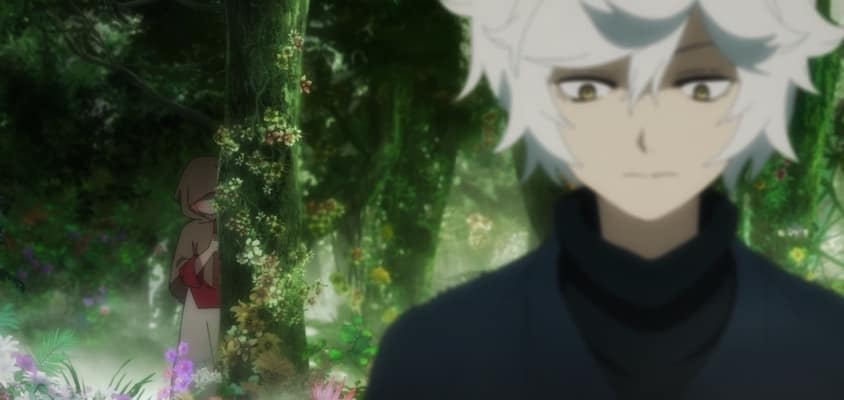
"Flowers and Offerings" begins with the two Aza brothers engaged in a fierce battle against enchanting nymphs in the forest. The nymphs, who initially appear calm and seductive, reveal their true forms as deadly adversaries. At the same time, the group led by Gabimaru arrives at the edge of an eerily deserted village and encounters a young girl, Mei. Her protector, a seemingly invincible giant named Houkou, accompanies her.
In the course of the story, we learn more about Mei's unique abilities. Although she cannot speak, she understands language and possesses a power that transcends the physical, as Gabimaru observes. Gabimaru leaves the group to pursue the swift-footed Mei through the forest, leaving the others to deal with Houkou.
During the confrontation with Houkou, he is wounded but quickly regenerates. While chasing Mei, Gabimaru eventually captures her, leading to her emotional breakdown. Sagiri then intervenes, comforting the child as her maternal instincts guide her actions.
A turning point occurs when Houkou proposes a deal: he will lead the group to the village and reveal information about the elusive elixir if they return Mei to him in exchange. Despite initial skepticism, Yuzuruiha is tempted by the offer of a bath and agrees to the deal.
Houkou's hut, filled with Taoist artifacts, serves as his home—and has done so for over a thousand years. Through his explanations, the island's secrets are further unveiled. Soshin, the lesser monsters encountered earlier, and Tensen, the indestructible guardians of the elixir, are all rooted in Taoist mythology.
The most revealing disclosure of the episode lies in the nature of the life-giving elixir Tan, which comes from humans who were defeated by Tensen and then consumed by flowers. This fate may have befallen the Aza brothers, but their ultimate fate remains uncertain.
The episode concludes with an intimate scene at the bathhouse. As Sagiri teaches Mei how to bathe, Gabimaru reflects on the past, reminiscing about the care he received from his wife.
In the course of the story, we learn more about Mei's unique abilities. Although she cannot speak, she understands language and possesses a power that transcends the physical, as Gabimaru observes. Gabimaru leaves the group to pursue the swift-footed Mei through the forest, leaving the others to deal with Houkou.
During the confrontation with Houkou, he is wounded but quickly regenerates. While chasing Mei, Gabimaru eventually captures her, leading to her emotional breakdown. Sagiri then intervenes, comforting the child as her maternal instincts guide her actions.
A turning point occurs when Houkou proposes a deal: he will lead the group to the village and reveal information about the elusive elixir if they return Mei to him in exchange. Despite initial skepticism, Yuzuruiha is tempted by the offer of a bath and agrees to the deal.
Houkou's hut, filled with Taoist artifacts, serves as his home—and has done so for over a thousand years. Through his explanations, the island's secrets are further unveiled. Soshin, the lesser monsters encountered earlier, and Tensen, the indestructible guardians of the elixir, are all rooted in Taoist mythology.
The most revealing disclosure of the episode lies in the nature of the life-giving elixir Tan, which comes from humans who were defeated by Tensen and then consumed by flowers. This fate may have befallen the Aza brothers, but their ultimate fate remains uncertain.
The episode concludes with an intimate scene at the bathhouse. As Sagiri teaches Mei how to bathe, Gabimaru reflects on the past, reminiscing about the care he received from his wife.
This article was originally published in German. It was translated with technical support and editorially reviewed before publication.
Comment(s) 0