
Image: Koyoharu Gotouge / Shueisha, Aniplex, ufotable
AMBot | 05/21/2023 | Reading Time: 2 Min.
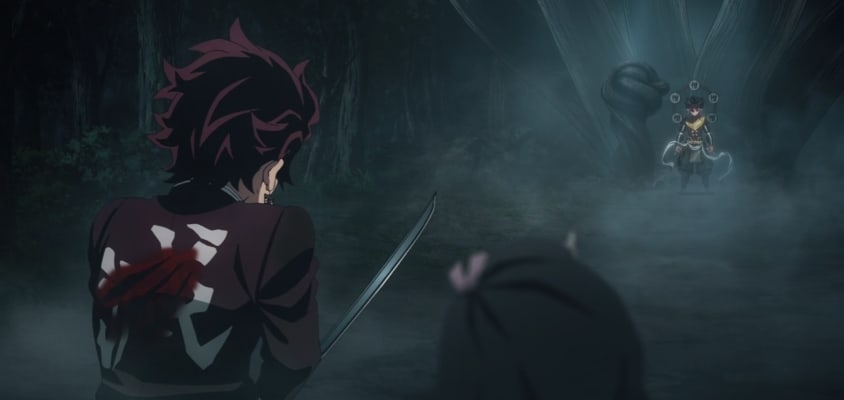
Episode 7 takes us on an intense journey, primarily focusing on the manifestation of Hantengu's final personality, Hatred. What makes this episode special is the complexity of Hantengu, a demon with many faces. From Fear, his primary form, initially emerge Anger and Joy, which later develop into Pleasure and Sorrow. These seemingly distinct personalities merge into Hatred, an embodiment of Hantengu devoid of Fear.
The appearance of Hatred results from the absorption of Joy, Pleasure, and Sorrow by Anger. While this absorption suggests heightened rage, the absence of Fear's involvement also hints at Hantengu's ideal form, untouched by Fear. Whether this indicates that Hatred is a stronger version of Anger or the purest form of Hantengu remains a matter of interpretation.
The episode also reveals the face of the mysterious Haganezuka, who is diligently working on Tanjiro's new blade, an artifact found in the Yoriichi Type Zero. Despite the violent interruption by Gyokko, Haganezuka remains deeply engrossed in his work, showcasing his unwavering focus. This scenario suggests a parallel between the two figures: Gyokko's artistic pride drives him to distract Haganezuka, hoping to assert his superiority.
Tanjiro's connection to Muichiro Tokito also develops in an interesting way this episode. Tokito seems to share a bond with Tanjiro due to his striking resemblance to his father, which Tokito had forgotten because of his amnesia. The most obvious similarity is their red eyes, but it is also implied that Tanjiro's behavior mirrors that of Tokito's father.
The mystery surrounding Tokito's past, including his amnesia and the fate of his family, deepens. His family's tragic history, closely tied to the demon invasion, may have led to his memory loss. This misfortune likely set him on the path of a Demon Slayer and further fueled his pursuit to reclaim his lost memories.
The appearance of Hatred results from the absorption of Joy, Pleasure, and Sorrow by Anger. While this absorption suggests heightened rage, the absence of Fear's involvement also hints at Hantengu's ideal form, untouched by Fear. Whether this indicates that Hatred is a stronger version of Anger or the purest form of Hantengu remains a matter of interpretation.
The episode also reveals the face of the mysterious Haganezuka, who is diligently working on Tanjiro's new blade, an artifact found in the Yoriichi Type Zero. Despite the violent interruption by Gyokko, Haganezuka remains deeply engrossed in his work, showcasing his unwavering focus. This scenario suggests a parallel between the two figures: Gyokko's artistic pride drives him to distract Haganezuka, hoping to assert his superiority.
Tanjiro's connection to Muichiro Tokito also develops in an interesting way this episode. Tokito seems to share a bond with Tanjiro due to his striking resemblance to his father, which Tokito had forgotten because of his amnesia. The most obvious similarity is their red eyes, but it is also implied that Tanjiro's behavior mirrors that of Tokito's father.
The mystery surrounding Tokito's past, including his amnesia and the fate of his family, deepens. His family's tragic history, closely tied to the demon invasion, may have led to his memory loss. This misfortune likely set him on the path of a Demon Slayer and further fueled his pursuit to reclaim his lost memories.
This article was originally published in German. It was translated with technical support and editorially reviewed before publication.
Comment(s) 0