
Image: 中村勇志(秋田書店)/六道の悪女たち製作委員会
AMBot | 04/09/2023 | Reading Time: 2 Min.
Rokudou no Onna-tachi is an anime that blends comedy, harem, and delinquent elements into a unique story with unconventional artwork. Fans of Tokyo Revengers might find this series appealing, but it’s not for everyone.
The story revolves around Rokudou, a young man who finds himself at the bottom of the social hierarchy. He and his friends have a reputation for being creepy, which draws the attention of the criminals at their school. When Rokudou inherits a family heirloom that attracts delinquent girls, his life takes a chaotic turn as he becomes the object of desire for a group of tough female characters.
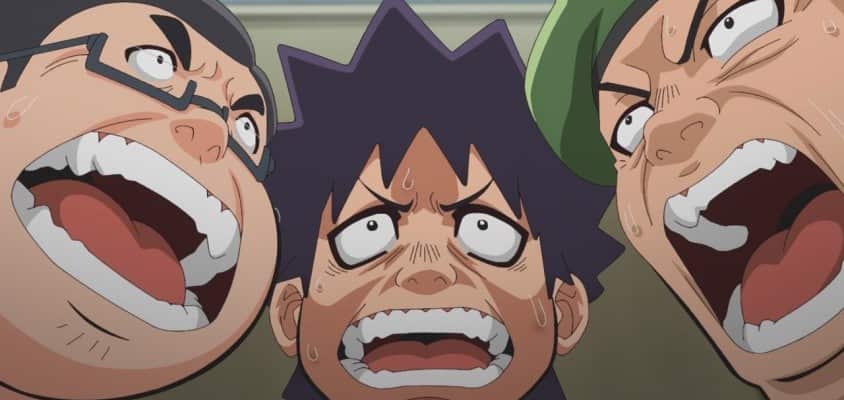
Rokudou is portrayed as an unlucky guy, but his unsettling behavior makes it hard to sympathize with him. The side characters are also hit-or-miss: Rokudou’s friends share his unlikable traits, and the delinquents are just as unsympathetic.
The female characters, such as Himawari Ranna, are introduced as criminals who fall for Rokudou due to the heirloom’s influence. Unfortunately, their characters don’t receive much development beyond their attraction to Rokudou and their violent tendencies.
The story revolves around Rokudou, a young man who finds himself at the bottom of the social hierarchy. He and his friends have a reputation for being creepy, which draws the attention of the criminals at their school. When Rokudou inherits a family heirloom that attracts delinquent girls, his life takes a chaotic turn as he becomes the object of desire for a group of tough female characters.
Rokudou is portrayed as an unlucky guy, but his unsettling behavior makes it hard to sympathize with him. The side characters are also hit-or-miss: Rokudou’s friends share his unlikable traits, and the delinquents are just as unsympathetic.
The female characters, such as Himawari Ranna, are introduced as criminals who fall for Rokudou due to the heirloom’s influence. Unfortunately, their characters don’t receive much development beyond their attraction to Rokudou and their violent tendencies.
This article was originally published in German. It was translated with technical support and editorially reviewed before publication.
Comment(s) 0