
Image: 武田綾乃・宝島社/『響け!』製作委員会2024
AMBot | 05/05/2024 | Reading Time: 3 Min.
In Episode 5 of "Hibike! Euphonium 3," Kumiko, now in her third year of high school, grapples with the daunting prospect of life after graduation as her father and teacher confront her about her lack of future plans. Contrary to her expectations, neither scolds her; her father assures her that she is free to choose her own path and emphasizes the importance of making a decision.
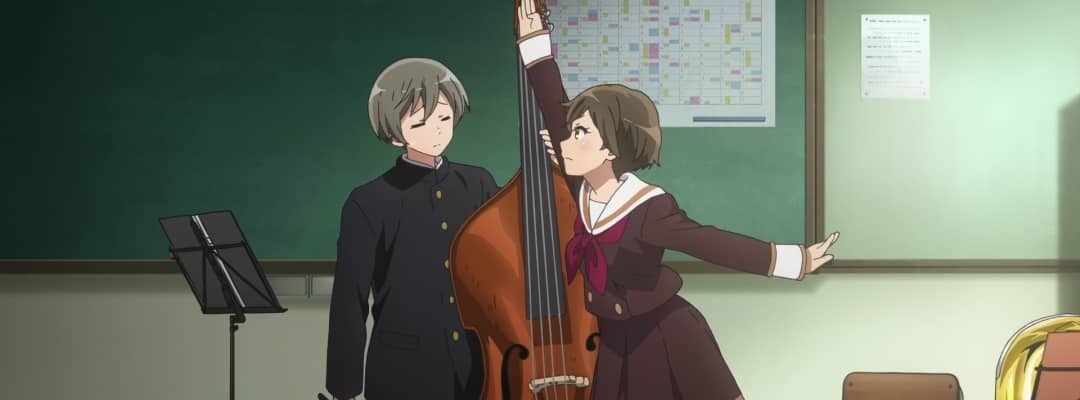
Amid these personal challenges, the Kitauji High School band also faces a period of change. After their failure at the national competitions, the band’s audition system—which previously required auditions for all major contests—comes under criticism. Shuuichi, who has taken on the role of vice president, proposes the Seira method: three separate auditions for each competition level to ensure sustained motivation and opportunities for improvement. This new strategy initially meets with confusion but is seen as a promising shift for the band’s dynamics.
The narrative also shifts to interpersonal dynamics, particularly through Kuroe Mayu’s fears of replacing others due to her comparable musical skills. This subplot intersects with the social aspects of the students’ lives, as seen when Shuuichi encourages social interactions during the upcoming Agata Festival, an event that garners significant attention within the group.
Kumiko’s avoidance of commitments, both personal and professional, becomes evident when she declines Mayu’s invitation to the festival under a pretext, reflecting her ongoing struggle with indecisiveness. However, this pattern is challenged during a critical conversation with her teacher, Michie-sensei, who warns her against letting indecision turn into inaction—prompting a moment of self-reflection for Kumiko.
The episode further explores the emotional bond between Kumiko and Reina, highlighting their unique connection. Reina invites Kumiko to her home during the Agata Festival, where they share an intimate evening discussing their futures and hopes. This culminates in a poignant music session where they play a meaningful piece symbolizing the seasons and underscoring their intertwined life paths.
Reina’s vulnerability surfaces as she expresses her fear that their paths may diverge after graduation, revealing deeper layers of her character and their relationship. This conversation underscores the theme of transition and the uncertainty of the future, yet with an undercurrent of hope that their bond will endure beyond their school years.
Amid these personal challenges, the Kitauji High School band also faces a period of change. After their failure at the national competitions, the band’s audition system—which previously required auditions for all major contests—comes under criticism. Shuuichi, who has taken on the role of vice president, proposes the Seira method: three separate auditions for each competition level to ensure sustained motivation and opportunities for improvement. This new strategy initially meets with confusion but is seen as a promising shift for the band’s dynamics.
The narrative also shifts to interpersonal dynamics, particularly through Kuroe Mayu’s fears of replacing others due to her comparable musical skills. This subplot intersects with the social aspects of the students’ lives, as seen when Shuuichi encourages social interactions during the upcoming Agata Festival, an event that garners significant attention within the group.
Kumiko’s avoidance of commitments, both personal and professional, becomes evident when she declines Mayu’s invitation to the festival under a pretext, reflecting her ongoing struggle with indecisiveness. However, this pattern is challenged during a critical conversation with her teacher, Michie-sensei, who warns her against letting indecision turn into inaction—prompting a moment of self-reflection for Kumiko.
The episode further explores the emotional bond between Kumiko and Reina, highlighting their unique connection. Reina invites Kumiko to her home during the Agata Festival, where they share an intimate evening discussing their futures and hopes. This culminates in a poignant music session where they play a meaningful piece symbolizing the seasons and underscoring their intertwined life paths.
Reina’s vulnerability surfaces as she expresses her fear that their paths may diverge after graduation, revealing deeper layers of her character and their relationship. This conversation underscores the theme of transition and the uncertainty of the future, yet with an undercurrent of hope that their bond will endure beyond their school years.
This article was originally published in German. It was translated with technical support and editorially reviewed before publication.
Comment(s) 0