
ONA
Description
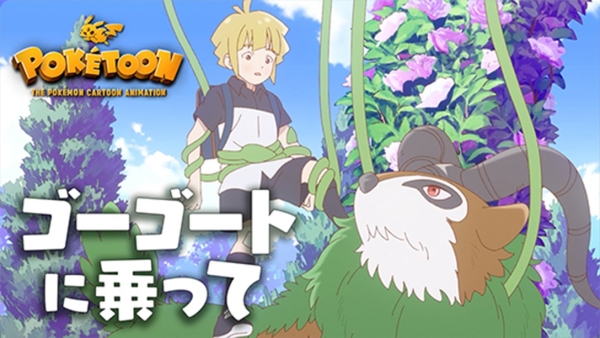
"Gogoat ni Notte" centers on a rural village where the mystical creature Gogoat, a large, goat-like being with the ability to traverse any terrain, plays a central role in the lives of the inhabitants. The story begins with a young villager named Haru, who discovers an ancient bond between humans and Gogoat, a connection that has been forgotten over generations. Haru learns that Gogoat is not merely a beast of burden but a guardian spirit tied to the land’s prosperity. When the village faces an ecological crisis due to deforestation and industrialization, Haru embarks on a journey to rekindle the bond between humans and Gogoat, hoping to restore balance to the environment.
The narrative unfolds as Haru encounters various characters, each representing different perspectives on the relationship between nature and humanity. Among them is Rina, a pragmatic engineer who initially views Gogoat as a tool for progress, and Kaito, a wandering storyteller who holds the key to the forgotten legends of Gogoat. As Haru travels through diverse landscapes, from dense forests to arid plains, the series explores themes of coexistence, tradition, and the consequences of neglecting natural harmony. The plot is driven by Haru’s growing understanding of Gogoat’s role as a mediator between the human and natural worlds, culminating in a climactic confrontation with forces seeking to exploit Gogoat’s power for personal gain.
The series balances episodic adventures with an overarching narrative, allowing for both character development and world-building. Haru’s journey is marked by challenges that test his resolve and deepen his connection to Gogoat, while secondary characters provide insight into the broader societal conflicts surrounding the village’s plight. The story’s resolution emphasizes the importance of mutual respect between humans and nature, leaving a lasting impression on the village’s future. "Gogoat ni Notte" stands out for its thoughtful exploration of environmental themes and its integration of folklore into a contemporary narrative.
The narrative unfolds as Haru encounters various characters, each representing different perspectives on the relationship between nature and humanity. Among them is Rina, a pragmatic engineer who initially views Gogoat as a tool for progress, and Kaito, a wandering storyteller who holds the key to the forgotten legends of Gogoat. As Haru travels through diverse landscapes, from dense forests to arid plains, the series explores themes of coexistence, tradition, and the consequences of neglecting natural harmony. The plot is driven by Haru’s growing understanding of Gogoat’s role as a mediator between the human and natural worlds, culminating in a climactic confrontation with forces seeking to exploit Gogoat’s power for personal gain.
The series balances episodic adventures with an overarching narrative, allowing for both character development and world-building. Haru’s journey is marked by challenges that test his resolve and deepen his connection to Gogoat, while secondary characters provide insight into the broader societal conflicts surrounding the village’s plight. The story’s resolution emphasizes the importance of mutual respect between humans and nature, leaving a lasting impression on the village’s future. "Gogoat ni Notte" stands out for its thoughtful exploration of environmental themes and its integration of folklore into a contemporary narrative.
Comment(s)
Staff
- DirectorMiwa Sasaki
- StoryboardMiwa Sasaki
- MusicYuri Habuka
- Character DesignShizue Kaneko
- Animation DirectorShizue Kaneko
- Director of PhotographyFumi Nanba
- ScriptYasumi Atarashi
- Unit DirectorMiwa Sasaki
- Original Concept
- Art DirectorMasanobu Nomura
- Sound DirectorKisuke Koizumi
Production
- Animation ProductionZEXCS