
TV-Series
Description
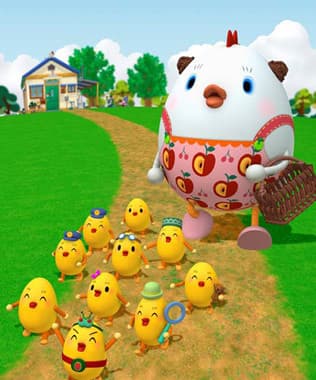
"Kokekko-san" is a short-form anime series that revolves around the daily lives of a group of anthropomorphic chickens living in a rural Japanese village. The chickens, who walk, talk, and interact like humans, engage in mundane yet humorous activities that reflect everyday life, often with a comedic twist. The central characters include Kokekko-san, a cheerful and somewhat naive hen who serves as the protagonist, and her friends, who each have distinct personalities that contribute to the lighthearted dynamics of the group.
The narrative is episodic, with each episode focusing on small, self-contained stories that highlight the chickens' interactions with their environment and each other. These stories often involve simple tasks, such as preparing food, participating in local festivals, or dealing with minor conflicts, all of which are infused with humor and charm. The chickens' anthropomorphic nature allows for creative and whimsical scenarios, such as using their beaks to hold objects or laying eggs in unexpected situations, which add to the series' comedic appeal.
The setting is a quaint, rural village that mirrors traditional Japanese countryside life, complete with rice fields, wooden houses, and seasonal changes. This backdrop provides a cozy and nostalgic atmosphere, enhancing the slice-of-life elements of the series. The chickens' interactions with other animals, such as a mischievous cat or a wise old rooster, further enrich the narrative, offering additional layers of humor and occasional life lessons.
Despite its simplicity, "Kokekko-san" effectively captures the essence of everyday life through its anthropomorphic characters and their relatable, albeit exaggerated, experiences. The series maintains a light and cheerful tone throughout, making it an accessible and enjoyable watch for audiences of all ages. Its brevity and episodic structure ensure that each story is concise and engaging, without overcomplicating the narrative.
The narrative is episodic, with each episode focusing on small, self-contained stories that highlight the chickens' interactions with their environment and each other. These stories often involve simple tasks, such as preparing food, participating in local festivals, or dealing with minor conflicts, all of which are infused with humor and charm. The chickens' anthropomorphic nature allows for creative and whimsical scenarios, such as using their beaks to hold objects or laying eggs in unexpected situations, which add to the series' comedic appeal.
The setting is a quaint, rural village that mirrors traditional Japanese countryside life, complete with rice fields, wooden houses, and seasonal changes. This backdrop provides a cozy and nostalgic atmosphere, enhancing the slice-of-life elements of the series. The chickens' interactions with other animals, such as a mischievous cat or a wise old rooster, further enrich the narrative, offering additional layers of humor and occasional life lessons.
Despite its simplicity, "Kokekko-san" effectively captures the essence of everyday life through its anthropomorphic characters and their relatable, albeit exaggerated, experiences. The series maintains a light and cheerful tone throughout, making it an accessible and enjoyable watch for audiences of all ages. Its brevity and episodic structure ensure that each story is concise and engaging, without overcomplicating the narrative.
Cast
- Kokekko-san
- PiyaMichiko Komatsu
- PimiMichiko Komatsu
Comment(s)
Staff
- DirectorKeiichirō MochizukiWon-Ki Hong
- MusicMegumi ŌhashiMICHIRURio Kōyama
- Art DirectorSung Su Lee
- Series CompositionSeidō Fujii
- Original Character DesignKazuhiro Nishiyama
- Sound DirectorSōichirō Kubo
Production
- ProductionGENCOG&G Entertainment