
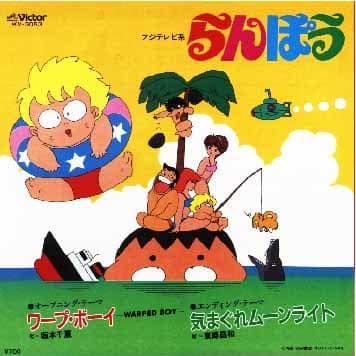
TV-Series
Description
"Ranpou" is a historical anime series set in the late Edo period of Japan, blending elements of action, drama, and supernatural intrigue. The narrative centers on Ranpou, a skilled physician with a mysterious past, who travels across the land offering medical aid to those in need. Despite his noble profession, Ranpou harbors a dark secret: he is a half-demon, a condition that grants him extraordinary abilities but also isolates him from society. His dual nature becomes a central theme as he struggles to reconcile his human compassion with the monstrous instincts he must suppress.
The story unfolds as Ranpou encounters various individuals and factions, each with their own agendas. Among them is a secretive organization seeking to exploit his demonic powers for their own gain, as well as a group of demon hunters determined to eradicate all supernatural beings, regardless of their intentions. Ranpou’s journey is further complicated by his interactions with a young orphan named Rin, whom he takes under his wing. Rin’s innocence and determination to protect others serve as a moral anchor for Ranpou, challenging him to confront his inner turmoil and embrace his humanity.
As the series progresses, Ranpou becomes embroiled in a larger conflict involving the balance of power between humans and demons. The Edo period’s rigid social hierarchy and political instability provide a rich backdrop for the story, with themes of prejudice, redemption, and the struggle for identity woven throughout. Key characters include Shizuka, a fierce warrior with a tragic past tied to Ranpou’s origins, and Kuro, a cunning demon who oscillates between ally and antagonist. The interplay between these characters drives the narrative forward, culminating in a climactic confrontation that forces Ranpou to make a pivotal choice about his future.
The series is notable for its intricate world-building, blending historical accuracy with supernatural elements to create a compelling and immersive setting. The plot is driven by a mix of episodic encounters and overarching storylines, allowing for both character development and exploration of the broader societal issues of the time. "Ranpou" stands out as a thought-provoking exploration of morality and identity, set against the backdrop of a tumultuous period in Japanese history.
The story unfolds as Ranpou encounters various individuals and factions, each with their own agendas. Among them is a secretive organization seeking to exploit his demonic powers for their own gain, as well as a group of demon hunters determined to eradicate all supernatural beings, regardless of their intentions. Ranpou’s journey is further complicated by his interactions with a young orphan named Rin, whom he takes under his wing. Rin’s innocence and determination to protect others serve as a moral anchor for Ranpou, challenging him to confront his inner turmoil and embrace his humanity.
As the series progresses, Ranpou becomes embroiled in a larger conflict involving the balance of power between humans and demons. The Edo period’s rigid social hierarchy and political instability provide a rich backdrop for the story, with themes of prejudice, redemption, and the struggle for identity woven throughout. Key characters include Shizuka, a fierce warrior with a tragic past tied to Ranpou’s origins, and Kuro, a cunning demon who oscillates between ally and antagonist. The interplay between these characters drives the narrative forward, culminating in a climactic confrontation that forces Ranpou to make a pivotal choice about his future.
The series is notable for its intricate world-building, blending historical accuracy with supernatural elements to create a compelling and immersive setting. The plot is driven by a mix of episodic encounters and overarching storylines, allowing for both character development and exploration of the broader societal issues of the time. "Ranpou" stands out as a thought-provoking exploration of morality and identity, set against the backdrop of a tumultuous period in Japanese history.
Comment(s)
No entries available.
Staff
- Chief Director · Ken Baba
- Script · Keiko Maruo
- Screenplay · Kenji Terada
- Screenplay · Yasushi Hirano
- Screenplay · Hideki Sonoda
- Screenplay · Hiroshi Toda
- Screenplay · Yoshio Urasawa
- Screenplay · Keiko Maruo
- Screenplay · Ayumi Enomoto
- Screenplay · Yuzo Yamada
- Screenplay · Ryoichi Yagi
- Storyboard · Kunihiko Yuyama
- Storyboard · Takeshi Shirato
- Storyboard · Tetsuo Yasumi
- Storyboard · Tameo Kohanawa
- Storyboard · Kiyoshi Fukumoto
- Storyboard · Noriyoshi Nakamura
- Storyboard · Daizo Takeuchi
- Storyboard · Akinori Orai
- Storyboard · Tetsutaro Fujiwara
- Storyboard · Yuzo Yamada
- Storyboard · Saki Noda
- Storyboard · Yuichi Fukuhara
- Episode Director · Noriyoshi Nakamura
- Episode Director · Shin Misawa
- Episode Director · Kouichi Sasaki
- Episode Director · Hisaya Takabayashi
- Episode Director · Yuzo Yamada
- Episode Director · Akio Yamadera
- Music · Chito Kawachi
- Original Manga · Masatoshi Uchizaki
- Character Design · Hiroshi Kanazawa
- Art Director · Toyo Ebisawa
- Animation Director · Masayuki
- Animation Director · Moriyasu Taniguchi
- Animation Director · Kazuaki Moori
- Animation Director · Hiroshi Kanezawa
- Animation Director · Takahisa Ichikawa
- Animation Director · Hiroshi Kanazawa
- Animation Director · Mitsuru Nasukawa
- Animation Director · Toshiyuki Honda
- Sound Director · Naoko Asari
- Director of Photography · Akihiko Takahashi
- Producer · Yoshiro Kataoka
- Producer · Hiromichi Mogaki
Production
- Production · Fuji TV
- Production · NAS