
OVA
Description
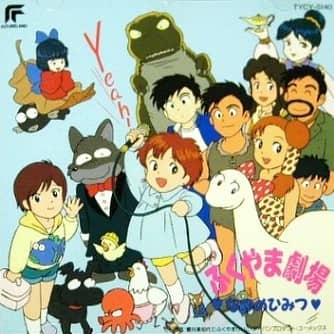
"Fukuyama Gekijō - Natsu no Himitsu" is a slice-of-life anime set in a small coastal town during the summer. The narrative revolves around a group of high school students who discover an abandoned theater, Fukuyama Gekijō, while exploring their town. The theater, once a vibrant cultural hub, has been closed for decades, and its mysterious past becomes a focal point for the characters.
The protagonist, Haruto, is a reserved and introspective student with a passion for photography. His childhood friend, Aoi, is energetic and curious, often pushing the group to uncover the secrets of the theater. Alongside them is Riku, a pragmatic and resourceful classmate with a knack for solving puzzles, and Yuna, a quiet and artistic transfer student who becomes intrigued by the theater's history. Together, they form an unlikely team to restore the theater and uncover its hidden stories.
As the group delves deeper into the theater's past, they uncover a series of old letters, photographs, and artifacts that reveal the lives of the people who once frequented it. These discoveries intertwine with their own personal struggles and growth. Haruto grapples with his fear of failure, Aoi confronts her insecurities about the future, Riku learns to balance logic with emotion, and Yuna finds her voice through her art. The theater becomes a metaphor for their collective journey, symbolizing both the preservation of memories and the courage to move forward.
The narrative is structured around their efforts to organize a summer festival at the theater, aiming to revive its legacy. Along the way, they encounter challenges such as repairing the dilapidated building, gaining community support, and reconciling with the town's older generation, who harbor mixed feelings about the theater's revival. The story culminates in the festival, where the characters' efforts come to fruition, and the theater's secrets are finally unveiled, bringing closure to its history and inspiring the town.
"Fukuyama Gekijō - Natsu no Himitsu" explores themes of friendship, nostalgia, and the passage of time, using the theater as a central symbol to connect the past and present. The characters' interactions and personal arcs are interwoven with the mystery of the theater, creating a cohesive narrative that balances emotional depth with a sense of discovery.
The protagonist, Haruto, is a reserved and introspective student with a passion for photography. His childhood friend, Aoi, is energetic and curious, often pushing the group to uncover the secrets of the theater. Alongside them is Riku, a pragmatic and resourceful classmate with a knack for solving puzzles, and Yuna, a quiet and artistic transfer student who becomes intrigued by the theater's history. Together, they form an unlikely team to restore the theater and uncover its hidden stories.
As the group delves deeper into the theater's past, they uncover a series of old letters, photographs, and artifacts that reveal the lives of the people who once frequented it. These discoveries intertwine with their own personal struggles and growth. Haruto grapples with his fear of failure, Aoi confronts her insecurities about the future, Riku learns to balance logic with emotion, and Yuna finds her voice through her art. The theater becomes a metaphor for their collective journey, symbolizing both the preservation of memories and the courage to move forward.
The narrative is structured around their efforts to organize a summer festival at the theater, aiming to revive its legacy. Along the way, they encounter challenges such as repairing the dilapidated building, gaining community support, and reconciling with the town's older generation, who harbor mixed feelings about the theater's revival. The story culminates in the festival, where the characters' efforts come to fruition, and the theater's secrets are finally unveiled, bringing closure to its history and inspiring the town.
"Fukuyama Gekijō - Natsu no Himitsu" explores themes of friendship, nostalgia, and the passage of time, using the theater as a central symbol to connect the past and present. The characters' interactions and personal arcs are interwoven with the mystery of the theater, creating a cohesive narrative that balances emotional depth with a sense of discovery.
Cast
Comment(s)
Staff
- Chief DirectorMichiyo Sakurai
- MusicToshiyuki Watanabe
- Character DesignMichiyo Sakurai
- Sound DirectorSadayoshi Fujino
- Executive producerJunji Fujita
- StoryboardMichiyo Sakurai
- Original creator
- Art DirectorMariko Kadono
- Director of PhotographyKinichi Ishikawa
- ProducerJunji FujitaMichiyo Sakurai
Production
- ProductionYumexUrban Product