Movie
Description
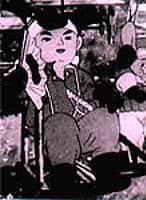
"Momotaro, Sacred Sailors" is a 1945 Japanese animated film produced during World War II, often regarded as Japan's first feature-length animated film. The narrative centers on Momotaro, a folkloric hero derived from Japanese mythology, who leads a group of anthropomorphic animals on a mission to liberate an island from foreign occupiers. The story begins with Momotaro, a young boy born from a giant peach, who is depicted as a symbol of strength and purity. Alongside his loyal companions—a dog, a monkey, a pheasant, and a bear—Momotaro embarks on a journey to the South Pacific, where they encounter enemy forces.
The film portrays the group's efforts to establish peace and cooperation among the island's inhabitants, who are depicted as oppressed by foreign invaders. The narrative emphasizes themes of unity, bravery, and patriotism, reflecting the wartime context in which it was produced. Momotaro and his animal companions engage in various acts of heroism, including building infrastructure, teaching the islanders useful skills, and ultimately confronting the enemy in a climactic battle. The story concludes with the island's liberation and the establishment of a harmonious society under Momotaro's leadership.
The characters are archetypal, with Momotaro representing idealized Japanese virtues, while his animal companions embody traits such as loyalty, intelligence, and resourcefulness. The film's plot is straightforward, focusing on the group's collective efforts to achieve their mission, with little emphasis on individual character development. The narrative structure is episodic, highlighting key moments of their journey and the challenges they overcome. "Momotaro, Sacred Sailors" serves as both a piece of wartime propaganda and a cultural artifact, blending traditional folklore with contemporary political messaging.
The film portrays the group's efforts to establish peace and cooperation among the island's inhabitants, who are depicted as oppressed by foreign invaders. The narrative emphasizes themes of unity, bravery, and patriotism, reflecting the wartime context in which it was produced. Momotaro and his animal companions engage in various acts of heroism, including building infrastructure, teaching the islanders useful skills, and ultimately confronting the enemy in a climactic battle. The story concludes with the island's liberation and the establishment of a harmonious society under Momotaro's leadership.
The characters are archetypal, with Momotaro representing idealized Japanese virtues, while his animal companions embody traits such as loyalty, intelligence, and resourcefulness. The film's plot is straightforward, focusing on the group's collective efforts to achieve their mission, with little emphasis on individual character development. The narrative structure is episodic, highlighting key moments of their journey and the challenges they overcome. "Momotaro, Sacred Sailors" serves as both a piece of wartime propaganda and a cultural artifact, blending traditional folklore with contemporary political messaging.
Comment(s)
Staff
- DirectorMitsuyo Seo
Production
- ProductionShouchiku Douga Kenkyuusho
Relations
Recommendations based on shared tags.