Movie
Description
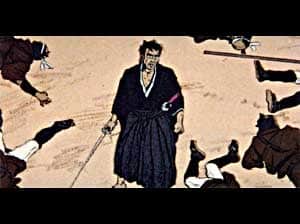
In "MURAMASA," the narrative unfolds in a feudal Japan-inspired world where the balance of power is maintained through the possession of legendary swords, each imbued with unique abilities. The central figure is Muramasa, a skilled swordsmith whose creations are highly sought after for their unparalleled craftsmanship and mystical properties. However, these swords are not mere weapons; they carry a curse that influences the fate of their wielders, often leading to tragedy and conflict.
The story begins with the discovery of a new sword forged by Muramasa, which becomes the catalyst for a series of events that draw various factions into a struggle for dominance. Among the key characters is Kageaki, a wandering swordsman who becomes entangled in the chaos after acquiring one of Muramasa's blades. Kageaki's journey is marked by encounters with other warriors, each driven by their own motives and bound by the swords' curses. These interactions reveal the complex interplay between ambition, loyalty, and the human cost of wielding such power.
As the plot progresses, the true nature of Muramasa's swords is gradually unveiled. The swords are not only tools of destruction but also vessels for the souls of their previous owners, who continue to influence the actions of their new wielders. This dynamic creates a web of interconnected destinies, where past and present collide, and the line between ally and enemy becomes increasingly blurred. The narrative explores themes of fate, morality, and the consequences of seeking power at any cost.
The series also delves into the backstories of its characters, providing context for their actions and motivations. Kageaki's past, in particular, is revealed to be intertwined with the legacy of Muramasa's swords, adding layers of complexity to his character. Other notable figures include a noblewoman seeking to reclaim her family's honor, a rogue samurai driven by vengeance, and a mysterious figure who seems to manipulate events from the shadows.
Throughout the series, the tension escalates as the various factions converge in a climactic struggle for control of Muramasa's ultimate creation, a sword said to grant its wielder unparalleled power. The resolution of this conflict hinges on the choices made by the characters, highlighting the series' exploration of free will versus destiny. The narrative concludes with a reflection on the enduring impact of Muramasa's legacy, leaving the audience to ponder the true cost of power and the cyclical nature of history.
The story begins with the discovery of a new sword forged by Muramasa, which becomes the catalyst for a series of events that draw various factions into a struggle for dominance. Among the key characters is Kageaki, a wandering swordsman who becomes entangled in the chaos after acquiring one of Muramasa's blades. Kageaki's journey is marked by encounters with other warriors, each driven by their own motives and bound by the swords' curses. These interactions reveal the complex interplay between ambition, loyalty, and the human cost of wielding such power.
As the plot progresses, the true nature of Muramasa's swords is gradually unveiled. The swords are not only tools of destruction but also vessels for the souls of their previous owners, who continue to influence the actions of their new wielders. This dynamic creates a web of interconnected destinies, where past and present collide, and the line between ally and enemy becomes increasingly blurred. The narrative explores themes of fate, morality, and the consequences of seeking power at any cost.
The series also delves into the backstories of its characters, providing context for their actions and motivations. Kageaki's past, in particular, is revealed to be intertwined with the legacy of Muramasa's swords, adding layers of complexity to his character. Other notable figures include a noblewoman seeking to reclaim her family's honor, a rogue samurai driven by vengeance, and a mysterious figure who seems to manipulate events from the shadows.
Throughout the series, the tension escalates as the various factions converge in a climactic struggle for control of Muramasa's ultimate creation, a sword said to grant its wielder unparalleled power. The resolution of this conflict hinges on the choices made by the characters, highlighting the series' exploration of free will versus destiny. The narrative concludes with a reflection on the enduring impact of Muramasa's legacy, leaving the audience to ponder the true cost of power and the cyclical nature of history.
Comment(s)
Staff
- Director
- Original story
- ArtSetsuko IshizuSeiji Miyamoto
- MusicRoetsu ToushaYuho Tousha
- Character DesignHyakkimaru
- ProducerYoshihiro Shimizu
Production
- ProductionTezuka Productions
Relations
Manga overview