
Manga
Description
"Aramitama" is a manga series that blends elements of supernatural horror, action, and psychological drama. The narrative centers around a young man named Shou, who becomes entangled in a world of ancient spirits and dark forces after encountering a mysterious artifact. This artifact, known as the Aramitama, is a cursed object that houses a malevolent spirit capable of granting immense power at a great cost. Shou’s life takes a drastic turn when he inadvertently awakens the spirit, binding it to his soul and forcing him to confront both external threats and his own inner turmoil.
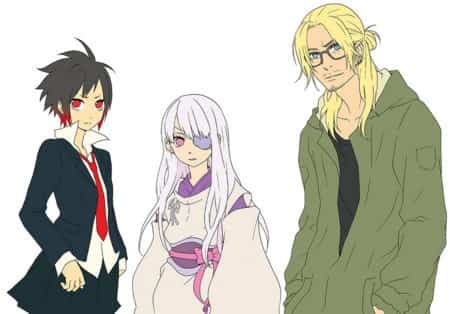
The story unfolds as Shou struggles to control the destructive power of the Aramitama while being pursued by various factions, each with their own agendas. These include a secretive religious organization seeking to harness the artifact’s power, rogue spirit hunters aiming to destroy it, and other individuals who have been similarly cursed. As Shou navigates this dangerous landscape, he forms uneasy alliances with other characters, such as Rin, a skilled exorcist with a tragic past, and Kaito, a former friend turned rival who seeks to claim the Aramitama for himself.
Themes of duality and the struggle between good and evil are central to the narrative, as the Aramitama’s influence begins to corrupt Shou’s mind, blurring the line between his humanity and the spirit’s malevolence. The series explores the psychological toll of wielding such power, as Shou is forced to confront his own fears, regrets, and desires. The plot is driven by a series of escalating conflicts, culminating in a climactic battle that tests Shou’s resolve and the strength of his bonds with those around him.
The manga is notable for its intricate world-building, which incorporates elements of Japanese folklore and mythology, particularly the concept of tamashii (souls) and the balance between their benevolent (nigimitama) and malevolent (aramitama) aspects. The characters are multifaceted, with their motivations and backstories gradually revealed through flashbacks and interactions, adding depth to the narrative. The pacing alternates between intense action sequences and quieter, introspective moments, creating a dynamic and engaging reading experience.
The story unfolds as Shou struggles to control the destructive power of the Aramitama while being pursued by various factions, each with their own agendas. These include a secretive religious organization seeking to harness the artifact’s power, rogue spirit hunters aiming to destroy it, and other individuals who have been similarly cursed. As Shou navigates this dangerous landscape, he forms uneasy alliances with other characters, such as Rin, a skilled exorcist with a tragic past, and Kaito, a former friend turned rival who seeks to claim the Aramitama for himself.
Themes of duality and the struggle between good and evil are central to the narrative, as the Aramitama’s influence begins to corrupt Shou’s mind, blurring the line between his humanity and the spirit’s malevolence. The series explores the psychological toll of wielding such power, as Shou is forced to confront his own fears, regrets, and desires. The plot is driven by a series of escalating conflicts, culminating in a climactic battle that tests Shou’s resolve and the strength of his bonds with those around him.
The manga is notable for its intricate world-building, which incorporates elements of Japanese folklore and mythology, particularly the concept of tamashii (souls) and the balance between their benevolent (nigimitama) and malevolent (aramitama) aspects. The characters are multifaceted, with their motivations and backstories gradually revealed through flashbacks and interactions, adding depth to the narrative. The pacing alternates between intense action sequences and quieter, introspective moments, creating a dynamic and engaging reading experience.
Comment(s)
Staff
- Story & ArtRyuji Gotsubo