
Manga
Description
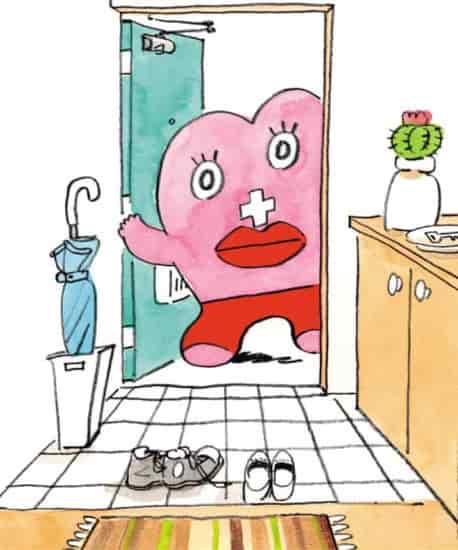
"Little Miss P" is a manga series that centers around the life of a young girl named P-ko, who navigates the complexities of adolescence, relationships, and self-discovery. P-ko is an ordinary middle school student with a vivid imagination and a tendency to daydream, often losing herself in fantasies that contrast sharply with her mundane reality. Her life takes a turn when she develops a crush on a classmate, K-kun, a quiet and aloof boy who becomes the focal point of her romantic aspirations.
The narrative explores P-ko's attempts to capture K-kun's attention, often leading to humorous and awkward situations. Her efforts are frequently thwarted by her own insecurities and the unpredictable dynamics of teenage social life. Alongside her romantic pursuits, P-ko grapples with friendships, particularly with her best friend Y-chan, who provides a grounded counterbalance to P-ko's whimsical nature. The interactions between P-ko and Y-chan highlight themes of loyalty, support, and the challenges of maintaining close relationships during adolescence.
As the story progresses, P-ko's character evolves, revealing deeper layers of her personality. Her daydreams, which initially serve as an escape from reality, gradually become a tool for self-reflection and growth. The series delves into her internal struggles, including feelings of inadequacy, the pressure to conform, and the desire to be understood. These themes are interwoven with lighthearted moments, creating a balance between humor and emotional depth.
The manga also introduces a cast of secondary characters, each contributing to the exploration of teenage life. K-kun, while initially portrayed as an idealized figure, is revealed to have his own vulnerabilities and complexities. Other classmates and acquaintances add dimension to the narrative, reflecting the diverse experiences and challenges faced by adolescents.
"Little Miss P" captures the essence of growing up, blending comedic elements with poignant reflections on identity, relationships, and the transition from childhood to adulthood. The series resonates with readers through its relatable portrayal of the highs and lows of adolescence, making it a compelling exploration of youth and self-discovery.
The narrative explores P-ko's attempts to capture K-kun's attention, often leading to humorous and awkward situations. Her efforts are frequently thwarted by her own insecurities and the unpredictable dynamics of teenage social life. Alongside her romantic pursuits, P-ko grapples with friendships, particularly with her best friend Y-chan, who provides a grounded counterbalance to P-ko's whimsical nature. The interactions between P-ko and Y-chan highlight themes of loyalty, support, and the challenges of maintaining close relationships during adolescence.
As the story progresses, P-ko's character evolves, revealing deeper layers of her personality. Her daydreams, which initially serve as an escape from reality, gradually become a tool for self-reflection and growth. The series delves into her internal struggles, including feelings of inadequacy, the pressure to conform, and the desire to be understood. These themes are interwoven with lighthearted moments, creating a balance between humor and emotional depth.
The manga also introduces a cast of secondary characters, each contributing to the exploration of teenage life. K-kun, while initially portrayed as an idealized figure, is revealed to have his own vulnerabilities and complexities. Other classmates and acquaintances add dimension to the narrative, reflecting the diverse experiences and challenges faced by adolescents.
"Little Miss P" captures the essence of growing up, blending comedic elements with poignant reflections on identity, relationships, and the transition from childhood to adulthood. The series resonates with readers through its relatable portrayal of the highs and lows of adolescence, making it a compelling exploration of youth and self-discovery.
Comment(s)
Staff
- Story & ArtKen Koyama