Manga
Description
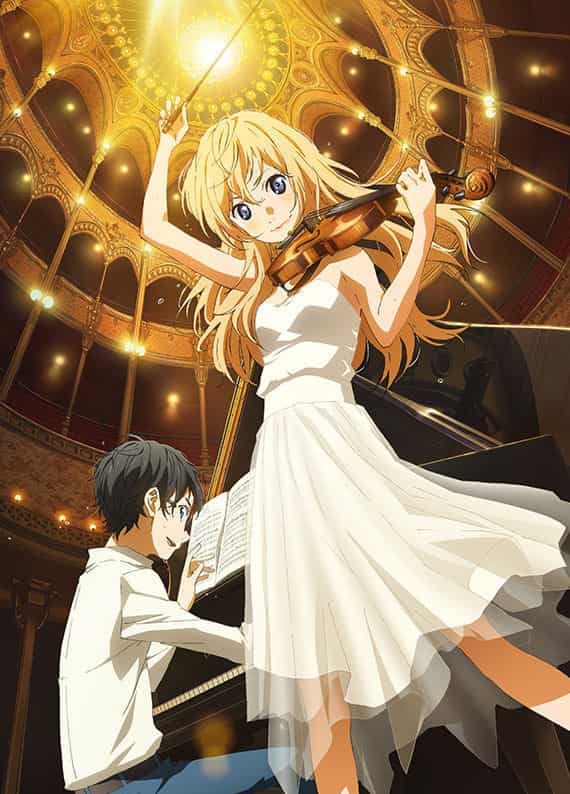
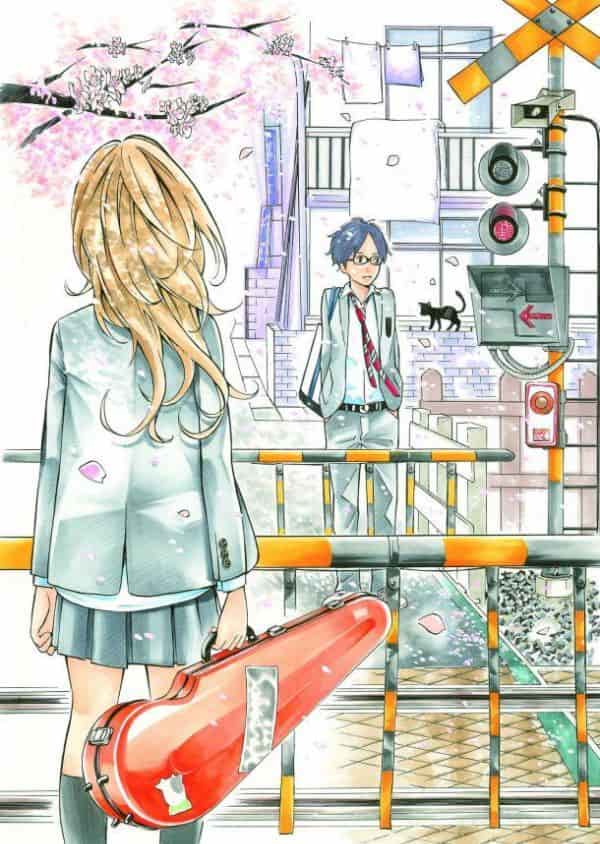
"Shigatsu wa Kimi no Uso" centers on Kōsei Arima, a piano prodigy who loses his ability to hear the sound of his own playing after the death of his emotionally demanding mother, Saki Arima. Once celebrated as a child prodigy, Kōsei withdraws from performing and lives a monotonous, colorless life, distancing himself from music and the world around him. His perspective shifts when he meets Kaori Miyazono, a free-spirited violinist whose unconventional and passionate approach to music contrasts sharply with Kōsei’s rigid, technical style. Kaori’s vibrant personality and insistence on playing music for self-expression rather than perfection rekindle Kōsei’s love for the piano.
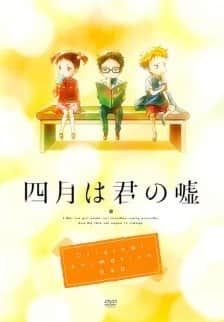
As Kōsei begins to rediscover his musical voice, he reconnects with his childhood friends, Tsubaki Sawabe and Ryōta Watari. Tsubaki, a softball player, harbors unspoken feelings for Kōsei, while Ryōta, a popular athlete, serves as a bridge between Kōsei and Kaori. The narrative explores Kōsei’s journey of healing and self-discovery, as he confronts his traumatic past, his complicated relationship with his mother, and his evolving feelings for Kaori. Kaori, meanwhile, grapples with her own struggles, which are gradually revealed as the story progresses.
The series delves into themes of love, loss, and the transformative power of art, using music as a central metaphor for emotional expression and connection. Kōsei’s performances become a means of communicating his innermost feelings, while Kaori’s violin playing embodies her defiance against limitations and her desire to live life fully. The story builds toward a poignant climax, intertwining the characters’ personal growth with their musical aspirations. Through its exploration of human relationships and the cathartic nature of music, "Shigatsu wa Kimi no Uso" presents a deeply emotional and resonant narrative.
As Kōsei begins to rediscover his musical voice, he reconnects with his childhood friends, Tsubaki Sawabe and Ryōta Watari. Tsubaki, a softball player, harbors unspoken feelings for Kōsei, while Ryōta, a popular athlete, serves as a bridge between Kōsei and Kaori. The narrative explores Kōsei’s journey of healing and self-discovery, as he confronts his traumatic past, his complicated relationship with his mother, and his evolving feelings for Kaori. Kaori, meanwhile, grapples with her own struggles, which are gradually revealed as the story progresses.
The series delves into themes of love, loss, and the transformative power of art, using music as a central metaphor for emotional expression and connection. Kōsei’s performances become a means of communicating his innermost feelings, while Kaori’s violin playing embodies her defiance against limitations and her desire to live life fully. The story builds toward a poignant climax, intertwining the characters’ personal growth with their musical aspirations. Through its exploration of human relationships and the cathartic nature of music, "Shigatsu wa Kimi no Uso" presents a deeply emotional and resonant narrative.
Comment(s)