
Manga
Description
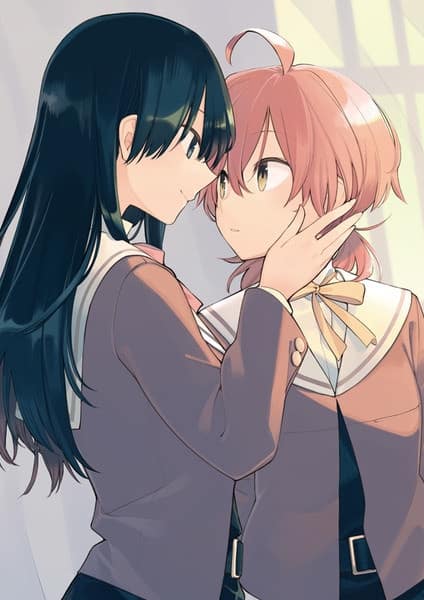
Yuu Koito, a high school student, has always been fascinated by shoujo manga and the idea of romantic love. However, when a classmate confesses his feelings to her, she feels nothing, leading her to question her understanding of love. Upon entering high school, Yuu meets Touko Nanami, the confident and charismatic student council president. Touko, admired by many, unexpectedly confesses her love to Yuu, who is taken aback but agrees to consider the relationship. Yuu’s initial hesitation stems from her inability to reciprocate Touko’s feelings, as she remains unsure of what love truly means to her.
As the story progresses, Yuu becomes deeply involved in Touko’s life, joining the student council and spending increasing amounts of time with her. Touko, who initially appears self-assured, reveals her own insecurities and struggles with self-worth. She idolizes her late older sister, Mio, and strives to emulate her in every way, believing that she must live up to an idealized version of herself to be worthy of love. This internal conflict creates tension in her relationship with Yuu, as Touko struggles to accept herself for who she is rather than who she thinks she should be.
The narrative explores the complexities of their relationship, delving into themes of identity, self-acceptance, and the nature of love. Yuu’s journey is one of self-discovery as she grapples with her inability to feel romantic love while navigating her growing bond with Touko. Meanwhile, Touko’s journey involves confronting her idealized self-image and learning to embrace her true identity. Their relationship evolves gradually, marked by moments of vulnerability, misunderstanding, and mutual support.
Secondary characters, such as Sayaka Saeki, a fellow student council member and Touko’s childhood friend, add depth to the story. Sayaka harbors her own unrequited feelings for Touko, which create a nuanced dynamic within the group. The series also introduces other relationships, including Yuu’s friendship with her classmate Koyomi Kanou, who provides a contrasting perspective on love and relationships.
The manga balances emotional depth with a measured pacing, allowing the characters’ growth to unfold naturally. It avoids simplistic resolutions, instead presenting a realistic portrayal of the challenges and uncertainties that come with understanding oneself and forming meaningful connections. The story concludes with a focus on the characters’ personal growth and the evolving nature of their relationships, emphasizing the importance of self-acceptance and mutual understanding.
As the story progresses, Yuu becomes deeply involved in Touko’s life, joining the student council and spending increasing amounts of time with her. Touko, who initially appears self-assured, reveals her own insecurities and struggles with self-worth. She idolizes her late older sister, Mio, and strives to emulate her in every way, believing that she must live up to an idealized version of herself to be worthy of love. This internal conflict creates tension in her relationship with Yuu, as Touko struggles to accept herself for who she is rather than who she thinks she should be.
The narrative explores the complexities of their relationship, delving into themes of identity, self-acceptance, and the nature of love. Yuu’s journey is one of self-discovery as she grapples with her inability to feel romantic love while navigating her growing bond with Touko. Meanwhile, Touko’s journey involves confronting her idealized self-image and learning to embrace her true identity. Their relationship evolves gradually, marked by moments of vulnerability, misunderstanding, and mutual support.
Secondary characters, such as Sayaka Saeki, a fellow student council member and Touko’s childhood friend, add depth to the story. Sayaka harbors her own unrequited feelings for Touko, which create a nuanced dynamic within the group. The series also introduces other relationships, including Yuu’s friendship with her classmate Koyomi Kanou, who provides a contrasting perspective on love and relationships.
The manga balances emotional depth with a measured pacing, allowing the characters’ growth to unfold naturally. It avoids simplistic resolutions, instead presenting a realistic portrayal of the challenges and uncertainties that come with understanding oneself and forming meaningful connections. The story concludes with a focus on the characters’ personal growth and the evolving nature of their relationships, emphasizing the importance of self-acceptance and mutual understanding.
Comment(s)
Staff
- Story & Art
Relations
Anime overview
