
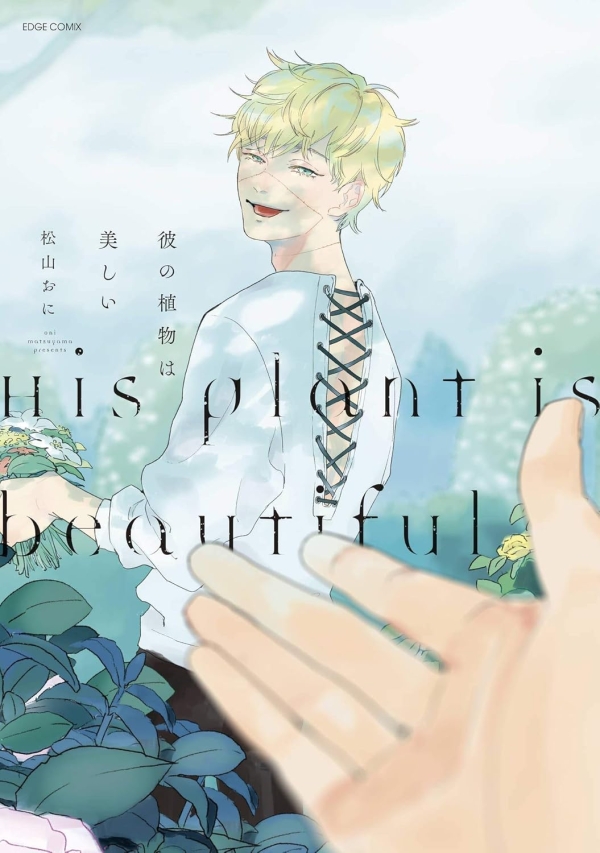
Manga
Description
"Kare no Shokubutsu wa Utsukushii" is a manga series that blends elements of romance, fantasy, and drama. The narrative centers around Hana, a young woman with the unique ability to communicate with plants. Her life takes a dramatic turn when she encounters Kei, a mysterious and aloof man who suffers from a rare condition that causes plants to grow uncontrollably from his body. This condition, known as the "Hanahaki Disease," is both a curse and a source of fascination, as the plants that emerge from Kei are extraordinarily beautiful but also life-threatening.
Hana, who has always felt a deep connection to nature, is drawn to Kei and offers to help him manage his condition. As she tends to the plants growing from his body, the two develop a complex relationship marked by mutual dependence and growing affection. Kei, who has lived in isolation due to his condition, begins to open up to Hana, while she finds purpose and fulfillment in caring for him. Their bond deepens as they navigate the challenges posed by Kei's illness, including the physical pain it causes and the societal stigma surrounding it.
The story explores themes of love, sacrifice, and the delicate balance between life and death. Hana's nurturing nature and Kei's struggle with his condition create a poignant dynamic, as they both grapple with the implications of their connection. The narrative also delves into the broader implications of the Hanahaki Disease, touching on its origins and the possibility of a cure. Supporting characters, including Kei's family and Hana's acquaintances, add depth to the story, providing additional perspectives on the central relationship and the challenges it faces.
As the series progresses, the relationship between Hana and Kei evolves, with moments of tenderness and tension. The manga balances its romantic elements with a sense of urgency, as Kei's condition worsens and the need for a solution becomes more pressing. The interplay between the fantastical elements of the story and the emotional struggles of the characters creates a compelling narrative that keeps readers engaged. The series ultimately explores the idea of love as both a source of healing and a potential burden, leaving a lasting impression on its audience.
Hana, who has always felt a deep connection to nature, is drawn to Kei and offers to help him manage his condition. As she tends to the plants growing from his body, the two develop a complex relationship marked by mutual dependence and growing affection. Kei, who has lived in isolation due to his condition, begins to open up to Hana, while she finds purpose and fulfillment in caring for him. Their bond deepens as they navigate the challenges posed by Kei's illness, including the physical pain it causes and the societal stigma surrounding it.
The story explores themes of love, sacrifice, and the delicate balance between life and death. Hana's nurturing nature and Kei's struggle with his condition create a poignant dynamic, as they both grapple with the implications of their connection. The narrative also delves into the broader implications of the Hanahaki Disease, touching on its origins and the possibility of a cure. Supporting characters, including Kei's family and Hana's acquaintances, add depth to the story, providing additional perspectives on the central relationship and the challenges it faces.
As the series progresses, the relationship between Hana and Kei evolves, with moments of tenderness and tension. The manga balances its romantic elements with a sense of urgency, as Kei's condition worsens and the need for a solution becomes more pressing. The interplay between the fantastical elements of the story and the emotional struggles of the characters creates a compelling narrative that keeps readers engaged. The series ultimately explores the idea of love as both a source of healing and a potential burden, leaving a lasting impression on its audience.
Comment(s)
Staff
- Story & ArtOni Matsuyama