Manga
Description
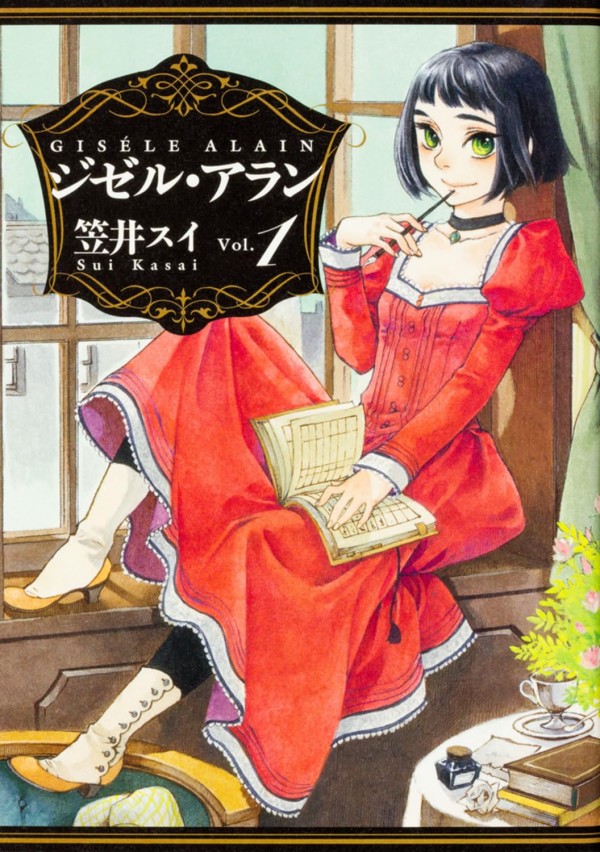
The protagonist of Gisele Alain is the eponymous thirteen-year-old girl, a headstrong and curious heiress who has run away from her wealthy noble family to forge her own path. The story is set in a beautifully detailed version of 19th-century France, where Gisele works as the young owner of an apartment building and runs an unconventional odd-jobs service from her door, calling herself a femme à tout faire, or jack of all trades.
The narrative is largely episodic, following Gisele as she takes on various requests from her tenants and neighbors. These tasks range from finding a lost cat and cleaning chimneys to more complex and emotionally charged interventions in people’s lives. She is often accompanied by Eric, a tenant who is behind on his rent and whom she essentially forces to act as her reluctant assistant and surrogate older brother. A key part of the story’s charm is Gisele’s personality: she is depicted as intelligent, cheerful, and well-meaning, but also naive, recklessly curious, and stubborn in her desire to fix other people’s problems, sometimes with unforeseen consequences.
While the tone is generally light and whimsical, the manga is known for exploring nuanced and occasionally dark themes. One of the most notable narrative arcs involves Colette, a free-spirited cabaret dancer who moves into the building. Gisele is immediately fascinated by her, but Eric is suspicious. Colette introduces the sheltered Gisele to the city’s red-light district, leading to a series of events that challenge the boundaries of good intentions and appropriate behavior. The story does not shy away from the ethical complexities of Colette’s actions, which include exposing the young Gisele to adult situations and kissing her, forcing both the characters and the reader to grapple with the question of whether a good intention justifies a harmful act.
Another recurring undercurrent is Gisele’s mysterious past and the reason for her estrangement from her noble family, which occasionally surfaces to cast a shadow over her newfound freedom. A subtle, slow-burning romance is also hinted at in the evolving relationship between Gisele and Eric. The supporting cast, including other building residents, returns throughout the chapters, creating a strong sense of continuity and community. The manga is noted for its highly detailed and expressive artwork, which lovingly recreates the historical European setting and has drawn frequent comparisons to works like Emma. The series was serialized from 2009 to 2014 and remains incomplete, placed on indefinite hiatus following the untimely death of its creator, Sui Kasai.
The narrative is largely episodic, following Gisele as she takes on various requests from her tenants and neighbors. These tasks range from finding a lost cat and cleaning chimneys to more complex and emotionally charged interventions in people’s lives. She is often accompanied by Eric, a tenant who is behind on his rent and whom she essentially forces to act as her reluctant assistant and surrogate older brother. A key part of the story’s charm is Gisele’s personality: she is depicted as intelligent, cheerful, and well-meaning, but also naive, recklessly curious, and stubborn in her desire to fix other people’s problems, sometimes with unforeseen consequences.
While the tone is generally light and whimsical, the manga is known for exploring nuanced and occasionally dark themes. One of the most notable narrative arcs involves Colette, a free-spirited cabaret dancer who moves into the building. Gisele is immediately fascinated by her, but Eric is suspicious. Colette introduces the sheltered Gisele to the city’s red-light district, leading to a series of events that challenge the boundaries of good intentions and appropriate behavior. The story does not shy away from the ethical complexities of Colette’s actions, which include exposing the young Gisele to adult situations and kissing her, forcing both the characters and the reader to grapple with the question of whether a good intention justifies a harmful act.
Another recurring undercurrent is Gisele’s mysterious past and the reason for her estrangement from her noble family, which occasionally surfaces to cast a shadow over her newfound freedom. A subtle, slow-burning romance is also hinted at in the evolving relationship between Gisele and Eric. The supporting cast, including other building residents, returns throughout the chapters, creating a strong sense of continuity and community. The manga is noted for its highly detailed and expressive artwork, which lovingly recreates the historical European setting and has drawn frequent comparisons to works like Emma. The series was serialized from 2009 to 2014 and remains incomplete, placed on indefinite hiatus following the untimely death of its creator, Sui Kasai.
Comment(s)
Staff
- Story & ArtSui Kasai
Recommendations
Empfehlungen auf Basis gemeinsamer Kategorien.