Manga
Description
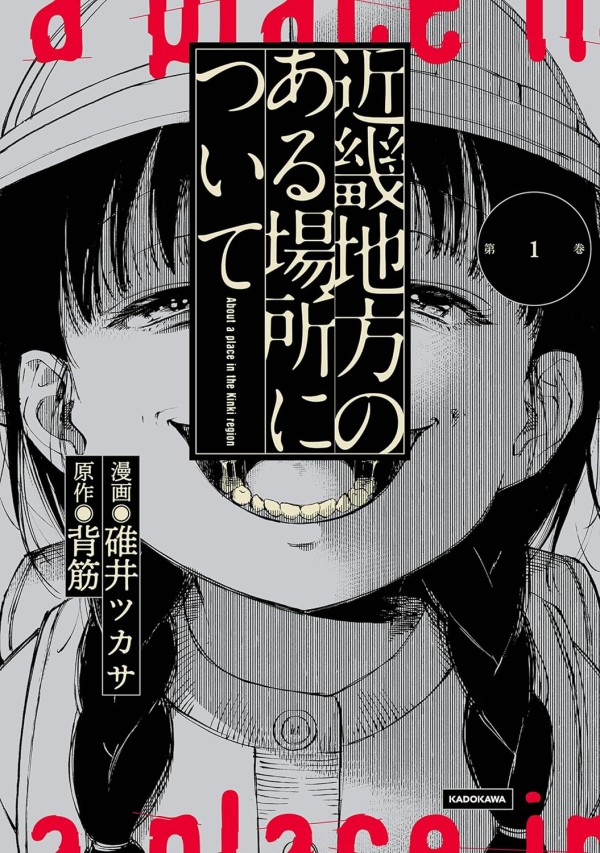
The editorial chief of a paranormal magazine has vanished while researching his next feature. Before disappearing, he had been investigating a string of seemingly unconnected events: the unsolved disappearance of a young girl, a mass hysteria incident at a school, local urban myths, and live streams from ghost hunters. His colleague, Ozawa Yusei, takes over the investigation and enlists the help of an old friend, the writer Seno Chihiro, to piece together what happened. Together, they sift through the missing man's research files, which point toward a specific, unnamed location in the Kinki region of Japan, somewhere in the mountains near a dam. This place, rendered with blank symbols in the text, seems to be a nexus for supernatural activity.
The story is a mosaic of different media and testimonies. The narrative is assembled from articles, interviews, online forum posts, and recorded footage, all of which suggest that various local paranormal phenomena are actually fragments of a single, terrifying truth. As Ozawa and Seno dig deeper, three distinct but connected supernatural entities emerge. The first is a large, white, ape-like being that dwells in the mountain and lures people, particularly women, with simple promises like having persimmons. The second is the Jumping Woman, the ghost of a mother who lost her son. Driven mad by grief, she attempted to resurrect him using a cursed stone and ancient rituals, only to give birth to a demon wearing her son’s face. The third is the demon itself, Akir-kun, which feeds on life and death.
The investigation reveals a dark history for the region. Local folklore tells of a man named Masaru who was killed by villagers for allegedly murdering women, only to become a lingering spirit. In the 1980s, a young girl disappeared, and a child’s game called "Masshiro-san" led to the ritual sacrifice of a pet cat, which was then replaced by a doll, serving as a prototype for the darker rituals to come. A cursed stone, once enshrined to contain the mountain entity, was stolen by a cult and later used by the Jumping Woman. Her subsequent suicide turned her into a curse that uses the internet and media to spread, eventually compelling the writer of the collected file to publish his findings as a way to disseminate the haunting further.
The manga adaptation, illustrated by Tsukasa Usui, serializes the original horror novel by Sesuji. It begins with a direct appeal to the reader: a compilation of research materials is presented in the hopes that someone can help locate the missing editor. As the collected files are read, the connection between a haunted apartment building, a decaying mansion covered in talismans, a strange stone, and a peculiar drawing becomes clear. The narrative arcs move from collecting individual ghost stories, to identifying their common origin, and finally to the investigators themselves traveling into the heart of the Kinki region to confront the source of the mystery, a journey that exposes them to the full, ongoing force of the curse.
The story is a mosaic of different media and testimonies. The narrative is assembled from articles, interviews, online forum posts, and recorded footage, all of which suggest that various local paranormal phenomena are actually fragments of a single, terrifying truth. As Ozawa and Seno dig deeper, three distinct but connected supernatural entities emerge. The first is a large, white, ape-like being that dwells in the mountain and lures people, particularly women, with simple promises like having persimmons. The second is the Jumping Woman, the ghost of a mother who lost her son. Driven mad by grief, she attempted to resurrect him using a cursed stone and ancient rituals, only to give birth to a demon wearing her son’s face. The third is the demon itself, Akir-kun, which feeds on life and death.
The investigation reveals a dark history for the region. Local folklore tells of a man named Masaru who was killed by villagers for allegedly murdering women, only to become a lingering spirit. In the 1980s, a young girl disappeared, and a child’s game called "Masshiro-san" led to the ritual sacrifice of a pet cat, which was then replaced by a doll, serving as a prototype for the darker rituals to come. A cursed stone, once enshrined to contain the mountain entity, was stolen by a cult and later used by the Jumping Woman. Her subsequent suicide turned her into a curse that uses the internet and media to spread, eventually compelling the writer of the collected file to publish his findings as a way to disseminate the haunting further.
The manga adaptation, illustrated by Tsukasa Usui, serializes the original horror novel by Sesuji. It begins with a direct appeal to the reader: a compilation of research materials is presented in the hopes that someone can help locate the missing editor. As the collected files are read, the connection between a haunted apartment building, a decaying mansion covered in talismans, a strange stone, and a peculiar drawing becomes clear. The narrative arcs move from collecting individual ghost stories, to identifying their common origin, and finally to the investigators themselves traveling into the heart of the Kinki region to confront the source of the mystery, a journey that exposes them to the full, ongoing force of the curse.
Comment(s)
Staff
- Original storySesuji
- ArtTsukasa Usui
Recommendations
Empfehlungen auf Basis gemeinsamer Kategorien.