
Manga
Description
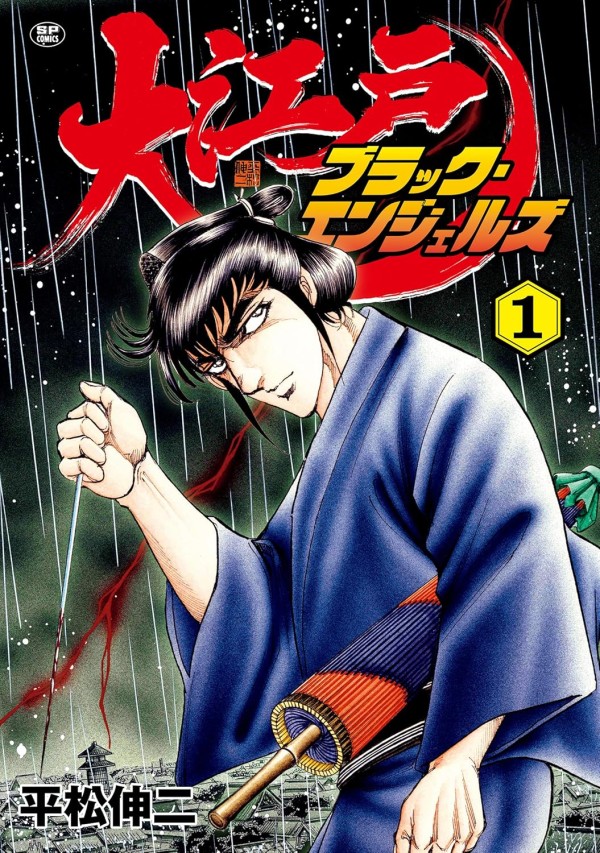
In 1790s Edo, a shadowy avenger known as the Black Angel dispenses justice that the law cannot reach. The protagonist is Yukiji, a struggling portrait painter whose realistic artistic style stands in stark contrast to the flat, abstract ukiyo-e prints of the era. This skill at capturing true likenesses becomes a narrative device that attracts both patrons and enemies. By night, Yukiji transforms into a lethal vigilante, using the sharpened metal support pole from a traditional paper umbrella as his weapon of choice.
The story is a historical reboot of Shinji Hiramatsu’s 1981 manga Black Angels, serialized in Comic Ran by Leeda-sha beginning in 2020. The plot follows Yukiji as he avenges the powerless. In the opening arc, a young woman named Oito is assaulted by her employer, the wealthy merchant Momofuku, and his brutish retainer Sutematsu. When Oito’s father confronts the men and is subsequently murdered and framed as a suicide, Yukiji discards his artist persona. He stalks the two villains through the rain-soaked streets, killing them with his umbrella spike and establishing his modus operandi.
Rather than abandoning his profession, Yukiji’s art remains central to the conflict. His realistic portraits attract the attention of a ukiyo-e publisher named Takaya Juzaburo and a carver named Hashimu, who wish to mass-produce his work. This commercial success draws the ire of traditionalist elders and a cunning daimyo named Ienaga, who holds a grudge against Takaya for past crimes against his family. These antagonists deploy ninja and a vengeful kunoichi to destroy the print shop, leading to confrontations that blend sword fighting with Yukiji’s improvised arsenal of painting brushes and poles.
The narrative introduces a colorful cast of rogues, including Matsuda, a former detective who arrives in Edo seeking to become the greatest painter in Japan. Matsuda’s brawling nature involves him in sumo matches and street fights, eventually tying into the main conflict against Ienaga and his scarred swordsmanship instructor, Mashirano Jyuubee. The second volume culminates in a rooftop duel between Yukiji and Jyuubee, where the artist uses the moonlight and shadows to disfigure his opponent. The series balances episodic acts of vengeance with an ongoing story about the clash between new artistic expression and corrupt traditional authority.
The story is a historical reboot of Shinji Hiramatsu’s 1981 manga Black Angels, serialized in Comic Ran by Leeda-sha beginning in 2020. The plot follows Yukiji as he avenges the powerless. In the opening arc, a young woman named Oito is assaulted by her employer, the wealthy merchant Momofuku, and his brutish retainer Sutematsu. When Oito’s father confronts the men and is subsequently murdered and framed as a suicide, Yukiji discards his artist persona. He stalks the two villains through the rain-soaked streets, killing them with his umbrella spike and establishing his modus operandi.
Rather than abandoning his profession, Yukiji’s art remains central to the conflict. His realistic portraits attract the attention of a ukiyo-e publisher named Takaya Juzaburo and a carver named Hashimu, who wish to mass-produce his work. This commercial success draws the ire of traditionalist elders and a cunning daimyo named Ienaga, who holds a grudge against Takaya for past crimes against his family. These antagonists deploy ninja and a vengeful kunoichi to destroy the print shop, leading to confrontations that blend sword fighting with Yukiji’s improvised arsenal of painting brushes and poles.
The narrative introduces a colorful cast of rogues, including Matsuda, a former detective who arrives in Edo seeking to become the greatest painter in Japan. Matsuda’s brawling nature involves him in sumo matches and street fights, eventually tying into the main conflict against Ienaga and his scarred swordsmanship instructor, Mashirano Jyuubee. The second volume culminates in a rooftop duel between Yukiji and Jyuubee, where the artist uses the moonlight and shadows to disfigure his opponent. The series balances episodic acts of vengeance with an ongoing story about the clash between new artistic expression and corrupt traditional authority.
Comment(s)
Staff
- Story & ArtShinji Hiramatsu