
Manga
Description
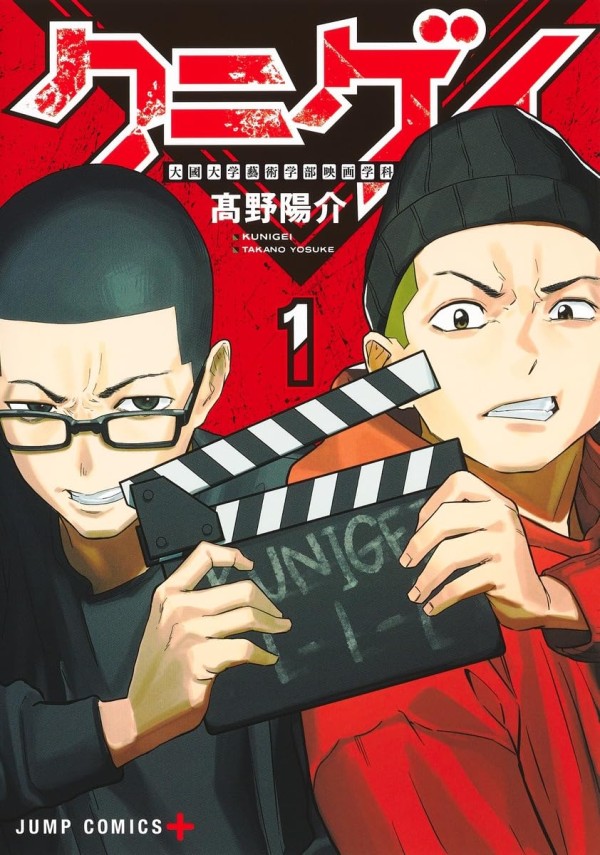
Daisuke Kagami arrives at Okuni University's prestigious art department film program carrying the confidence of a high school film festival award. He dreams of becoming a director and expects his university years to be the launchpad for that career. That confidence shatters almost immediately. On the first major assignment, a short film project he assumed would showcase his talent, Daisuke receives harsh, disheartening feedback from his professors. His sense of failure deepens when he watches the work of his classmate, Kado Osawa. Kado, who also won an award in high school, has created a project that leaves the faculty and students stunned by its quality. Kado himself offers no comfort, delivering blunt criticism of Daisuke's film that pushes the aspiring director into genuine torment.
The setting is the film program of Okuni University, an art college where students are expected to master both the technical craft and the artistic soul of moviemaking. The pressure comes not just from grades but from the constant exposure to peers with extraordinary gifts. The story follows Daisuke as he struggles to understand why Kado succeeded where he failed. He comes to a difficult realization: between their two projects, there is a vast gap in effort and intention. Kado had poured something deeper into his work, something that moved the audience in a way Daisuke had not even considered. This understanding does not discourage Daisuke. Instead, it ignites a fierce resolve to abandon his complacency and throw everything he has into his own filmmaking, transforming his admiration and jealousy into a driving force.
The rivalry is the engine of the narrative, but it is an unusual one. Kado does not actively engage with Daisuke's obsession. He exists as a distant, almost indifferent peak of talent. This makes Daisuke's struggle largely internal, a battle against his own feelings of inadequacy and his desperate need to close the gap between them. As the story progresses through the university's events, including the school arts festival where the two compete directly, Daisuke seeks out mentors. He receives intense script guidance from a professor named Tamagawa, who pushes him to raise the resolution of his own likes and dislikes, to understand his taste on a deeper level. This mentorship forces Daisuke to confront the shallowness of his previous ambitions and to search for a genuine artistic voice.
Later, a documentary production assignment becomes a turning point. Grappling with his own perceived superficiality, Daisuke makes a surprising proposal to Kado, directly confronting the source of his obsession. Their conflicting passions collide, forcing both to examine their relationship to art and to each other. Throughout these arcs, the story remains focused on the intense, often painful creative education of a young artist. It explores themes of envy, the nature of genius, and the difference between loving movies and having the relentless drive to make them. Over the course of 28 chapters, Daisuke's journey is not about surpassing Kado in a conventional victory, but about how the pressure of that impossible standard forces him to evolve.
The setting is the film program of Okuni University, an art college where students are expected to master both the technical craft and the artistic soul of moviemaking. The pressure comes not just from grades but from the constant exposure to peers with extraordinary gifts. The story follows Daisuke as he struggles to understand why Kado succeeded where he failed. He comes to a difficult realization: between their two projects, there is a vast gap in effort and intention. Kado had poured something deeper into his work, something that moved the audience in a way Daisuke had not even considered. This understanding does not discourage Daisuke. Instead, it ignites a fierce resolve to abandon his complacency and throw everything he has into his own filmmaking, transforming his admiration and jealousy into a driving force.
The rivalry is the engine of the narrative, but it is an unusual one. Kado does not actively engage with Daisuke's obsession. He exists as a distant, almost indifferent peak of talent. This makes Daisuke's struggle largely internal, a battle against his own feelings of inadequacy and his desperate need to close the gap between them. As the story progresses through the university's events, including the school arts festival where the two compete directly, Daisuke seeks out mentors. He receives intense script guidance from a professor named Tamagawa, who pushes him to raise the resolution of his own likes and dislikes, to understand his taste on a deeper level. This mentorship forces Daisuke to confront the shallowness of his previous ambitions and to search for a genuine artistic voice.
Later, a documentary production assignment becomes a turning point. Grappling with his own perceived superficiality, Daisuke makes a surprising proposal to Kado, directly confronting the source of his obsession. Their conflicting passions collide, forcing both to examine their relationship to art and to each other. Throughout these arcs, the story remains focused on the intense, often painful creative education of a young artist. It explores themes of envy, the nature of genius, and the difference between loving movies and having the relentless drive to make them. Over the course of 28 chapters, Daisuke's journey is not about surpassing Kado in a conventional victory, but about how the pressure of that impossible standard forces him to evolve.
Comment(s)
Staff
- Story & ArtYosuke Takano