
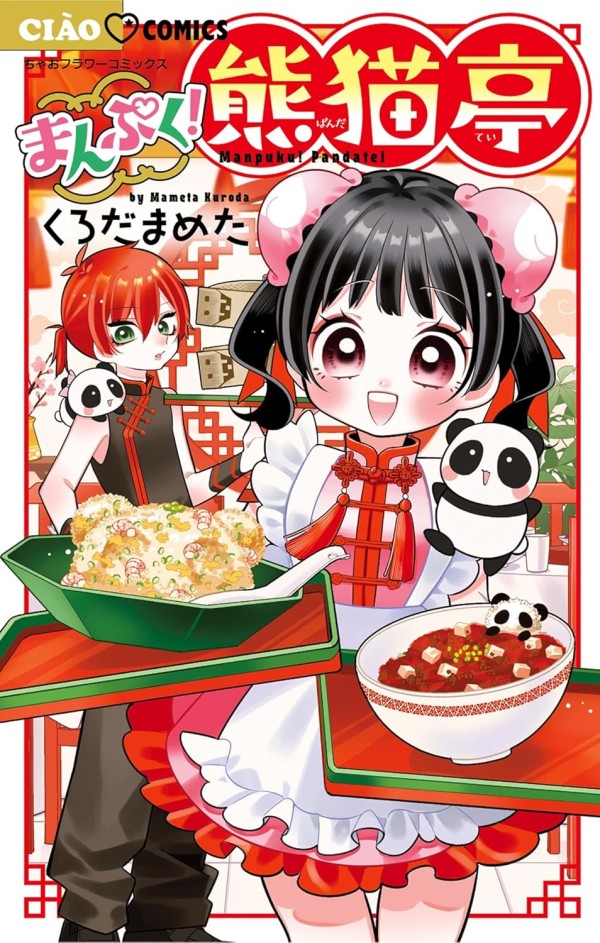
Manga
Description
At the heart of Manpuku! Pandatei is the bustling kitchen of a Chinese restaurant in Tokyo, where the art of cooking becomes a bridge between generations, cultures, and personal histories. The story centers on Ban, a young and fiercely dedicated chef who takes over the titular Pandatei after the sudden death of its previous owner, his adoptive grandfather. Ban is not a natural prodigy; his skills are hard-won through relentless practice and a near-obsessive attention to detail, driven by a desire to honor the man who raised him and to preserve the restaurant’s soul. The setting is the restaurant itself, a modest but beloved neighborhood establishment known for its hearty, no-frills Chinese home cooking, alongside the surrounding community of regular customers, rival eateries, and food suppliers who each have their own stories and appetites.
The primary conflict emerges from Ban’s struggle to maintain Pandatei’s standards while facing pressures from a changing cityscape and his own insecurities. He is haunted by the memory of his grandfather’s seemingly effortless ability to read customers’ hearts and adjust dishes to heal or uplift them—a gift Ban feels he lacks. This internal doubt is externalized through a series of culinary challenges, such as a demanding food critic who dismisses his cooking as technically correct but soulless, or a wealthy developer who offers to buy the property to open a sleek, modern chain restaurant. Ban’s journey is not about defeating villains but about discovering his own culinary voice, which he gradually does by listening to the quiet stories of his patrons: a salaryman who misses his late wife’s mapo tofu, a young girl who is allergic to shrimp but longs for the taste of her grandmother’s fried rice, and an elderly regular whose failing taste buds can still recognize the warmth of a proper broth.
The main cast is fleshed out through these daily interactions. Lin, a sharp-tongued but kind-hearted waitress who has worked at Pandatei for decades, serves as Ban’s anchor, offering blunt advice and emotional support while hiding her own grief over the grandfather’s passing. There is also Shun, a brash young food blogger who initially mocks Ban’s old-fashioned methods but becomes a reluctant ally after Ban saves his mother’s small bento shop from closing with a simple but ingenious pickle recipe. A recurring antagonist of sorts is Takeda, the owner of a high-end fusion restaurant across the street, whose rivalry with Ban is rooted not in malice but in a shared respect for the grandfather, leading to tense cooking duels that often end in mutual learning rather than victory.
The narrative unfolds in episodic arcs, each centered on a specific dish or ingredient, such as the quest to perfect a springy noodle dough during a humid rainy season, or the competition to source the best seasonal bamboo shoots from a stubborn mountain farmer. A major arc involves Ban discovering a hidden recipe journal left by his grandfather, but instead of revealing shortcuts, the journal contains only cryptic sketches and emotional notes about customers, forcing Ban to realize that the secret to the restaurant’s success was never technique but empathy. Another significant arc follows the threatened demolition of the old shopping street, where Ban rallies the local merchants, not through protests, but by organizing a massive community feast that showcases the distinct flavors of each shop, reminding the developer of the area’s irreplaceable human texture.
As the story progresses, Ban learns to accept that he will never replicate his grandfather, and that is precisely the point. He begins to innovate, not by discarding tradition, but by infusing it with his own quirky experiments—like a tantanmen that uses local miso instead of Chinese sesame paste, which initially shocks regulars but eventually becomes a new favorite. The climax of the series does not end with a grand championship or a sale of the restaurant, but with a quiet, ordinary evening where Ban serves a simple bowl of egg drop soup to a crying child who missed her mother. In that moment, he realizes he has finally understood what his grandfather meant by “cooking for one person at a time.” The manga closes on an open note, with Ban still learning, still making mistakes, and still serving his community, the steam from his wok rising as a gentle, persistent promise of continuity and care.
The primary conflict emerges from Ban’s struggle to maintain Pandatei’s standards while facing pressures from a changing cityscape and his own insecurities. He is haunted by the memory of his grandfather’s seemingly effortless ability to read customers’ hearts and adjust dishes to heal or uplift them—a gift Ban feels he lacks. This internal doubt is externalized through a series of culinary challenges, such as a demanding food critic who dismisses his cooking as technically correct but soulless, or a wealthy developer who offers to buy the property to open a sleek, modern chain restaurant. Ban’s journey is not about defeating villains but about discovering his own culinary voice, which he gradually does by listening to the quiet stories of his patrons: a salaryman who misses his late wife’s mapo tofu, a young girl who is allergic to shrimp but longs for the taste of her grandmother’s fried rice, and an elderly regular whose failing taste buds can still recognize the warmth of a proper broth.
The main cast is fleshed out through these daily interactions. Lin, a sharp-tongued but kind-hearted waitress who has worked at Pandatei for decades, serves as Ban’s anchor, offering blunt advice and emotional support while hiding her own grief over the grandfather’s passing. There is also Shun, a brash young food blogger who initially mocks Ban’s old-fashioned methods but becomes a reluctant ally after Ban saves his mother’s small bento shop from closing with a simple but ingenious pickle recipe. A recurring antagonist of sorts is Takeda, the owner of a high-end fusion restaurant across the street, whose rivalry with Ban is rooted not in malice but in a shared respect for the grandfather, leading to tense cooking duels that often end in mutual learning rather than victory.
The narrative unfolds in episodic arcs, each centered on a specific dish or ingredient, such as the quest to perfect a springy noodle dough during a humid rainy season, or the competition to source the best seasonal bamboo shoots from a stubborn mountain farmer. A major arc involves Ban discovering a hidden recipe journal left by his grandfather, but instead of revealing shortcuts, the journal contains only cryptic sketches and emotional notes about customers, forcing Ban to realize that the secret to the restaurant’s success was never technique but empathy. Another significant arc follows the threatened demolition of the old shopping street, where Ban rallies the local merchants, not through protests, but by organizing a massive community feast that showcases the distinct flavors of each shop, reminding the developer of the area’s irreplaceable human texture.
As the story progresses, Ban learns to accept that he will never replicate his grandfather, and that is precisely the point. He begins to innovate, not by discarding tradition, but by infusing it with his own quirky experiments—like a tantanmen that uses local miso instead of Chinese sesame paste, which initially shocks regulars but eventually becomes a new favorite. The climax of the series does not end with a grand championship or a sale of the restaurant, but with a quiet, ordinary evening where Ban serves a simple bowl of egg drop soup to a crying child who missed her mother. In that moment, he realizes he has finally understood what his grandfather meant by “cooking for one person at a time.” The manga closes on an open note, with Ban still learning, still making mistakes, and still serving his community, the steam from his wok rising as a gentle, persistent promise of continuity and care.
Comment(s)
Staff
- Story & ArtMameta Kuroda