
Manga
Description
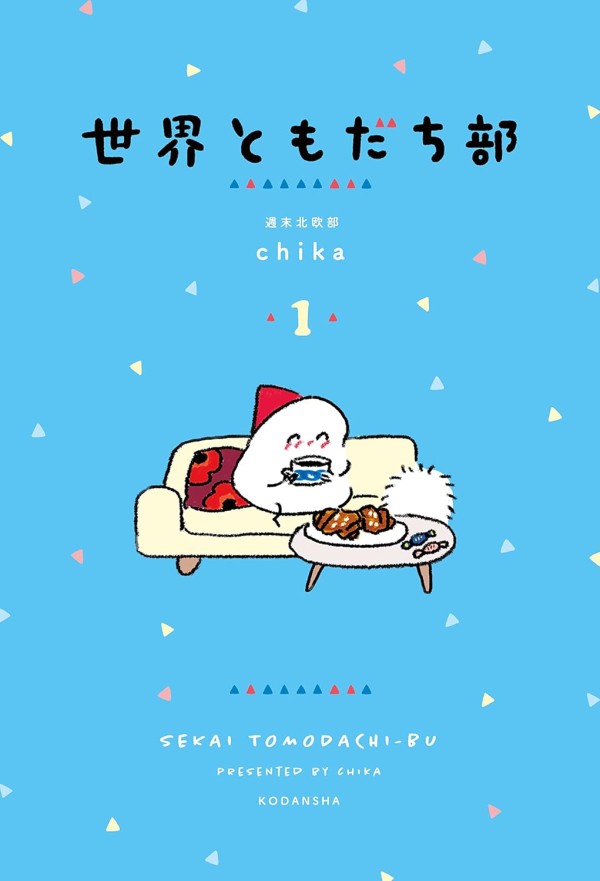
My half is made of friends. That is why I can keep moving forward. This is the core belief of Sekai Tomodachi-bu, a manga by the creator known as Shumatsu Hokuobu Chika, who after more than a decade of loving Finland and a grueling period of working full-time while attending sushi school, finally realized her dream of moving to Scandinavia. The manga is a series of warmly illustrated essays that recount the friendships she built across the world and how those connections gave her the energy to push through exhaustion, loneliness, and self-doubt.
The central figure is Chika herself, a self-described Finnophile who, while still a company employee in Japan, enrolled in a sushi chef training program to make her Nordic migration viable. The story does not follow a single dramatic plot; instead, it weaves together vignettes from different periods of her life, each focused on a specific friend or group of friends. These people are given animal-inspired nicknames that reflect their personalities or how Chika perceives them.
The setting shifts freely: from the international dormitories of her university days in Japan, where she started an Insomnia Club with fellow sleepless students, to the bustling sushi schools of Tokyo, and later to the forests and cities of Finland and Norway. Through these locations, the manga explores how Chika’s friendships helped her see the world differently.
In the first volume, readers meet a Finnish friend she calls Harinezumi (Hedgehog), whom she addresses as “brother” and who calls her “sister”; a Korean friend named Kitsune (Fox), whom she felt was her “other half” from the moment they met; and a Norwegian band of five singers who serve as her long‑time heroes. The second volume introduces an apartment exchange with a friend called Kuzuri (Wolverine), a Japanese‑Finnish swap that lets each live in the other’s dream country; a couple named Nezumi (Mouse) who start a farm life in rural South Korea; a seventy‑year‑old volunteer mentor named Mejiro (White‑eye); a colleague who practices a houseless lifestyle, Musasabi (Flying Squirrel); and a group of festival singers in Norway. The third volume follows Chika after her move: sushi‑chef friends who later pursue music (Taiyoneko, Sun Cat), a relentlessly encouraging friend named Manati (Manatee), an older sushi trainee who becomes a chef in Finland (Tobiuo, Flying Fish), childhood friend Sakura‑chan, and fellow manga artists she meets in Finland—Runeberg Tart, Raspberry, and Donut—as well as her own family.
Each chapter is a standalone anecdote that illustrates how friends with similar interests reinforce joy, while friends with different perspectives open new ways of thinking. The manga’s emotional arc is subtle but clear: Chika begins as a person often overwhelmed by her ambitions and fears, and through the steady support of her global network, she gains the confidence to make a life‑changing move. There is no central antagonist or major conflict; the tension comes from the difficulty of balancing work, study, and dream‑chasing, and the resolution always arrives in the form of a friend’s timely message, a shared laugh, or a lesson learned.
The notable narrative arcs include her university “Insomnia Club” phase, where late‑night conversations with international dorm mates forged lasting bonds; her sushi‑school era, where she bonded with classmates from different Japanese prefectures and exchanged regional specialty boxes; and her post‑move life, where she builds a new community in Finland. Throughout, the manga emphasizes that friendship requires effort—keeping in touch across time zones, speaking different languages, and being open to differences—but that effort is what makes the relationships so life‑affirming.
The central figure is Chika herself, a self-described Finnophile who, while still a company employee in Japan, enrolled in a sushi chef training program to make her Nordic migration viable. The story does not follow a single dramatic plot; instead, it weaves together vignettes from different periods of her life, each focused on a specific friend or group of friends. These people are given animal-inspired nicknames that reflect their personalities or how Chika perceives them.
The setting shifts freely: from the international dormitories of her university days in Japan, where she started an Insomnia Club with fellow sleepless students, to the bustling sushi schools of Tokyo, and later to the forests and cities of Finland and Norway. Through these locations, the manga explores how Chika’s friendships helped her see the world differently.
In the first volume, readers meet a Finnish friend she calls Harinezumi (Hedgehog), whom she addresses as “brother” and who calls her “sister”; a Korean friend named Kitsune (Fox), whom she felt was her “other half” from the moment they met; and a Norwegian band of five singers who serve as her long‑time heroes. The second volume introduces an apartment exchange with a friend called Kuzuri (Wolverine), a Japanese‑Finnish swap that lets each live in the other’s dream country; a couple named Nezumi (Mouse) who start a farm life in rural South Korea; a seventy‑year‑old volunteer mentor named Mejiro (White‑eye); a colleague who practices a houseless lifestyle, Musasabi (Flying Squirrel); and a group of festival singers in Norway. The third volume follows Chika after her move: sushi‑chef friends who later pursue music (Taiyoneko, Sun Cat), a relentlessly encouraging friend named Manati (Manatee), an older sushi trainee who becomes a chef in Finland (Tobiuo, Flying Fish), childhood friend Sakura‑chan, and fellow manga artists she meets in Finland—Runeberg Tart, Raspberry, and Donut—as well as her own family.
Each chapter is a standalone anecdote that illustrates how friends with similar interests reinforce joy, while friends with different perspectives open new ways of thinking. The manga’s emotional arc is subtle but clear: Chika begins as a person often overwhelmed by her ambitions and fears, and through the steady support of her global network, she gains the confidence to make a life‑changing move. There is no central antagonist or major conflict; the tension comes from the difficulty of balancing work, study, and dream‑chasing, and the resolution always arrives in the form of a friend’s timely message, a shared laugh, or a lesson learned.
The notable narrative arcs include her university “Insomnia Club” phase, where late‑night conversations with international dorm mates forged lasting bonds; her sushi‑school era, where she bonded with classmates from different Japanese prefectures and exchanged regional specialty boxes; and her post‑move life, where she builds a new community in Finland. Throughout, the manga emphasizes that friendship requires effort—keeping in touch across time zones, speaking different languages, and being open to differences—but that effort is what makes the relationships so life‑affirming.
Comment(s)
Staff
- Story & Artchika Shūmatsu Hokuō-bu