Manga
Description
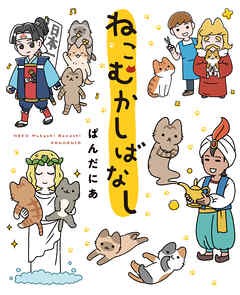
What if a cat wandered into a familiar fairy tale? That question is the spark behind this gentle four-panel manga series. Each story takes a well-known folk tale or classic work of literature—from Momotaro and Cinderella to Sherlock Holmes and The Tale of the Bamboo Cutter—and inserts one or more cats into the narrative. The cats are not magical guides or talking helpers; they behave exactly like real cats. They nap in the middle of a critical scene, knock over a carefully placed object, ignore a direct command, or simply curl up on a sleeping prince, causing the original story to veer off into a softer, sillier, and much more heartwarming direction.
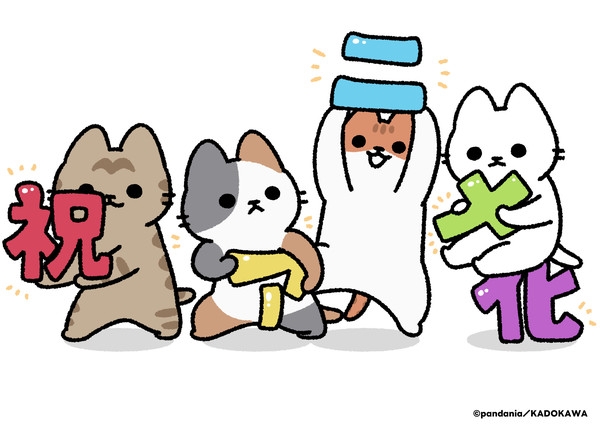
The main cast consists of several distinct feline personalities: Kijitora, a brown tabby; Chatora, an orange tabby; Mikeneko, a calico; and Shironeko, a white cat. These recurring characters and others appear across episodes, sometimes taking on roles within the story—such as a lazy lamp genie, a proud but easily distracted slipper-dropping princess, or a tiny version of the Cowardly Lion—and sometimes acting as an outside force that derails the plot with pure cat behavior. There is no single overarching conflict. Instead, the manga is built on a series of self-contained, two-to-four-page sketches. The joy comes from watching a familiar story get gently upended by a creature whose priorities are napping, eating, and being petted.
Because the manga draws from both global fairy tales and Japanese folklore, the settings shift constantly: a Western castle, a Japanese village, a Greek myth, a quiet shoe shop, a deep forest. The only constant is the cats themselves. They react to each story’s dramatic moments with complete indifference or mild curiosity, and the human characters, whether they are Snow White, a poor shoemaker, or a samurai, are often shown to be helpless cat lovers themselves. The humor is understated and observational, relying on the contrast between high-stakes legend and low-stakes feline reality. The artwork matches this quiet tone, with soft, clean lines and a relaxed, affectionate approach to drawing cat poses and expressions. The result is a calm, soothing reading experience that reframes old tales as gentle comedies built around the universal, inexplicable appeal of cats.
The main cast consists of several distinct feline personalities: Kijitora, a brown tabby; Chatora, an orange tabby; Mikeneko, a calico; and Shironeko, a white cat. These recurring characters and others appear across episodes, sometimes taking on roles within the story—such as a lazy lamp genie, a proud but easily distracted slipper-dropping princess, or a tiny version of the Cowardly Lion—and sometimes acting as an outside force that derails the plot with pure cat behavior. There is no single overarching conflict. Instead, the manga is built on a series of self-contained, two-to-four-page sketches. The joy comes from watching a familiar story get gently upended by a creature whose priorities are napping, eating, and being petted.
Because the manga draws from both global fairy tales and Japanese folklore, the settings shift constantly: a Western castle, a Japanese village, a Greek myth, a quiet shoe shop, a deep forest. The only constant is the cats themselves. They react to each story’s dramatic moments with complete indifference or mild curiosity, and the human characters, whether they are Snow White, a poor shoemaker, or a samurai, are often shown to be helpless cat lovers themselves. The humor is understated and observational, relying on the contrast between high-stakes legend and low-stakes feline reality. The artwork matches this quiet tone, with soft, clean lines and a relaxed, affectionate approach to drawing cat poses and expressions. The result is a calm, soothing reading experience that reframes old tales as gentle comedies built around the universal, inexplicable appeal of cats.
Comment(s)
Staff
- Story & Art
Relations
Anime overview