
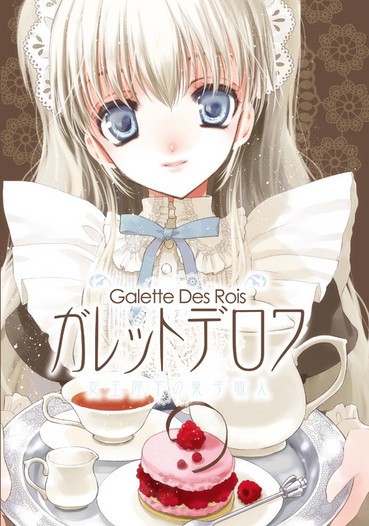
Manga
Description
In the royal capital of a kingdom reminiscent of 18th-century France, a young pastry chef named Alain dreams of creating the most exquisite confections, but his humble provincial origins leave him ridiculed by the court’s established pâtissiers. His fortunes change when he is summoned to the palace not for his skill, but because the newly crowned young Queen Marie has lost all appetite and the entire royal kitchen has failed to tempt her. Armed with a simple recipe for a galette des rois—a traditional epiphany cake—he bakes a version that finally makes the queen smile. Impressed, she appoints him as her personal pastry chef, a decision that shocks the aristocracy and ignites fierce jealousy among the palace cooks.
The central conflict arises from the queen’s hidden agenda: Marie is not merely a melancholic monarch but a shrewd ruler whose kingdom is on the brink of financial collapse due to corrupt nobles and food shortages. She uses Alain’s humble, honest pastries as a political tool to reconnect with commoners and expose the excesses of her court, while Alain himself remains blissfully unaware of her machinations, believing his only duty is to bring her joy through sugar and cream. Their relationship deepens into a delicate partnership—she teaches him the ruthless game of politics, while he teaches her that trust and sincerity can be as nourishing as bread.
The main cast includes Queen Marie, a young woman whose icy public persona masks a lonely heart and a razor-sharp mind; Alain, whose artistic innocence is gradually tempered by palace intrigue; and the villainous Grand Chamberlain Viscount Rohan, who sees Alain as a threat to his control over the monarchy and orchestrates sabotage, from spoiled ingredients to false accusations of poisoning. Supporting figures include Lisette, a sharp-tongued kitchen maid who becomes Alain’s closest ally and secret spy among the servants, and the elderly royal taster, Gaston, who mentors Alain on the hidden flavors of courtly danger.
Major narrative arcs unfold in three phases. The first arc, The Bitter Sugar, follows Alain’s initial struggles to survive the kitchen’s hostility while creating cakes that subtly convey the queen’s edicts to the public—a cherry tart means a tax break, a chocolate mousse signals a curfew. The second arc, Feast of Fools, escalates when Rohan frames Alain for a failed state banquet, forcing Alain to flee the palace and live among peasant bakers, where he learns the true depth of the famine gripping the land. The final arc, The King’s Slice, sees Alain return not as a fugitive but as the queen’s official regent of provisions, using his pastry skills to devise nutritious, long-lasting sweets that feed the army and the poor, culminating in a grand galette des rois baked for a peace treaty with a neighboring empire. The hidden fève—a porcelain charm—within that last cake carries a secret message from Marie that alters the succession laws, cementing Alain’s legacy not as a mere confectioner, but as the architect of a new social order where bread and cake are no longer symbols of class division but of shared sustenance.
The central conflict arises from the queen’s hidden agenda: Marie is not merely a melancholic monarch but a shrewd ruler whose kingdom is on the brink of financial collapse due to corrupt nobles and food shortages. She uses Alain’s humble, honest pastries as a political tool to reconnect with commoners and expose the excesses of her court, while Alain himself remains blissfully unaware of her machinations, believing his only duty is to bring her joy through sugar and cream. Their relationship deepens into a delicate partnership—she teaches him the ruthless game of politics, while he teaches her that trust and sincerity can be as nourishing as bread.
The main cast includes Queen Marie, a young woman whose icy public persona masks a lonely heart and a razor-sharp mind; Alain, whose artistic innocence is gradually tempered by palace intrigue; and the villainous Grand Chamberlain Viscount Rohan, who sees Alain as a threat to his control over the monarchy and orchestrates sabotage, from spoiled ingredients to false accusations of poisoning. Supporting figures include Lisette, a sharp-tongued kitchen maid who becomes Alain’s closest ally and secret spy among the servants, and the elderly royal taster, Gaston, who mentors Alain on the hidden flavors of courtly danger.
Major narrative arcs unfold in three phases. The first arc, The Bitter Sugar, follows Alain’s initial struggles to survive the kitchen’s hostility while creating cakes that subtly convey the queen’s edicts to the public—a cherry tart means a tax break, a chocolate mousse signals a curfew. The second arc, Feast of Fools, escalates when Rohan frames Alain for a failed state banquet, forcing Alain to flee the palace and live among peasant bakers, where he learns the true depth of the famine gripping the land. The final arc, The King’s Slice, sees Alain return not as a fugitive but as the queen’s official regent of provisions, using his pastry skills to devise nutritious, long-lasting sweets that feed the army and the poor, culminating in a grand galette des rois baked for a peace treaty with a neighboring empire. The hidden fève—a porcelain charm—within that last cake carries a secret message from Marie that alters the succession laws, cementing Alain’s legacy not as a mere confectioner, but as the architect of a new social order where bread and cake are no longer symbols of class division but of shared sustenance.
Comment(s)
Staff
- Story & ArtRami Hato