
Manga
Description
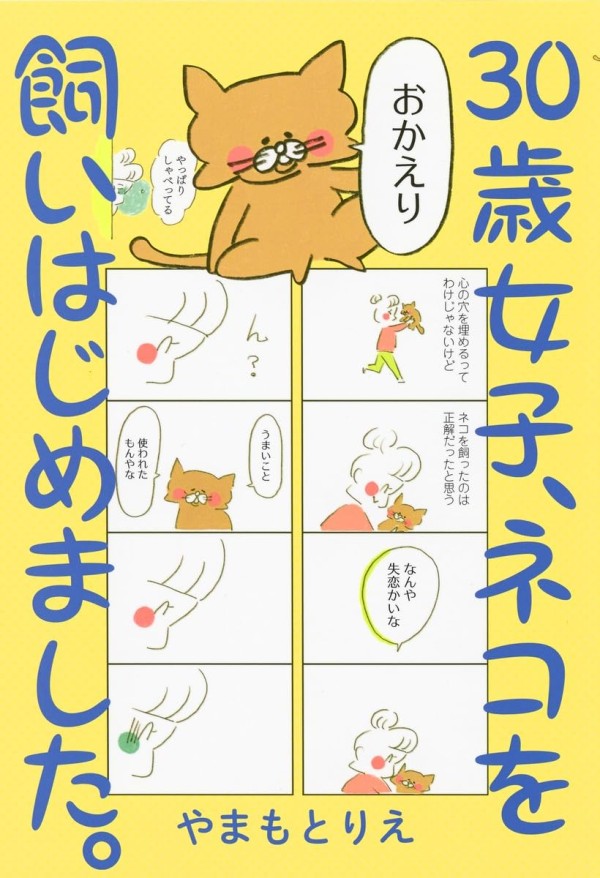
When a thirty-year-old woman is unceremoniously dumped by her boyfriend of eight years, she impulsively adopts a cat. The cat, however, is not an ordinary pet; it can speak, and it does not hold back. The cat’s sharp, blunt observations immediately cut through the protagonist’s comfortable but stagnant existence, forcing her to confront the fact that she has been coasting through love, marriage hunting, hobbies, and work without any real direction or commitment.
The story follows the woman as she navigates the messy aftermath of the breakup and her own feelings of inadequacy. She feels stuck in a cycle of half-hearted attempts at adult life—half-hearted friendships, half-hearted efforts at dating, half-hearted career moves. The cat becomes an unlikely confidant and critic, calling her out on her self-pity and procrastination while also offering the occasional nudge forward. Encouraged (or shamed) by the cat’s commentary, she decides to take charge of her life piece by piece. She reluctantly tries formal marriage hunting (konkatsu), goes on awkward blind dates, questions her own motives for wanting to marry, and wrestles with societal expectations versus her genuine desires.
Over the course of the narrative, the woman also reconnects with old friends, confronts memories of the past, and starts a blog as a creative outlet. Each small challenge—whether it’s learning to be more honest in a relationship, figuring out what she truly wants in a partner, or simply gaining the confidence to speak up—is met with setbacks and breakthroughs. The talking cat remains a consistent presence, sometimes frustrating and sometimes surprisingly comforting, helping her to see her own blind spots. The story arcs include her journey from passive self-doubt to a more active, self-aware approach to life, as well as a significant turning point involving a sudden loss or departure (the cat disappears or a relationship ends), which forces her to stand on her own. By the end, she begins to accept that living authentically, even if imperfectly, is more important than chasing an ideal image of success.
The story follows the woman as she navigates the messy aftermath of the breakup and her own feelings of inadequacy. She feels stuck in a cycle of half-hearted attempts at adult life—half-hearted friendships, half-hearted efforts at dating, half-hearted career moves. The cat becomes an unlikely confidant and critic, calling her out on her self-pity and procrastination while also offering the occasional nudge forward. Encouraged (or shamed) by the cat’s commentary, she decides to take charge of her life piece by piece. She reluctantly tries formal marriage hunting (konkatsu), goes on awkward blind dates, questions her own motives for wanting to marry, and wrestles with societal expectations versus her genuine desires.
Over the course of the narrative, the woman also reconnects with old friends, confronts memories of the past, and starts a blog as a creative outlet. Each small challenge—whether it’s learning to be more honest in a relationship, figuring out what she truly wants in a partner, or simply gaining the confidence to speak up—is met with setbacks and breakthroughs. The talking cat remains a consistent presence, sometimes frustrating and sometimes surprisingly comforting, helping her to see her own blind spots. The story arcs include her journey from passive self-doubt to a more active, self-aware approach to life, as well as a significant turning point involving a sudden loss or departure (the cat disappears or a relationship ends), which forces her to stand on her own. By the end, she begins to accept that living authentically, even if imperfectly, is more important than chasing an ideal image of success.
Comment(s)
Staff
- Story & ArtRie Yamamoto