
Manga
Description
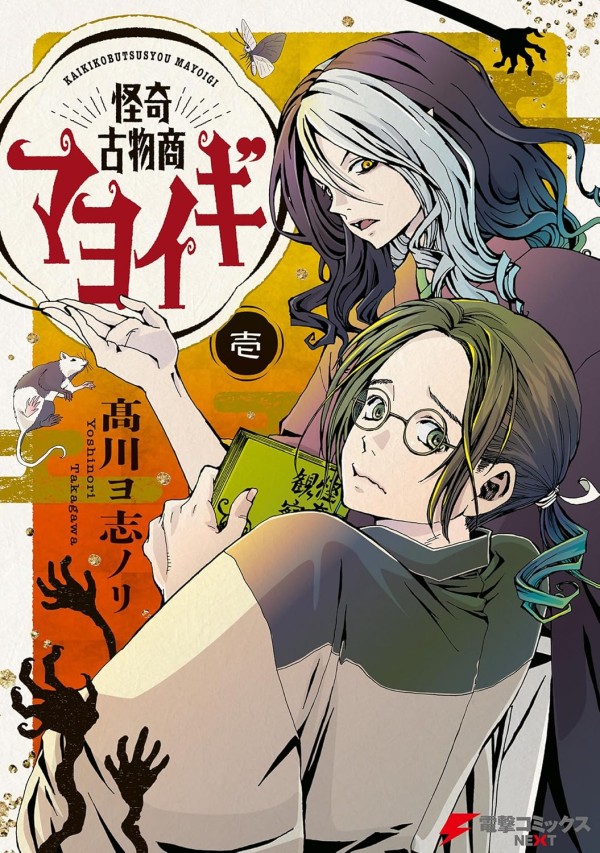
The strange antique shop “Mayoigi,” run by the enigmatic dealer who goes by the same name, specializes in buying goods that have been saturated with the world’s absurdity and irrationality. In a society that rushes to label everything as black or white, Mayoigi consistently applies cold, “rational” judgment to each transaction. The items that cross his counter are not merely old—they are products that have suffered because of human greed, carelessness, or systemic folly: mass‑purchased merchandise discarded simply to obtain a premium freebie, objects thrown away after being altered by the intrusive values of others, commodities forced into shoddy re‑designs for profit, and countless other victims of everyday injustice.
Mayoigi is the shop’s owner and sole proprietor, a calm, calculating figure who listens to the silent grievances of these unwanted goods. Once he acquires an item, he often engineers a fitting “return” or “payback” to the humans who wronged it—a quiet, almost magical retaliation that restores balance without overt violence. The stories unfold in a series of episodes, each featuring a different “problem item” and the people entangled with it. Through these vignettes, the series explores themes of rational vs. irrational behavior, the hidden cost of consumerism, and the quiet rebellion of objects against their mistreatment.
As the narrative progresses, recurring characters emerge alongside Mayoigi—such as the journalist Hakonezaki—and the episodic format gradually builds toward a larger arc. In the second and final volume, the accumulated tensions climax when Hakonezaki brings an ominous “vessel” to the shop. Holding it, Mayoigi announces that the store’s business is finished, and in an instant the entire shop vanishes, leaving behind the town to continue its ordinary days. The manga closes with a sense that the strange, rational dealer and his otherworldly establishment have moved on to some other time or place, leaving a lingering trace of the fantastic in the everyday world.
Mayoigi is the shop’s owner and sole proprietor, a calm, calculating figure who listens to the silent grievances of these unwanted goods. Once he acquires an item, he often engineers a fitting “return” or “payback” to the humans who wronged it—a quiet, almost magical retaliation that restores balance without overt violence. The stories unfold in a series of episodes, each featuring a different “problem item” and the people entangled with it. Through these vignettes, the series explores themes of rational vs. irrational behavior, the hidden cost of consumerism, and the quiet rebellion of objects against their mistreatment.
As the narrative progresses, recurring characters emerge alongside Mayoigi—such as the journalist Hakonezaki—and the episodic format gradually builds toward a larger arc. In the second and final volume, the accumulated tensions climax when Hakonezaki brings an ominous “vessel” to the shop. Holding it, Mayoigi announces that the store’s business is finished, and in an instant the entire shop vanishes, leaving behind the town to continue its ordinary days. The manga closes with a sense that the strange, rational dealer and his otherworldly establishment have moved on to some other time or place, leaving a lingering trace of the fantastic in the everyday world.
Comment(s)
Staff
- Story & ArtYoshinori Takagawa