
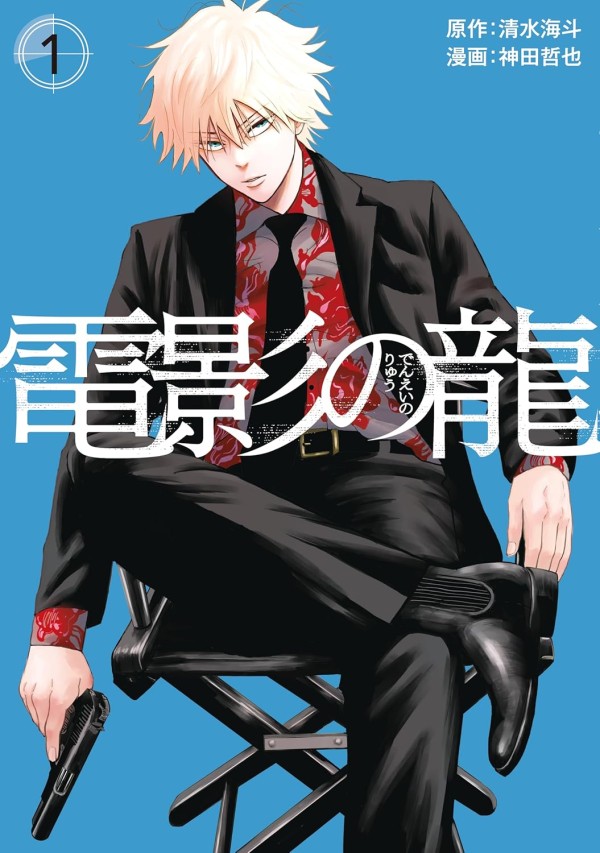
Manga
Description
In the early Heisei era, in a stifling rural town, two childhood friends—Ryuji and Tatsuyoshi—share a dream: Ryuji wants to become an actor, and Tatsuyoshi a film director. But their circumstances are bleak. Abandoned by his parents, Ryuji has no one else and, burdened by debt, he sinks into the yakuza underworld, giving up on his acting ambition. Tatsuyoshi, however, refuses to let the dream die. He proposes that they make a movie out of Ryuji’s life as a yakuza—every beating, every shakedown, every moment of violence and despair will be captured on camera. The idea is to turn a life that feels like trash into a film that spits back at the world.
Eight years later, Tatsuyoshi has become a capable fighter and a full member of the same yakuza group, always carrying his video camera. He records everything: the routine intimidation, the gangland politics, the bloody conflicts. Ryuji is the star of this real‑time film, a man living a brutal existence but still clinging to the faint hope that the camera might make his suffering mean something. The leader of their gang, Tsukimoto, warns them of an escalating war with the rival Hikami group and arms them with a gun. Ryuji is forced to kill a traitor, a moment that drives home the inescapable violence of their world.
The story expands when Ryuji meets Nana, a young woman forced into sex work to pay off her parents’ debts. She had also dreamed of becoming an actress. The two are drawn together by their parallel, broken ambitions. As the gang war heats up, the Hikami group kidnaps Nana to lure Ryuji into a trap. Tatsuyoshi’s camera captures the rescue attempt, the firefights, and the growing bond between Ryuji and Nana. In a final confrontation on a beach, Ryuji and Tatsuyoshi are ambushed and shot. Believing they are about to die, they thank each other for the years of friendship. Ryuji dies, but Tatsuyoshi survives. He takes the surviving footage and edits it into a single film—the raw, unscripted record of Ryuji’s yakuza life, from his first steps into the underworld to his violent end.
The finished movie is screened, causing a stir. Some viewers are horrified by the real‑life violence and death on screen; others are fascinated by its unfiltered authenticity. The film becomes a subject of intense debate, a final act of defiance against a world that had given Ryuji nothing. Nana, meanwhile, receives a letter from Ryuji—written before his death—that reveals he had secretly sent her audition tape to an agency, securing her a start as an actress. She goes on to build a career, carrying the memory of the two friends who turned a wasted life into art.
Eight years later, Tatsuyoshi has become a capable fighter and a full member of the same yakuza group, always carrying his video camera. He records everything: the routine intimidation, the gangland politics, the bloody conflicts. Ryuji is the star of this real‑time film, a man living a brutal existence but still clinging to the faint hope that the camera might make his suffering mean something. The leader of their gang, Tsukimoto, warns them of an escalating war with the rival Hikami group and arms them with a gun. Ryuji is forced to kill a traitor, a moment that drives home the inescapable violence of their world.
The story expands when Ryuji meets Nana, a young woman forced into sex work to pay off her parents’ debts. She had also dreamed of becoming an actress. The two are drawn together by their parallel, broken ambitions. As the gang war heats up, the Hikami group kidnaps Nana to lure Ryuji into a trap. Tatsuyoshi’s camera captures the rescue attempt, the firefights, and the growing bond between Ryuji and Nana. In a final confrontation on a beach, Ryuji and Tatsuyoshi are ambushed and shot. Believing they are about to die, they thank each other for the years of friendship. Ryuji dies, but Tatsuyoshi survives. He takes the surviving footage and edits it into a single film—the raw, unscripted record of Ryuji’s yakuza life, from his first steps into the underworld to his violent end.
The finished movie is screened, causing a stir. Some viewers are horrified by the real‑life violence and death on screen; others are fascinated by its unfiltered authenticity. The film becomes a subject of intense debate, a final act of defiance against a world that had given Ryuji nothing. Nana, meanwhile, receives a letter from Ryuji—written before his death—that reveals he had secretly sent her audition tape to an agency, securing her a start as an actress. She goes on to build a career, carrying the memory of the two friends who turned a wasted life into art.
Comment(s)
Staff
- StoryKaito Shimizu
- ArtTetsuya Kanda